Instant
01 · Ask
Ask the AI a follow-up
Got more questions about bespoke Blind Design & Installation? Describe the bit you're unsure about — the AI explains options, sequencing and what to ask the curtains & blinds.

Pattern-matched, motorised or non-standard size — made-to-measure for awkward windows and feature rooms.
You've read the brief on bespoke Blind Design & Installation. Now lean on us to find the right curtains & blinds — and stay in control of the job.
Got more questions about bespoke Blind Design & Installation? Describe the bit you're unsure about — the AI explains options, sequencing and what to ask the curtains & blinds.
Costs, timelines, pitfalls and the right questions to ask before any curtains & blinds starts on bespoke Blind Design & Installation.
Itemised quotes from up to 3 local curtains & blindss on bespoke Blind Design & Installation — so you can compare like-for-like, not lump sums.
Ready when you are
Enter your postcode and get free quotes from local pros.
Four moves that separate a smooth job from a nightmare.
Failing to account for window handles or tiles in a kitchen/bathroom, which prevents the blind from lowering fully.
Using standard screws in crumbly Victorian masonry or hollow plasterboard, leading to the blind pulling away from the wall.
Ordering blinds for the same room at different times can result in slight colour variations between dye lots.
Inaccurately levelled headrails causing the fabric to "telescope" or fray at the edges over time.
Indicative UK ranges and what affects price.
By job type
Quote spread is typically ± 18% — always get 3 quotes.
Curtains & Blinds quick-view
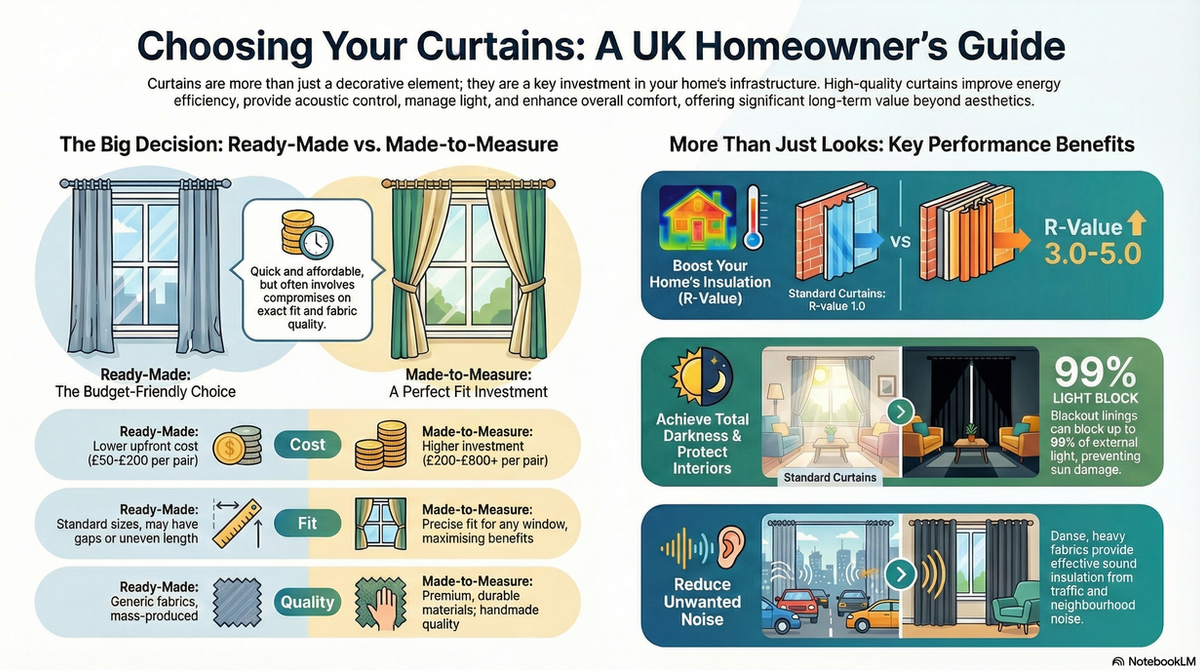
Curtains & Blinds explained
Investing in professional design and installation ensures your window treatments complement your interior architecture perfectly. From motorised rollers to hand-finished Roman blinds, the bespoke route offers access to high-quality fabrics and robust hardware that mass-market retailers cannot match.
Prices vary significantly based on fabric choice, window size, and the complexity of the mechanism. Motorisation typically adds £150–£400 per window depending on the system used.
| Item | Low £ | High £ | Notes |
|---|---|---|---|
| Bespoke Roller Blind | £120 | £350 | Per window, including basic installation. |
| Bespoke Roman Blind | £250 | £650 | Higher cost due to fabric volume and hand-stitching. |
| Motorised Smart Blind | £400 | £950 | Includes battery or hardwired motor and remote. |
| Measuring & Fitting Only | £50 | £90 | Labour charge per window (excluding materials). |
| Bay Window Supplement | £100 | £250 | Additional labour for complex angles. |
Material costs are the primary driver of price; high-end designer fabrics or specialist thermal linings can double the cost of the project. Always confirm if the quote includes VAT and the disposal of old window dressings.
While fitting a basic roller blind is a common DIY task, bespoke blinds carry a high risk for the inexperienced. If you provide the measurements and they are off by even 5mm, the blind may be unusable, and you will not be entitled to a refund for custom-made goods.
Professional installers carry the liability for measurements and ensure that all installations meet strict UK child safety regulations regarding cord lengths and tensioners.
If you are opting for hardwired motorised blinds, you may also need a qualified electrician to comply with Part P Building Regulations, whereas battery-operated versions can be handled entirely by the blind specialist.
Yes. High-quality bespoke blinds with thermal or cellular linings create an insulating air pocket that reduces heat loss through glass by up to 20% in winter and reflects heat in summer.
Roman or Roller blinds are popular for bays as they can be fitted close to the glass. However, bespoke shutters or vertical blinds often offer the cleanest look for the complex angles of a UK bay window.
They are ideal for hard-to-reach windows (like skylights) and offer increased security by allowing you to set timers while away. They also remove the need for cords, making them inherently child-safe.
Most bespoke blinds should be lightly dusted or vacuumed with a brush attachment. Roman blinds may require professional dry cleaning, while high-quality rollers can often be wiped with a damp cloth.
Most professional installers will offer a removal and disposal service for a small fee. It is best to clarify this during the consultation so they can factor in the time and waste disposal.
This guide was written with AI assistance and is intended for general information only. Prices are estimates based on UK averages and may vary by region. Always get at least three quotes and consult a qualified professional before starting any work.
Ask follow-ups in plain English. The AI explains options, sequencing and what to ask the curtains & blinds — so you walk in informed.
Installing conservatory blinds is one of the most effective ways for UK homeowners to reclaim their living space. While conservatories offer beautiful light, th...
READ GUIDE →GuideVenetian blinds are a staple in UK homes, offering a classic look with excellent light control. However, because they rely on a complex system of cords, pulleys...
READ GUIDE →GuideProfessional curtain installation is about more than just aesthetics; it ensures your window treatments are level, secure, and operate smoothly. For UK homeowne...
READ GUIDE →GuideA snapped or frayed curtain cord can render even the most expensive window dressings useless. In the UK, many homes still rely on corded tracks or Roman blind s...
READ GUIDE →GuideVertical blinds are a practical and popular choice for UK homes, particularly for large patio doors and bay windows. While they are durable, the moving parts wi...
READ GUIDE →GuideWooden shutters, often referred to as plantation shutters, are a premium window treatment that offers a timeless aesthetic for UK homes. Beyond their visual app...
READ GUIDE →