Instant
01 · Ask
Ask the AI a follow-up
Got more questions about custom Blind Fitting? Describe the bit you're unsure about — the AI explains options, sequencing and what to ask the curtains & blinds.

Made-to-measure for non-standard windows — measured by a fitter, cut to the millimetre.
You've read the brief on custom Blind Fitting. Now lean on us to find the right curtains & blinds — and stay in control of the job.
Got more questions about custom Blind Fitting? Describe the bit you're unsure about — the AI explains options, sequencing and what to ask the curtains & blinds.
Costs, timelines, pitfalls and the right questions to ask before any curtains & blinds starts on custom Blind Fitting.
Itemised quotes from up to 3 local curtains & blindss on custom Blind Fitting — so you can compare like-for-like, not lump sums.
Ready when you are
Enter your postcode and get free quotes from local pros.
Four moves that separate a smooth job from a nightmare.
Many UK homes have steel or reinforced concrete lintels. Without the right equipment, DIYers often fail to get a secure fixing, leading to the blind falling down.
Forgetting to account for window handles or tiles in a kitchen/bathroom can prevent the blind from lowering fully.
If the brackets aren't perfectly level, the blind will roll to one side, eventually fraying the edges of the fabric.
Using standard plugs in "dot and dab" plasterboard walls often results in the blind pulling away from the wall over time.
Indicative UK ranges and what affects price.
By job type
Quote spread is typically ± 18% — always get 3 quotes.
Curtains & Blinds quick-view
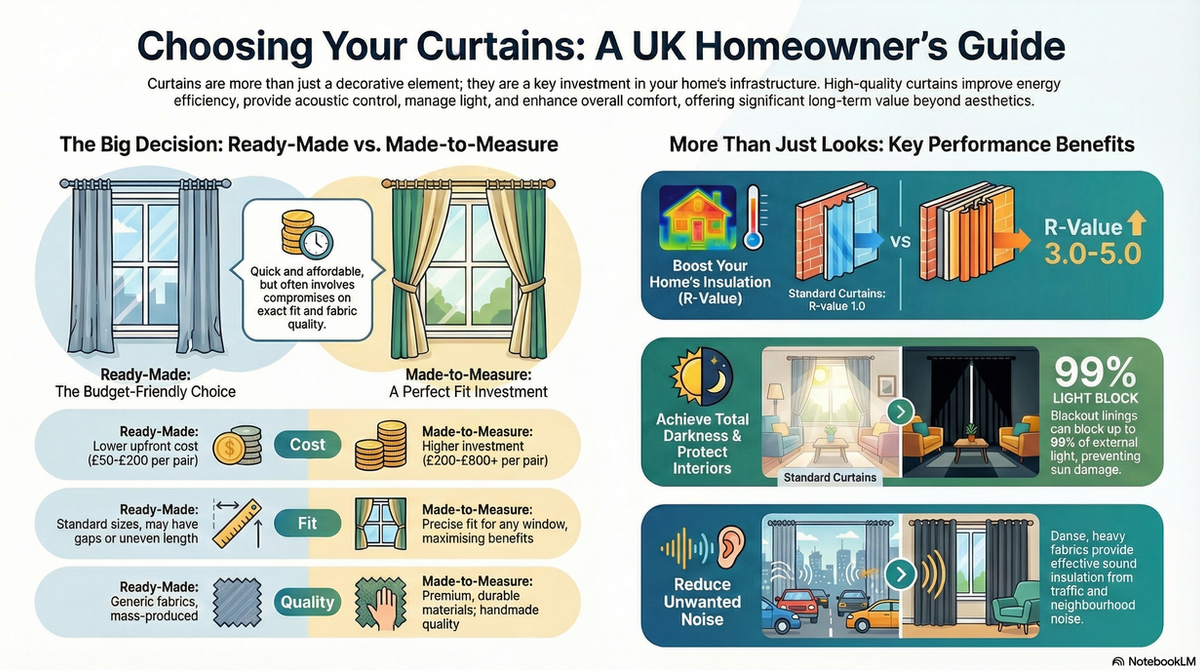
Curtains & Blinds explained
A professional installation doesn't just guarantee a level finish; it ensures that the fixings are appropriate for your specific wall type and that all modern safety regulations are strictly met. This guide covers everything you need to know about the costs, timelines, and technicalities of custom blind fitting in the UK.
The cost of fitting custom blinds varies depending on the complexity of the window (such as bays or skylights) and the type of blind being installed. Motorised systems and heavy wooden shutters typically command higher labour rates due to the technical setup involved.
| Item / Service | Low £ | High £ | Notes |
|---|---|---|---|
| Survey & Measuring Fee | £40 | £75 | Often deducted from the final bill if you order through the fitter. |
| Labour (per standard window) | £35 | £65 | Minimum call-out charges usually apply for single windows. |
| Motorised Setup (per blind) | £25 | £50 | Includes programming remotes and connecting to hubs. |
| Bay Window Surcharge | £60 | £120 | Covers the extra time for angled bracket alignment. |
| Consumables & Fixings | £10 | £25 | Heavy-duty anchors for plasterboard or concrete lintels. |
Prices generally include VAT. Expect to pay more in London and the South East, where hourly rates for specialist trades can be 20-30% higher than the national average.
While many homeowners feel confident installing a basic roller blind, custom blinds often require drilling into steel or concrete lintels, which can be difficult without a high-powered SDS drill and the correct bits. If your measurements are off by even 5mm, a custom-made blind may not fit at all, leaving you with an expensive mistake that cannot be returned.
Professional fitting is highly recommended for motorised systems, large conservatory roofs, and any installation involving young children to ensure full compliance with safety legislation.
Ask these questions before hiring:
It is rarely recommended. Even blinds from the same manufacturer often update their bracket designs, and using old fixings may void your warranty or compromise safety.
Yes. You should remove any items from the windowsill and move furniture at least one metre away from the window to give the fitter enough space for their ladder.
Yes, but it requires care. Specialist "No-Drill" blinds (like Perfect Fit or INTU) clip into the bead, while standard blinds require specific screws that won't damage the internal steel reinforcement of the frame.
Most modern custom blinds use internal rechargeable lithium-ion batteries that last 6-12 months per charge. Hard-wired versions require a 240v power supply nearby, usually installed by an electrician.
Since 2014, all blinds sold and installed in the UK must meet safety standards. This includes limits on cord lengths and the mandatory installation of safety devices to prevent strangulation hazards.
This guide was written with AI assistance and is intended for general information only. Prices are estimates based on UK averages and may vary by region. Always get at least three quotes and consult a qualified professional before starting any work.
Ask follow-ups in plain English. The AI explains options, sequencing and what to ask the curtains & blinds — so you walk in informed.
Installing conservatory blinds is one of the most effective ways for UK homeowners to reclaim their living space. While conservatories offer beautiful light, th...
READ GUIDE →GuideVenetian blinds are a staple in UK homes, offering a classic look with excellent light control. However, because they rely on a complex system of cords, pulleys...
READ GUIDE →GuideProfessional curtain installation is about more than just aesthetics; it ensures your window treatments are level, secure, and operate smoothly. For UK homeowne...
READ GUIDE →GuideA snapped or frayed curtain cord can render even the most expensive window dressings useless. In the UK, many homes still rely on corded tracks or Roman blind s...
READ GUIDE →GuideVertical blinds are a practical and popular choice for UK homes, particularly for large patio doors and bay windows. While they are durable, the moving parts wi...
READ GUIDE →GuideWooden shutters, often referred to as plantation shutters, are a premium window treatment that offers a timeless aesthetic for UK homes. Beyond their visual app...
READ GUIDE →