Instant
01 · Ask
Ask the AI a follow-up
Got more questions about motorised Blind Installation? Describe the bit you're unsure about — the AI explains options, sequencing and what to ask the curtains & blinds.

Wired or battery, Wi-Fi or RF — programmed and paired to your smart-home setup.
You've read the brief on motorised Blind Installation. Now lean on us to find the right curtains & blinds — and stay in control of the job.
Got more questions about motorised Blind Installation? Describe the bit you're unsure about — the AI explains options, sequencing and what to ask the curtains & blinds.
Costs, timelines, pitfalls and the right questions to ask before any curtains & blinds starts on motorised Blind Installation.
Itemised quotes from up to 3 local curtains & blindss on motorised Blind Installation — so you can compare like-for-like, not lump sums.
Ready when you are
Enter your postcode and get free quotes from local pros.
Four moves that separate a smooth job from a nightmare.
Thick masonry walls in older UK homes can block RF signals. You may need signal repeaters or a mesh network.
If the bracket isn't perfectly level, the fabric will drift to one side, eventually damaging the edges.
Cheap motors or poorly positioned solar chargers can lead to frequent failures. Always opt for high-capacity lithium-ion units.
Lower-quality motors can be surprisingly loud. Always ask to hear a sample motor before committing to a whole-house installation.
Indicative UK ranges and what affects price.
By job type
Quote spread is typically ± 18% — always get 3 quotes.
Curtains & Blinds quick-view
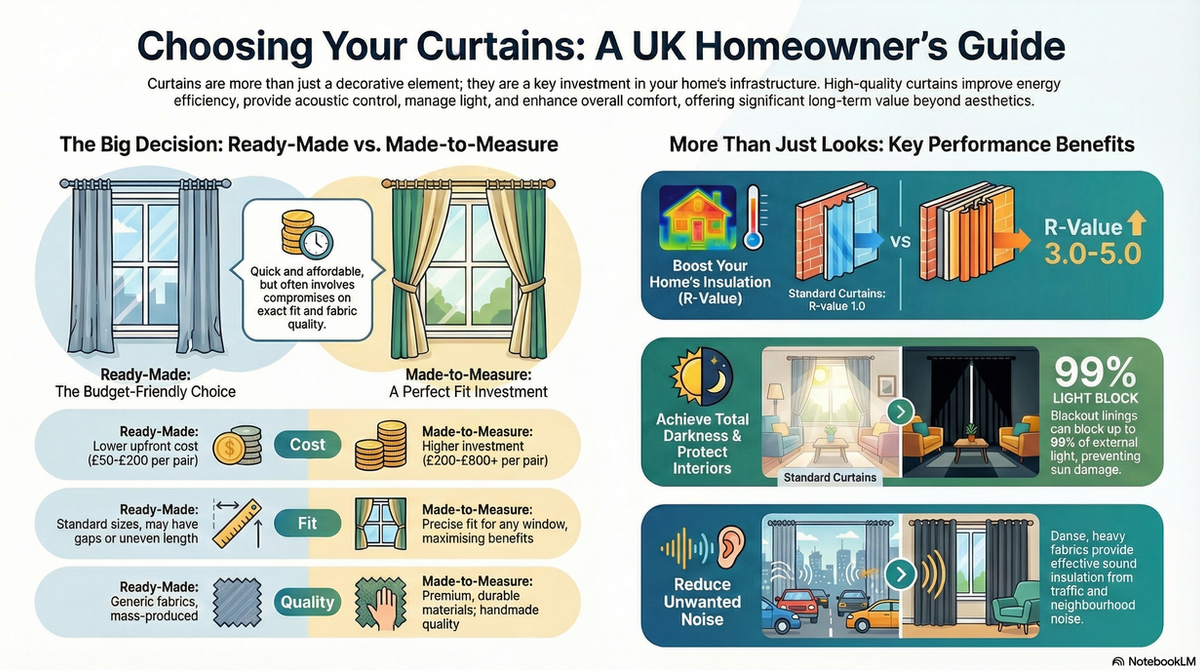
Curtains & Blinds explained
Whether you are looking for simple battery-operated rollers or a fully integrated smart home system, professional installation ensures your blinds operate smoothly and integrate seamlessly with your existing technology. This guide covers everything from hardware selection to the latest UK safety regulations.
Prices vary significantly based on the motor brand (such as Somfy or Louvolite), the fabric chosen, and the complexity of the power supply. Hardwired systems are more expensive upfront due to the need for an electrician but offer long-term reliability.
| Item | Low £ | High £ | Notes |
|---|---|---|---|
| Battery Motorised Blind (Complete) | £180 | £450 | Per window; includes motor and basic fabric. |
| Mains Powered Blind (Complete) | £300 | £650 | Per window; excludes electrical spur installation. |
| Smart Home Hub/Bridge | £60 | £200 | Required for app and voice control functionality. |
| Labour (Installation Only) | £60 | £120 | Per blind; rates vary by region and complexity. |
| Electrician (New Power Points) | £150 | £350 | Fixed fee for running cables to window locations. |
Note: Large bifold door installations or specialist "blackout" side-channel systems will sit at the higher end of these estimates. Always ensure quotes include VAT.
While DIY battery kits are available, professional installation is recommended for larger windows or integrated systems. A professional ensures the blind is perfectly level; even a 2mm tilt can cause "telescoping," where the fabric rolls unevenly and frays against the brackets.
If you opt for mains-powered blinds, UK law requires a qualified electrician to carry out the wiring to comply with Part P Building Regulations.
In many cases, yes. Retrofit kits are available for standard 32mm or 40mm roller tubes. However, if the blind is old or the tube is a non-standard size, it is usually more cost-effective to replace the entire unit.
Most modern lithium-ion motors require charging once every 6 to 12 months, based on two full cycles (up and down) per day. Solar-gain strips can extend this indefinitely in south-facing windows.
Battery-powered and solar blinds will continue to work normally. Hardwired mains blinds will stay in their current position until power is restored, unless they have a manual override (rare in domestic models).
Premium "Sonesse" or "Quiet" range motors operate at around 40-45dB, which is similar to a quiet refrigerator. Budget motors can be significantly louder and may vibrate through the wall if not mounted correctly.
Yes, provided you have a smart hub connected to your home Wi-Fi. You can use a smartphone app to operate the blinds from anywhere in the world, which is excellent for home security.
This guide was written with AI assistance and is intended for general information only. Prices are estimates based on UK averages and may vary by region. Always get at least three quotes and consult a qualified professional before starting any work.
Ask follow-ups in plain English. The AI explains options, sequencing and what to ask the curtains & blinds — so you walk in informed.
Installing conservatory blinds is one of the most effective ways for UK homeowners to reclaim their living space. While conservatories offer beautiful light, th...
READ GUIDE →GuideVenetian blinds are a staple in UK homes, offering a classic look with excellent light control. However, because they rely on a complex system of cords, pulleys...
READ GUIDE →GuideProfessional curtain installation is about more than just aesthetics; it ensures your window treatments are level, secure, and operate smoothly. For UK homeowne...
READ GUIDE →GuideA snapped or frayed curtain cord can render even the most expensive window dressings useless. In the UK, many homes still rely on corded tracks or Roman blind s...
READ GUIDE →GuideVertical blinds are a practical and popular choice for UK homes, particularly for large patio doors and bay windows. While they are durable, the moving parts wi...
READ GUIDE →GuideWooden shutters, often referred to as plantation shutters, are a premium window treatment that offers a timeless aesthetic for UK homes. Beyond their visual app...
READ GUIDE →