Instant
01 · Ask
Ask the AI a follow-up
Got more questions about stripping Old Paint? Describe the bit you're unsure about — the AI explains options, sequencing and what to ask the decorator.

Chemical, heat-gun or sanded — old layers removed without damaging the timber or plaster underneath.
You've read the brief on stripping Old Paint. Now lean on us to find the right decorator — and stay in control of the job.
Got more questions about stripping Old Paint? Describe the bit you're unsure about — the AI explains options, sequencing and what to ask the decorator.
Costs, timelines, pitfalls and the right questions to ask before any decorator starts on stripping Old Paint.
Itemised quotes from up to 3 local decorators on stripping Old Paint — so you can compare like-for-like, not lump sums.
Ready when you are
Enter your postcode and get free quotes from local pros.
Four moves that separate a smooth job from a nightmare.
Excessive heat scorches wood or melts uPVC. Use chemical strip on heat-sensitive substrates.
Wear gloves, eye protection, ventilation. Modern water-based strippers are safer but still caustic.
Dry sanding pre-1960s paint releases lead dust. Use wet methods only.
Multiple paint layers need multiple applications. Don't rush — let stripper work fully.
Indicative UK ranges and what affects price.
By job type
Quote spread is typically ± 18% — always get 3 quotes.
Decorator quick-view
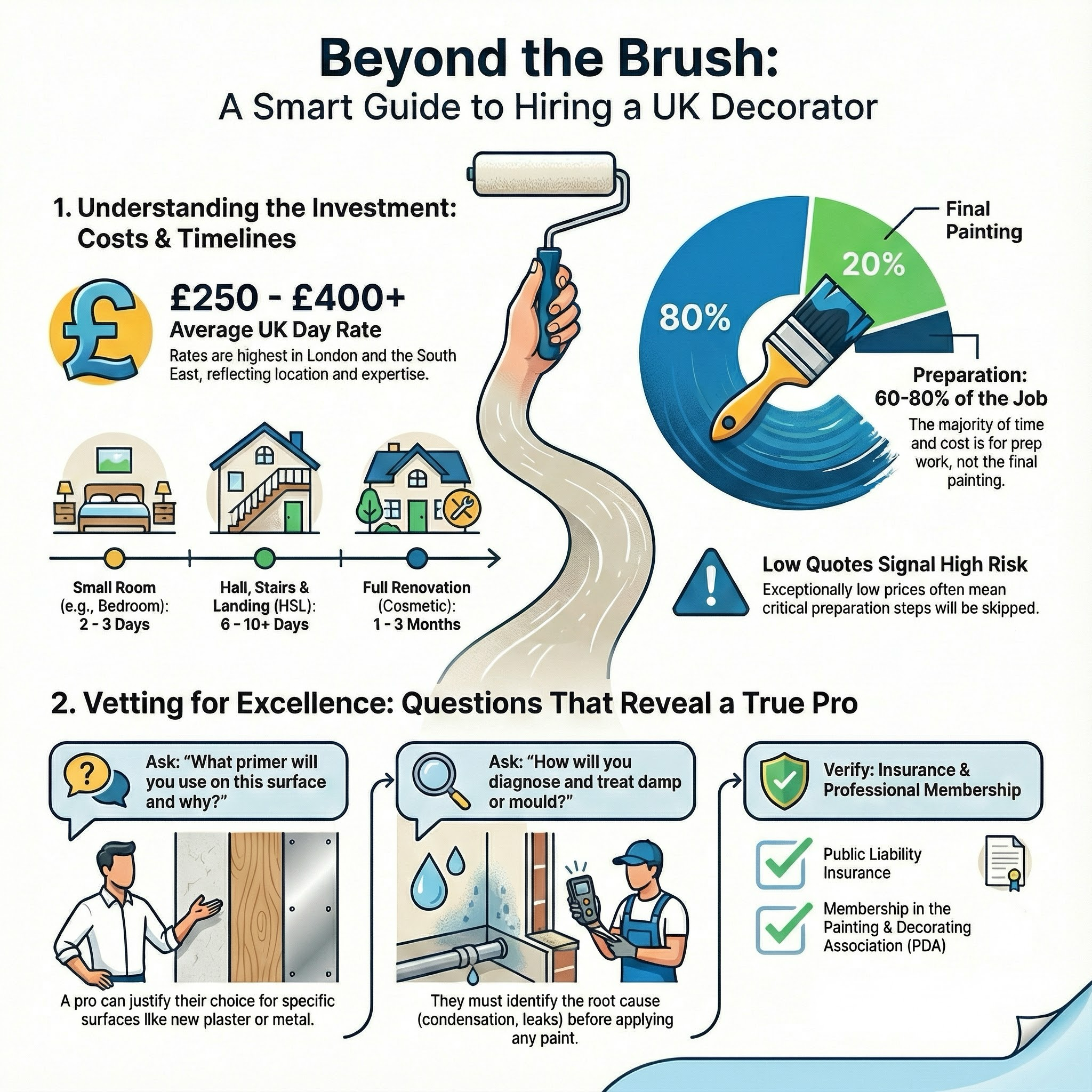
Decorator explained
Stripping old paint reveals original wood, removes failed coatings, or prepares a surface for a new finish. Expect to pay £15–£80 per m² for UK paint stripping depending on method, layer count, and lead-paint concerns.
Three main methods. Chemical stripping: water-based or solvent-based paste applied, allowed to soften (15 minutes to 24 hours), paint scraped off. Heat gun: hot air softens paint, scraped off with putty knife. Abrasive: sanding, scraping, or media-blasting (sand, soda, dry-ice). Method depends on substrate, layer count, and lead-paint presence (always test if pre-1960).
| Item | Low (£) | High (£) | Notes |
|---|---|---|---|
| Chemical stripper per litre | 15 | 40 | Peelaway, Strypa |
| Heat gun hire per day | 10 | 25 | Most homeowners own one |
| Skirting/architrave per metre | 10 | 30 | Stripping labour |
| Internal door strip | 80 | 250 | Including off-site option |
| Stair spindles per spindle | 15 | 40 | Fiddly, time-consuming |
| Soda blasting per m² | 25 | 60 | Off-site service |
| Lead paint test | 30 | 80 | One sample |
| Asbestos test (textured paint) | 30 | 80 | If pre-2000 Artex |
Single internal door: half to full day. Whole staircase including spindles: 1–2 days. Whole-room woodwork strip: 2–4 days.
DIY-able for small areas with chemical stripper or heat gun. Lead paint testing required for pre-1960s properties — wet sanding only. Professional service for stairs, spindles, or large jobs.
A specialist paint stripper or decorator. For lead paint, use a contractor familiar with CONIAC/HSE guidelines. Off-site soda blasting (eco-friendly, no chemicals) is a great option for doors and furniture.
Lead paint: pre-1960s painted surfaces likely contain lead. Wet methods only (no dry sanding). HSE guidelines apply. Asbestos: pre-2000 Artex may contain asbestos — test first, never dry-strip.
Chemical strippers (Peelaway, Strypa) for most situations. Heat gun for thicker built-up paint on wood. Soda blasting (off-site) for the cleanest job.
Pre-1960s: likely yes. Pre-1990s: possible. Get a £30 lead test if uncertain. Treat as lead and wet-method if not tested.
For modern paint, yes — wear a dust mask. For pre-1960s paint, never dry-sand — lead risk.
Yes, with proper technique. Don't hold too close (charring), wear eye protection (chips fly). Risk-assess for lead paint first.
Bicarbonate of soda media propelled at the surface — strips paint without damaging substrate. Eco-friendly, professional service.
£500–£1,500 professional including spindles, newel posts, handrail, treads (if exposed wood). DIY: 2–3 weekends with chemical stripper.
This guide was written with AI assistance and is intended for general information only. Prices are estimates based on UK averages and may vary by region. Always get at least three quotes and consult a qualified professional before starting any work.
Ask follow-ups in plain English. The AI explains options, sequencing and what to ask the decorator — so you walk in informed.
Interior painting transforms a room more than any other upgrade. UK costs per room, prep work and what professionals actually charge in 2026.
READ GUIDE →GuideExterior paint protects the building and refreshes the look. UK costs by house size, masonry vs render and what survives UK weather.
READ GUIDE →GuideWallpaper transforms rooms with pattern, texture and colour. UK costs per roll, prep work and matching pattern repeats.
READ GUIDE →GuideAirless spray gives a factory finish on woodwork and walls. UK costs, equipment and when spray beats brush-and-roller.
READ GUIDE →GuidePainting kitchen units transforms the kitchen at a fraction of replacement cost. UK costs, methods and what survives daily use.
READ GUIDE →GuideSkirting, architrave and doors deserve a proper paint job. UK costs, gloss vs eggshell and how to get a brush-mark-free finish.
READ GUIDE →