Instant
01 · Ask
Ask the AI a follow-up
Got more questions about crash barrier cutting? Describe the bit you're unsure about — the AI explains options, sequencing and what to ask the fencing & gates.

On-site cutting and modification of Armco / W-beam crash barriers — for installs, removals and alterations.
You've read the brief on crash barrier cutting. Now lean on us to find the right fencing & gates — and stay in control of the job.
Got more questions about crash barrier cutting? Describe the bit you're unsure about — the AI explains options, sequencing and what to ask the fencing & gates.
Costs, timelines, pitfalls and the right questions to ask before any fencing & gates starts on crash barrier cutting.
Itemised quotes from up to 3 local fencing & gatess on crash barrier cutting — so you can compare like-for-like, not lump sums.
Ready when you are
Enter your postcode and get free quotes from local pros.
Four moves that separate a smooth job from a nightmare.
Failing to treat the cut edge immediately leads to "bleeding" rust that ruins the barrier's appearance and strength.
DIYers often underestimate the danger of "metal fume fever" caused by inhaling zinc vapours during hot cutting.
Removing a section of a tensioned barrier without proper anchoring can cause the remaining sections to sag or buckle.
Poorly finished cuts create significant injury risks for pedestrians or pets.
Indicative UK ranges and what affects price.
By job type
Quote spread is typically ± 18% — always get 3 quotes.
Fencing & Gates quick-view
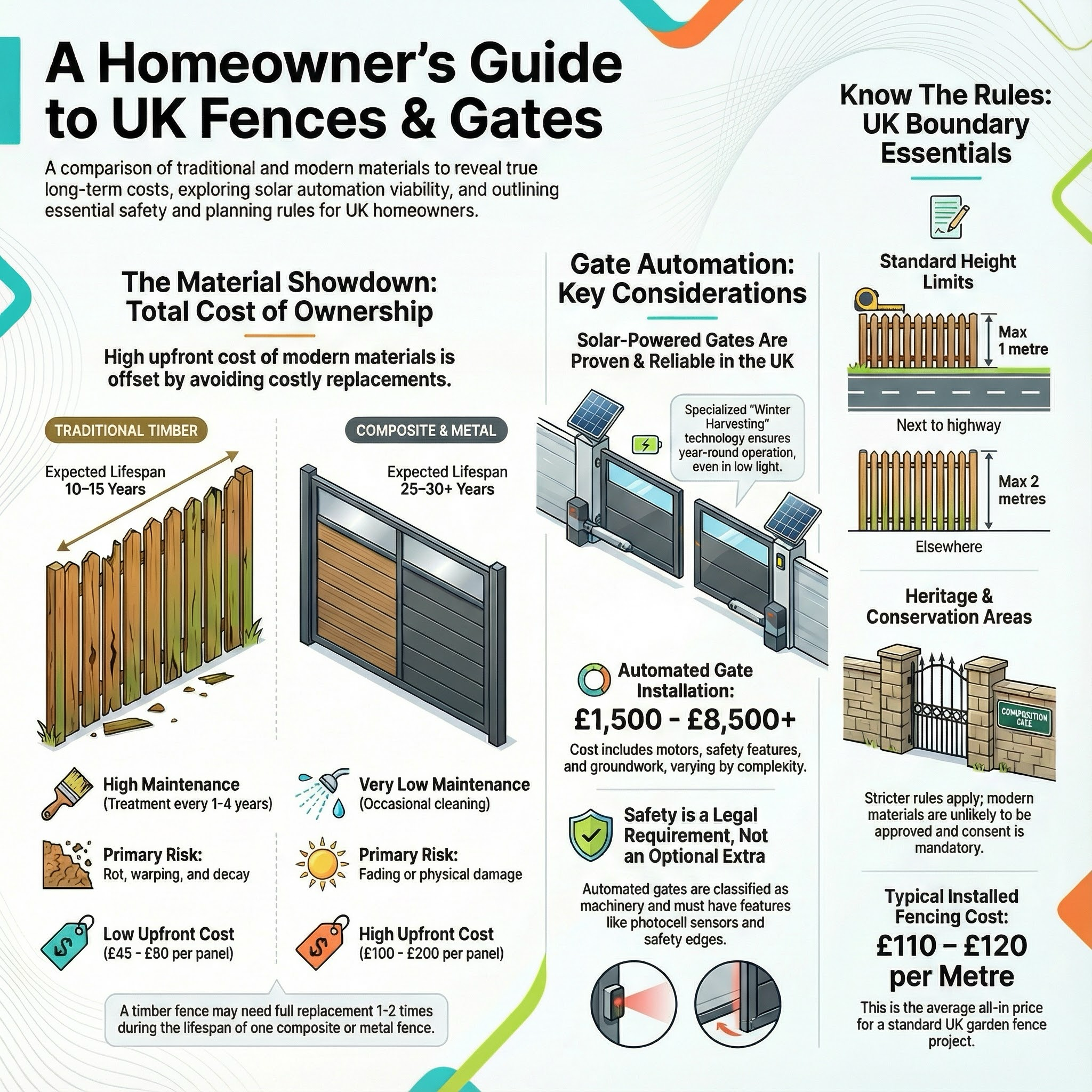
Fencing & Gates explained
Working with heavy-gauge galvanised steel requires specialist equipment and strict safety protocols. This guide outlines the process, costs, and essential regulations for homeowners and commercial site managers looking to repair or modify crash barriers in the UK.
The cost of crash barrier cutting depends heavily on the thickness of the steel and whether the work is on a private driveway or a public highway requiring traffic management.
| Item | Low £ | High £ | Notes |
|---|---|---|---|
| Call-out / Minimum Charge | £100 | £180 | Covers travel and first hour on site. |
| Labour (per hour) | £60 | £110 | Higher rates for night or weekend work. |
| Materials (Primer/Fixings) | £40 | £120 | Zinc-rich paint and high-tensile bolts. |
| Waste Disposal | £30 | £90 | Per section; scrap value may offset some cost. |
| Traffic Management | £250 | £1,500 | Required for any work near public roads. |
Expect to pay more in London and the South East. If the barrier is part of a "tensioned" system, the labour costs will increase as the system must be safely de-tensioned before any cutting begins.
Professional intervention is highly recommended for crash barrier work. Armco barriers are made from heavy-gauge steel that is difficult to cut with standard DIY tools. More importantly, cutting galvanised steel releases toxic zinc oxide fumes which require specialist respiratory protection.
Cutting a barrier without the correct knowledge can compromise the structural integrity of the entire run, leaving your property unprotected in the event of an impact.
Look for a contractor who specialises in "Armco" installation or metal fabrication. General fencing contractors may not have the heavy-duty cutting equipment required for thick-gauge steel.
While possible, it is extremely slow and dangerous. You will go through many discs, and the heat generated can damage the surrounding galvanised coating. Professionals use high-torque petrol saws or plasma cutters for a cleaner, safer finish.
No permit is required for work on private land. However, if the barrier was a condition of your planning permission (e.g., for a new build near a road), you should check with your local planning office before removing it.
Crash barriers are high-quality steel and are 100% recyclable. Your contractor should take them to a scrap metal merchant. If you have a large amount, the scrap value might even cover the cost of the disposal fee.
After cutting and priming, professionals install "end caps" or "fish tails." These are rounded sections that bolt onto the cut end to hide the raw edge and provide a safer, more aesthetic finish.
If done correctly and re-terminated with a post, the structural integrity remains. If you simply cut a hole in the middle of a run without adding supporting posts, the barrier will likely fail if hit by a vehicle.
This guide was written with AI assistance and is intended for general information only. Prices are estimates based on UK averages and may vary by region. Always get at least three quotes and consult a qualified professional before starting any work.
Ask follow-ups in plain English. The AI explains options, sequencing and what to ask the fencing & gates — so you walk in informed.
A high-quality garden fence is essential for UK homeowners, providing privacy, security, and a vital windbreak against the British weather. Beyond aesthetics, a...
READ GUIDE →GuideA well-installed wooden gate is more than just a boundary; it provides essential security, privacy, and kerb appeal for your property. In the UK, where wind and...
READ GUIDE →GuideA high-quality fence is more than just a boundary; it provides security, privacy, and essential shelter for your garden. In the UK, our fences must withstand ev...
READ GUIDE →GuideA sturdy fence is the backbone of UK garden security, privacy, and aesthetic appeal. Whether your panels have succumbed to a winter gale or your posts have fina...
READ GUIDE →GuideA well-installed front fence does more than just mark your property boundary; it enhances kerb appeal, provides security, and keeps pets or children safe from t...
READ GUIDE →GuideTrellis installation is a versatile way for UK homeowners to enhance garden privacy, support climbing plants, and create decorative zones within an outdoor spac...
READ GUIDE →