Instant
01 · Ask
Ask the AI a follow-up
Got more questions about wooden Gate Installation? Describe the bit you're unsure about — the AI explains options, sequencing and what to ask the fencing & gates.

Garden, side or driveway timber gate — supplied, hung and finished with hardware fitted.
You've read the brief on wooden Gate Installation. Now lean on us to find the right fencing & gates — and stay in control of the job.
Got more questions about wooden Gate Installation? Describe the bit you're unsure about — the AI explains options, sequencing and what to ask the fencing & gates.
Costs, timelines, pitfalls and the right questions to ask before any fencing & gates starts on wooden Gate Installation.
Itemised quotes from up to 3 local fencing & gatess on wooden Gate Installation — so you can compare like-for-like, not lump sums.
Ready when you are
Enter your postcode and get free quotes from local pros.
Four moves that separate a smooth job from a nightmare.
Often caused by undersized hinges or a gate frame that lacks a proper diagonal "brace" (it should always point up from the bottom hinge side).
Gates fitted too tightly in summer may stick in winter when the wood absorbs moisture; a 10mm gap is the minimum requirement.
Posts that aren't set deep enough (minimum 1/3 of the post length) will lean over time due to the weight of the gate.
Using cheap, non-galvanised screws will result in black streaks on the timber and eventual hinge failure.
Indicative UK ranges and what affects price.
By job type
Quote spread is typically ± 18% — always get 3 quotes.
Fencing & Gates quick-view
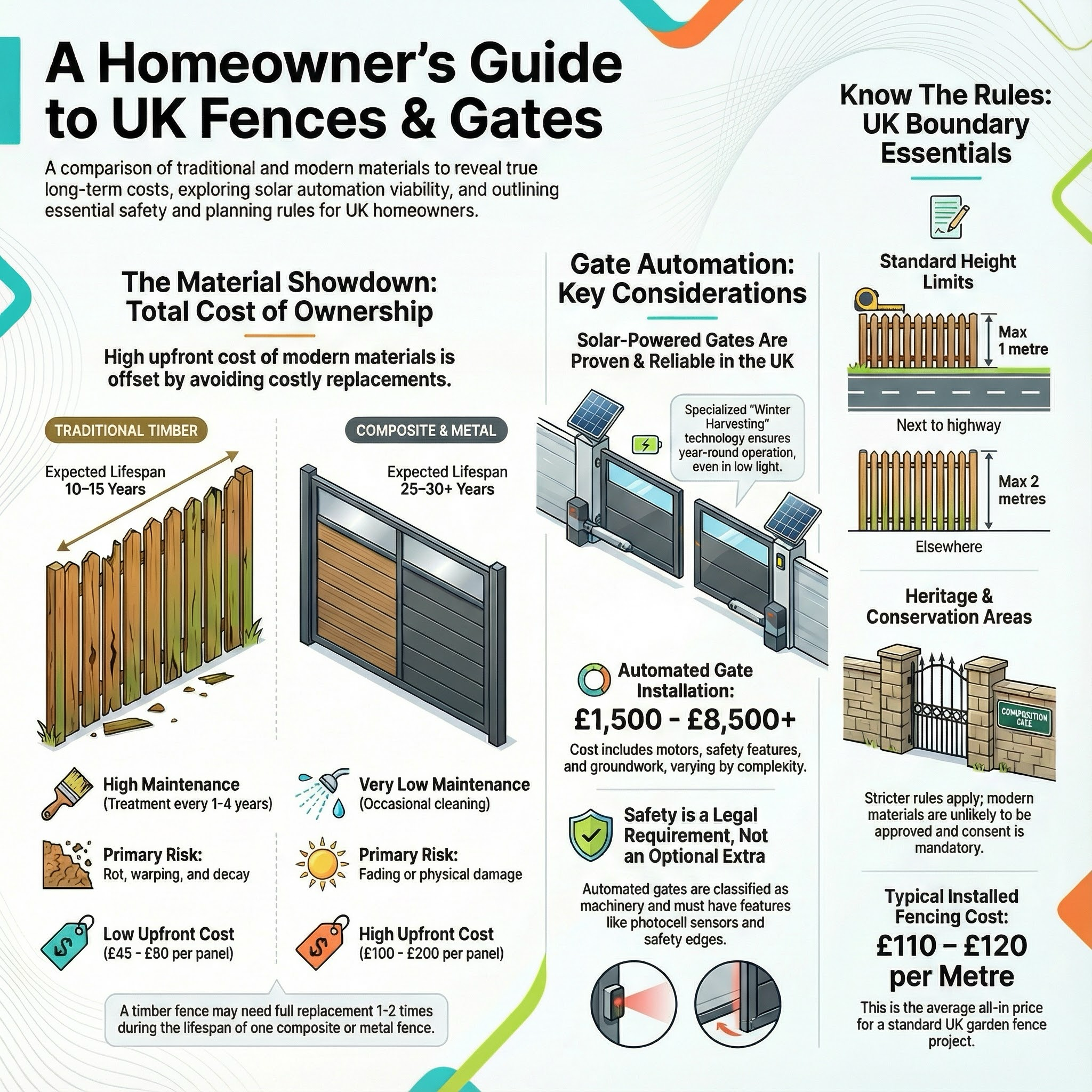
Fencing & Gates explained
Whether you are replacing a simple side gate or installing grand driveway entrance gates, understanding the materials and labour involved ensures a long-lasting result. This guide covers everything from timber selection to the latest UK pricing for a professional installation.
| Item | Low £ | High £ | Notes |
|---|---|---|---|
| Standard Softwood Side Gate | £250 | £480 | Includes basic gate, hardware, and labour. |
| Hardwood Side Gate (Iroko/Oak) | £600 | £1,100 | Premium timber with superior longevity and rot resistance. |
| Double Driveway Gates (Softwood) | £1,000 | £2,200 | Pair of gates including heavy-duty 150mm posts. |
| Automated Driveway Gates (Hardwood) | £4,500 | £8,500+ | Includes underground or surface motors and safety sensors. |
| Labour Daily Rate | £200 | £400 | Per person; varies significantly by UK region. |
| Waste Disposal | £40 | £80 | Removal of old gate and soil from post holes. |
Prices are heavily influenced by your choice of timber. Pressure-treated softwood (UC4 grade) is the most affordable option, while hardwoods like Oak or Iroko offer significantly better resistance to rot but come at a premium price point due to material costs and weight.
Pro Tip: Always ensure your installer uses galvanised or stainless steel hardware. Standard steel will rust quickly in the UK climate, leading to unsightly "bleeding" stains on the wood and mechanical failure.
Installing a lightweight garden gate is a manageable DIY task for those comfortable with a spirit level and drill. However, larger gates are deceptively heavy and require two people to hang safely and accurately to avoid injury or damage.
Professional installers ensure that the "fall" of the gate is perfect, preventing it from swinging open or shut on its own. If you are installing automated driveway gates, you must hire a professional to ensure compliance with UK safety standards (BS EN 12453) regarding crush protection and force testing.
Pressure-treated Redwood (softwood) is the best balance of cost and durability. For a premium, long-lasting gate, Iroko or Western Red Cedar are excellent as they contain natural oils that resist rot without constant maintenance.
If the wood is pressure-treated (green or brown tint), you should wait 2–4 months for the timber to "season" and dry out before applying paint or oil. If it is untreated hardwood, it should be oiled or sealed immediately after installation.
This is usually due to the gate "dropping" because the hinges have loosened or the post has shifted. Adding a "gate wheel" or adjusting the tension on adjustable hinges can often solve this without replacing the whole unit.
For a standard 6ft gate, posts should be at least 600mm (2 feet) into the ground. For heavy driveway gates, this should increase to 900mm or more to handle the leverage and weight of the swinging leaf.
Yes, provided the gate is "sturdy" enough to handle the force of the motors. Most standard "featheredge" gates are too flimsy; you typically need a heavy-duty frame with mortise and tenon joints for automation to be successful.
You should check the hardware and lubricate hinges once a year. Depending on the finish, a fresh coat of UV-resistant oil or stain should be applied every 2–3 years to prevent the wood from greying or cracking.
This guide was written with AI assistance and is intended for general information only. Prices are estimates based on UK averages and may vary by region. Always get at least three quotes and consult a qualified professional before starting any work.
Ask follow-ups in plain English. The AI explains options, sequencing and what to ask the fencing & gates — so you walk in informed.
A high-quality garden fence is essential for UK homeowners, providing privacy, security, and a vital windbreak against the British weather. Beyond aesthetics, a...
READ GUIDE →GuideA high-quality fence is more than just a boundary; it provides security, privacy, and essential shelter for your garden. In the UK, our fences must withstand ev...
READ GUIDE →GuideCrash barrier cutting, often referred to as Armco cutting, is a specialist task typically required when a barrier has been damaged by a vehicle or needs modifyi...
READ GUIDE →GuideA sturdy fence is the backbone of UK garden security, privacy, and aesthetic appeal. Whether your panels have succumbed to a winter gale or your posts have fina...
READ GUIDE →GuideA well-installed front fence does more than just mark your property boundary; it enhances kerb appeal, provides security, and keeps pets or children safe from t...
READ GUIDE →GuideTrellis installation is a versatile way for UK homeowners to enhance garden privacy, support climbing plants, and create decorative zones within an outdoor spac...
READ GUIDE →