Instant
01 · Ask
Ask the AI a follow-up
Got more questions about armchair repair and recovering? Describe the bit you're unsure about — the AI explains options, sequencing and what to ask the furniture repair.

Frame, springs and upholstery — restored or fully recovered in your chosen fabric.
You've read the brief on armchair repair and recovering. Now lean on us to find the right furniture repair — and stay in control of the job.
Got more questions about armchair repair and recovering? Describe the bit you're unsure about — the AI explains options, sequencing and what to ask the furniture repair.
Costs, timelines, pitfalls and the right questions to ask before any furniture repair starts on armchair repair and recovering.
Itemised quotes from up to 3 local furniture repairs on armchair repair and recovering — so you can compare like-for-like, not lump sums.
Ready when you are
Enter your postcode and get free quotes from local pros.
Four moves that separate a smooth job from a nightmare.
On striped or checked fabrics, poor alignment across the cushions and backrest is a sign of amateur work.
Using cheap foam or failing to replace degraded "crumbly" foam leads to an uncomfortable and uneven finish.
Failing to tighten the frame before adding new fabric means the chair will remain noisy and unstable.
Fabric that is too loose will "puddle" and wrinkle within weeks; too tight, and the seams may burst.
Indicative UK ranges and what affects price.
By job type
Quote spread is typically ± 18% — always get 3 quotes.
Furniture Repair quick-view
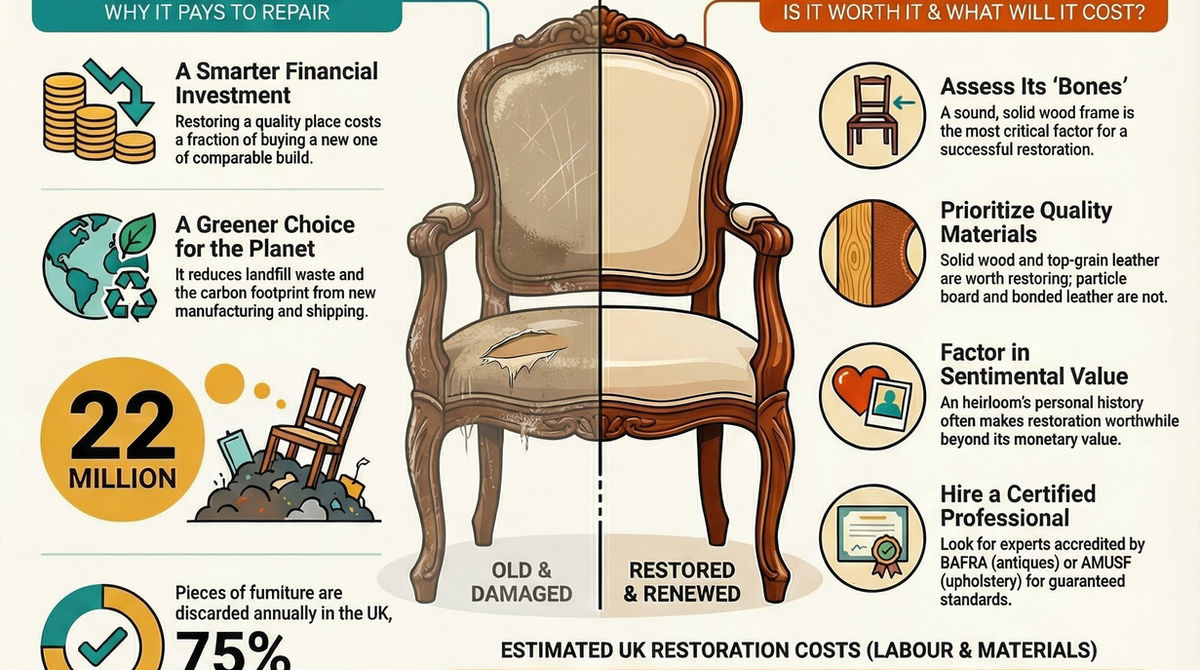
Whether it is a family heirloom or a high-quality charity shop find, professional upholstery can breathe new life into a tired piece. This guide covers the essential costs, timelines, and regulations involved in armchair restoration for UK homeowners in 2025.
The total cost of armchair recovery is split between specialist labour and material choices. While labour rates are relatively stable, your choice of fabric can significantly swing the final price.
| Item | Low £ | High £ | Notes |
|---|---|---|---|
| Standard Armchair (Labour) | £350 | £600 | Excludes fabric; includes stripping and re-covering. |
| Wingback or Club Chair (Labour) | £500 | £850 | Higher cost due to complex curves and wings. |
| Upholstery Fabric (per metre) | £30 | £150+ | Most armchairs require 5 to 7 metres. |
| Replacement Foam & Wadding | £60 | £180 | High-density reflex foam or luxury fillings. |
| Spring & Webbing Restoration | £80 | £250 | Full rebuild of the seat's internal support. |
| Collection & Delivery | £40 | £120 | Varies by distance and vehicle requirements. |
Note: Complex pattern matching (such as large florals or tartans) often requires 15-20% more fabric and increased labour time. Always allow for a 10% contingency for unforeseen frame repairs once the old fabric is removed.
While basic "staple-over" projects are possible for beginners, professional upholstery is a highly skilled trade. Achieving the correct tension, perfectly straight seams, and symmetrical pattern matching requires years of experience and specialist tools like pneumatic staple guns and webbing stretchers.
Professional Tip: If your chair is an antique or has sentimental value, DIY attempts can often decrease its value or lead to structural failure. A professional will also ensure the piece meets modern UK fire safety standards.
Domestic upholstery in the UK is governed by the Furniture and Furnishings (Fire) (Safety) Regulations 1988. These are some of the strictest standards in the world.
Reupholstering a high-quality chair usually costs similar to or slightly more than a mid-range new chair. However, the result is often superior in quality to modern "fast furniture" and is tailored exactly to your style.
Most standard armchairs require between 5 and 7 metres of fabric. Wingback chairs or those with extra cushions may require up to 8 or 9 metres, especially if there is a large pattern repeat to match.
This measures the durability of the fabric. For a domestic armchair used daily, you should look for a fabric with a Martindale rating of at least 20,000–25,000 rubs to ensure it doesn't wear thin quickly.
Yes, leather chairs can be converted to fabric. The process is the same, though the upholsterer may need to add extra padding layers, as leather is thicker and hides frame contours differently than fabric.
Most upholsterers prefer to supply the fabric as they can vouch for its quality and fire safety compliance. If you provide your own, ensure it is specifically rated for upholstery and not just "curtain weight."
This guide was written with AI assistance and is intended for general information only. Prices are estimates based on UK averages and may vary by region. Always get at least three quotes and consult a qualified professional before starting any work.
Ask follow-ups in plain English. The AI explains options, sequencing and what to ask the furniture repair — so you walk in informed.
Restoring a cherished piece of furniture is often more cost-effective and sustainable than buying new. Whether it is a family heirloom or a high-quality find th...
READ GUIDE →GuideTable revarnishing is one of the most effective ways to breathe new life into tired furniture. Whether it is a cherished family heirloom, a sturdy oak dining ta...
READ GUIDE →GuideA high-quality sofa is often a significant investment, making professional repair a far more sustainable and cost-effective choice than replacement. Whether it ...
READ GUIDE →GuideA coffee table is often the focal point of a British living room, but years of tea spills, hot mugs, and general wear can leave it looking tired. Restoring a hi...
READ GUIDE →GuideMoth damage can be a distressing discovery for UK homeowners, often affecting expensive wool carpets, heirloom upholstery, or high-end cashmere garments. While ...
READ GUIDE →GuideReupholstering a cherished armchair is a sustainable way to breathe new life into high-quality furniture that has seen better days. Many older UK-made chairs fe...
READ GUIDE →