Instant
01 · Ask
Ask the AI a follow-up
Got more questions about armchair Repair? Describe the bit you're unsure about — the AI explains options, sequencing and what to ask the furniture repair.

Wonky leg, broken spring or sagging cushion — fixed on-site or workshop-restored.
You've read the brief on armchair Repair. Now lean on us to find the right furniture repair — and stay in control of the job.
Got more questions about armchair Repair? Describe the bit you're unsure about — the AI explains options, sequencing and what to ask the furniture repair.
Costs, timelines, pitfalls and the right questions to ask before any furniture repair starts on armchair Repair.
Itemised quotes from up to 3 local furniture repairs on armchair Repair — so you can compare like-for-like, not lump sums.
Ready when you are
Enter your postcode and get free quotes from local pros.
Four moves that separate a smooth job from a nightmare.
This occurs when the foam has lost its "memory" or the webbing has stretched, causing you to feel the frame when sitting.
Usually caused by a single snapped spring or a collapsed corner block within the timber frame.
Often a sign of "bonded leather" failing; a professional can sometimes stabilise this, but full panel replacement is often better.
Squeaking or grinding usually indicates a lack of lubrication or a bent metal linkage that is rubbing against the frame.
Indicative UK ranges and what affects price.
By job type
Quote spread is typically ± 18% — always get 3 quotes.
Furniture Repair quick-view
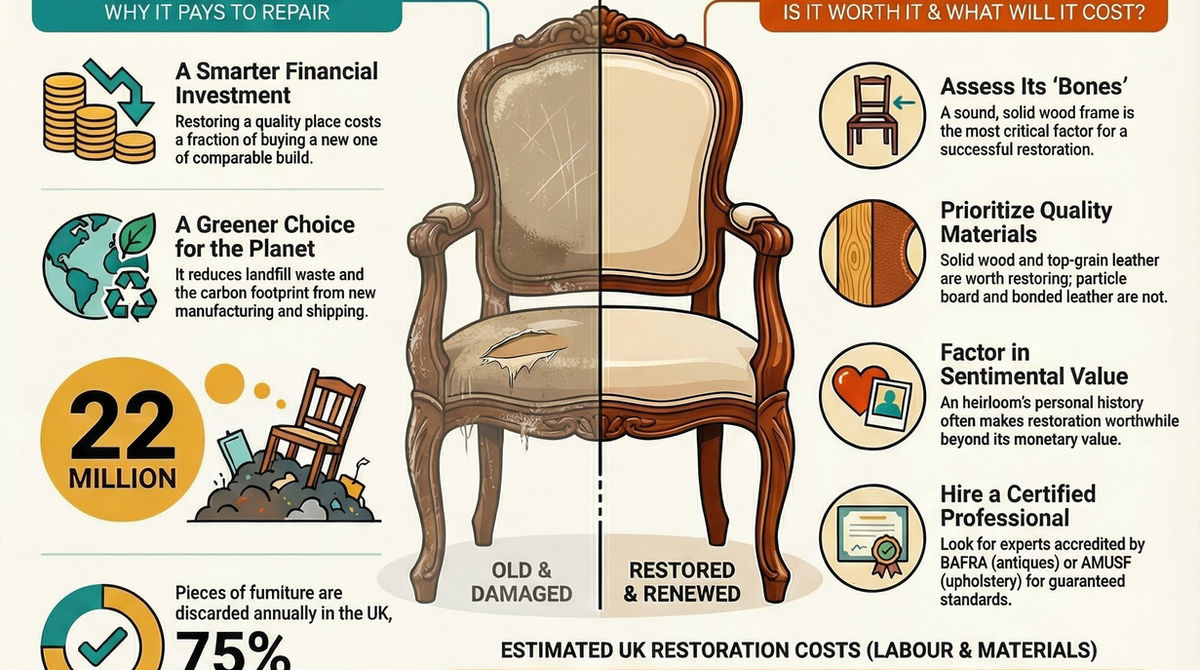
Restoring an armchair not only preserves its comfort and aesthetic value but also ensures it remains safe for use. From structural frame reinforcements to foam density upgrades, modern restoration techniques can make an old chair feel better than the day it was first purchased.
The cost of armchair repair depends heavily on the quality of materials used and whether the work can be completed in your home or requires a workshop visit. Prices below include VAT and reflect standard 2025/26 UK rates.
| Item | Low £ | High £ | Notes |
|---|---|---|---|
| Call-out / Assessment Fee | £50 | £100 | Often deducted from the final bill if work proceeds. |
| Spring or Webbing Repair | £80 | £160 | Includes materials and labour for a standard seat base. |
| Seat Foam Replacement | £70 | £130 | High-density foam with dacron wrap for longevity. |
| Recliner Cable/Handle Fix | £90 | £180 | Includes parts for most major UK brands. |
| Leather Scratch/Tear Repair | £60 | £150 | Includes cleaning, filling, and colour-matching. |
| Full Frame Stabilisation | £120 | £250 | Involves stripping back and re-gluing the main structure. |
Premium fabrics, genuine leather hides, and complex electric motors will increase material costs. Additionally, specialists in London and the South East typically charge 20-30% more for labour than those in the North or Midlands.
Homeowners can easily handle basic maintenance, such as tightening screw-in legs or using a leather cleaning kit. However, structural repairs and spring tensioning should be left to the experts. High-tension springs can be dangerous if they snap during a DIY attempt, and improper adhesive use can permanently damage timber frames.
Note: If your chair is an electric recliner, all electrical repairs must be carried out by a professional to ensure the motor and wiring comply with UK safety standards.
All furniture repairs in the UK must adhere to strict safety standards to protect your home and family. Professional upholsterers are required to follow these guidelines:
If the chair has a solid hardwood frame, it is almost always worth repairing. Modern "budget" chairs often use chipboard or plywood, which may not be worth the labour cost, but quality furniture will last decades with professional maintenance.
Yes. This is usually caused by stretched webbing or a detached spring. A professional can strip the base and install new, high-tension supports to restore the original seat height and firmness.
Yes, technicians use a flexible filler to plug the puncture marks, followed by a colour-matched dye and a protective topcoat to blend the repair with the rest of the chair.
It will likely feel firmer initially. You can choose the density of the foam; "Soft" is best for back cushions, while "Firm" or "Medium-High Density" is recommended for seat pads to prevent future sagging.
Most repairers carry a range of standard fabric books. However, if you want an exact match for a patterned or unique fabric, you may need to source a "half-metre" from the original manufacturer.
If the chair is plugged in but makes no sound when the button is pressed, it is likely the transformer or motor. If it hums but doesn't move, there may be an obstruction in the metal mechanism.
This guide was written with AI assistance and is intended for general information only. Prices are estimates based on UK averages and may vary by region. Always get at least three quotes and consult a qualified professional before starting any work.
Ask follow-ups in plain English. The AI explains options, sequencing and what to ask the furniture repair — so you walk in informed.
Restoring a cherished piece of furniture is often more cost-effective and sustainable than buying new. Whether it is a family heirloom or a high-quality find th...
READ GUIDE →GuideTable revarnishing is one of the most effective ways to breathe new life into tired furniture. Whether it is a cherished family heirloom, a sturdy oak dining ta...
READ GUIDE →GuideA high-quality sofa is often a significant investment, making professional repair a far more sustainable and cost-effective choice than replacement. Whether it ...
READ GUIDE →GuideA coffee table is often the focal point of a British living room, but years of tea spills, hot mugs, and general wear can leave it looking tired. Restoring a hi...
READ GUIDE →GuideMoth damage can be a distressing discovery for UK homeowners, often affecting expensive wool carpets, heirloom upholstery, or high-end cashmere garments. While ...
READ GUIDE →GuideReupholstering a cherished armchair is a sustainable way to breathe new life into high-quality furniture that has seen better days. Many older UK-made chairs fe...
READ GUIDE →