Instant
01 · Ask
Ask the AI a follow-up
Got more questions about chair cover replacement? Describe the bit you're unsure about — the AI explains options, sequencing and what to ask the furniture repair.

Removable chair covers — measured, made, fitted, hand-finished. Refresh without reupholstering.
You've read the brief on chair cover replacement. Now lean on us to find the right furniture repair — and stay in control of the job.
Got more questions about chair cover replacement? Describe the bit you're unsure about — the AI explains options, sequencing and what to ask the furniture repair.
Costs, timelines, pitfalls and the right questions to ask before any furniture repair starts on chair cover replacement.
Itemised quotes from up to 3 local furniture repairs on chair cover replacement — so you can compare like-for-like, not lump sums.
Ready when you are
Enter your postcode and get free quotes from local pros.
Four moves that separate a smooth job from a nightmare.
Using non-pre-shrunk fabrics for loose covers can lead to them becoming impossible to refit after the first wash.
Failing to "centre" a large floral or geometric pattern results in a lopsided, unprofessional appearance.
Putting a beautiful new cover over collapsed foam or broken springs is a waste of money; always address the "innards" first.
Choosing a thin "curtain weight" fabric for a high-traffic seat will lead to premature thinning and tearing.
Indicative UK ranges and what affects price.
By job type
Quote spread is typically ± 18% — always get 3 quotes.
Furniture Repair quick-view
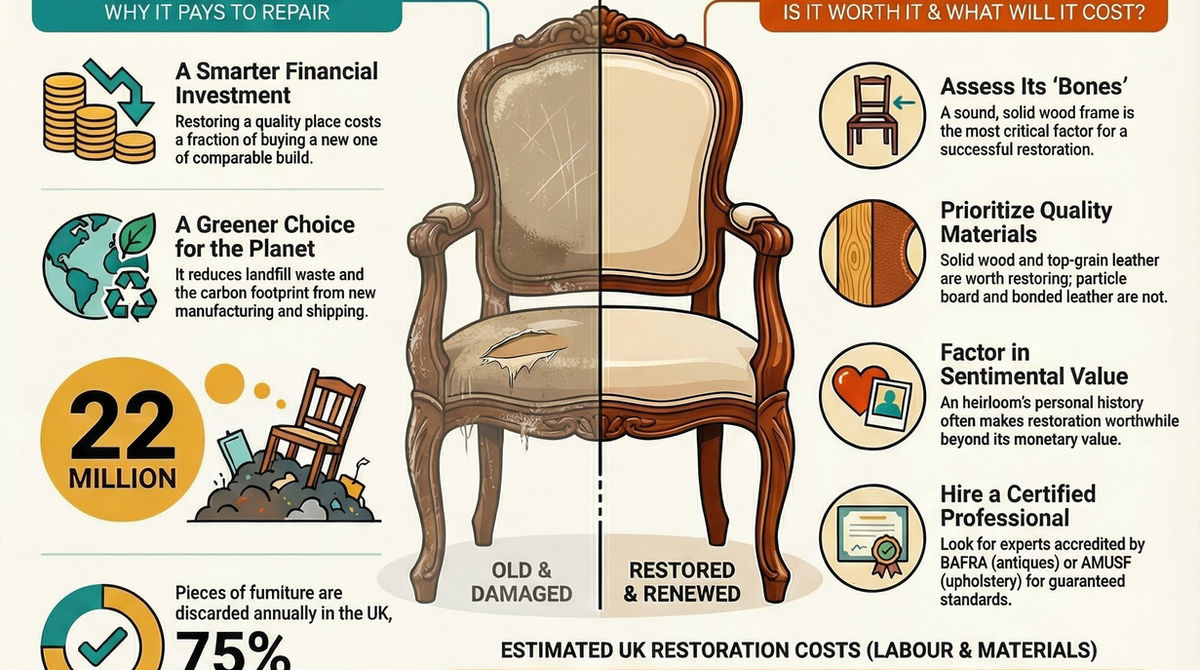
In the UK, this work ranges from simple loose slipcovers to fixed upholstery replacements that require precision tensioning and specialist tools. A well-executed cover replacement not only improves aesthetics but also ensures your furniture remains comfortable and compliant with modern safety standards.
Prices for chair cover replacement vary significantly based on the size of the chair and the quality of the fabric chosen. The following estimates include 2025 UK labour rates and VAT.
| Item | Low £ | High £ | Notes |
|---|---|---|---|
| Dining Chair (Seat Only) | £60 | £120 | Simple wrap-and-staple fitting. |
| Dining Chair (Back & Seat) | £150 | £280 | Includes more complex sewing. |
| Armchair (Fixed Cover) | £350 | £750 | Labour only; fabric is additional. |
| Bespoke Loose Slipcover | £250 | £500 | Removable and washable options. |
| Fabric (per metre) | £25 | £120+ | Highly dependent on brand and durability. |
| Foam Replacement | £30 | £90 | Per cushion, depending on density. |
Factors affecting the final bill include the complexity of the chair's shape, the need for pattern matching (which requires more fabric), and whether the internal fillings or springs require repair before the new cover is fitted.
While basic dining chair pads are a manageable DIY project with a heavy-duty stapler, complex armchairs or antique pieces should be left to professionals. Achieving the correct tension is difficult for beginners, and poorly fitted covers will sag or tear within months.
Expert Tip: Professional upholsterers ensure that all materials used meet the UK Furniture and Furnishings (Fire Safety) Regulations, which is vital for insurance and resale purposes.
For high-quality or antique furniture, recovering is almost always better value than buying a modern equivalent of the same standard. However, for budget flat-pack furniture, the labour costs of professional upholstery often exceed the cost of a new item.
Typically, a standard armchair requires between 5 and 7 metres of fabric. This increases if the fabric has a large pattern repeat that needs matching across different sections of the chair.
This is generally not recommended. Removing the old cover allows the tradesperson to inspect the frame and ensures the new fabric sits correctly without added bulk or hygiene issues from old dust and allergens.
Upholstery is fixed permanently to the frame using staples or tacks. Loose covers (slipcovers) are removable, usually secured with zips or ties, making them easier to clean but often offering a slightly more relaxed fit.
Most upholsterers can supply fabric from trade books, which ensures the material is fit for purpose. If you provide your own, the tradesperson may charge a "cutting fee" and will require proof that the fabric meets UK fire safety standards.
This guide was written with AI assistance and is intended for general information only. Prices are estimates based on UK averages and may vary by region. Always get at least three quotes and consult a qualified professional before starting any work.
Ask follow-ups in plain English. The AI explains options, sequencing and what to ask the furniture repair — so you walk in informed.
Restoring a cherished piece of furniture is often more cost-effective and sustainable than buying new. Whether it is a family heirloom or a high-quality find th...
READ GUIDE →GuideTable revarnishing is one of the most effective ways to breathe new life into tired furniture. Whether it is a cherished family heirloom, a sturdy oak dining ta...
READ GUIDE →GuideA high-quality sofa is often a significant investment, making professional repair a far more sustainable and cost-effective choice than replacement. Whether it ...
READ GUIDE →GuideA coffee table is often the focal point of a British living room, but years of tea spills, hot mugs, and general wear can leave it looking tired. Restoring a hi...
READ GUIDE →GuideMoth damage can be a distressing discovery for UK homeowners, often affecting expensive wool carpets, heirloom upholstery, or high-end cashmere garments. While ...
READ GUIDE →GuideReupholstering a cherished armchair is a sustainable way to breathe new life into high-quality furniture that has seen better days. Many older UK-made chairs fe...
READ GUIDE →