Instant
01 · Ask
Ask the AI a follow-up
Got more questions about chair refinishing? Describe the bit you're unsure about — the AI explains options, sequencing and what to ask the furniture repair.

Stripped, sanded, stained and lacquered or oiled — restored to factory finish.
You've read the brief on chair refinishing. Now lean on us to find the right furniture repair — and stay in control of the job.
Got more questions about chair refinishing? Describe the bit you're unsure about — the AI explains options, sequencing and what to ask the furniture repair.
Costs, timelines, pitfalls and the right questions to ask before any furniture repair starts on chair refinishing.
Itemised quotes from up to 3 local furniture repairs on chair refinishing — so you can compare like-for-like, not lump sums.
Ready when you are
Enter your postcode and get free quotes from local pros.
Four moves that separate a smooth job from a nightmare.
Over-sanding can reveal the cheaper "base" wood beneath a thin decorative layer, which is very difficult to hide.
If you have used modern spray polishes (like Pledge) for years, the silicone can cause "fish-eyes" in a new professional finish.
Old finish left in the grain can cause dark blotches when a new stain is applied.
Applying new glue over old, crusty glue will result in a joint that fails almost immediately.
Indicative UK ranges and what affects price.
By job type
Quote spread is typically ± 18% — always get 3 quotes.
Furniture Repair quick-view
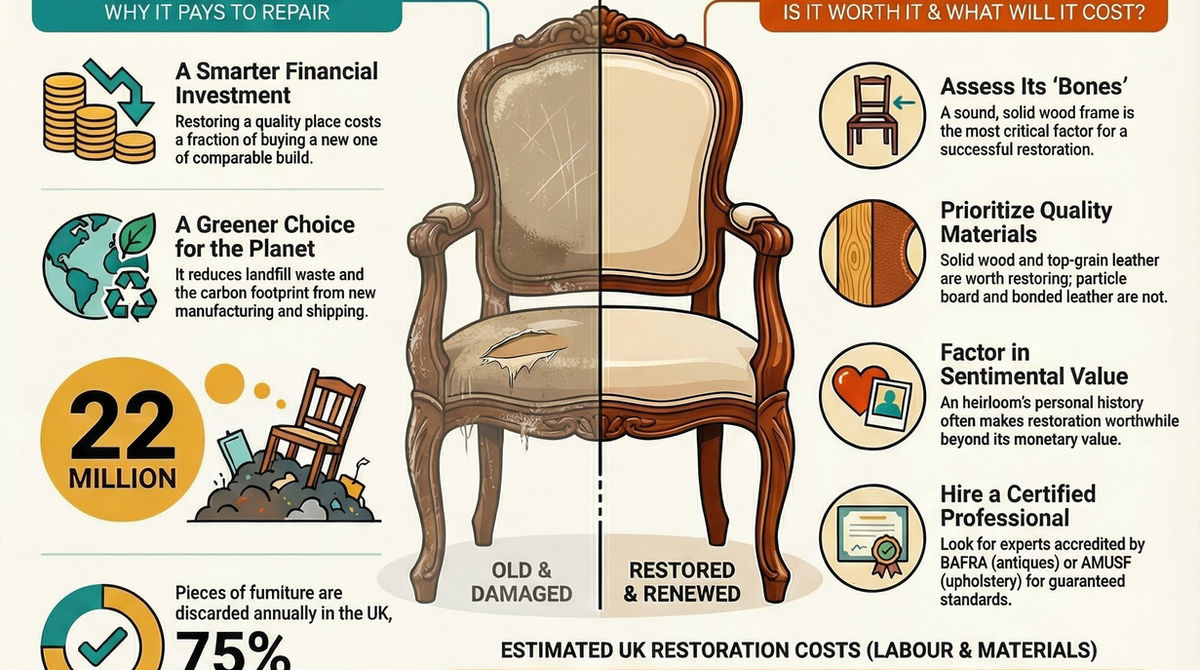
In the UK, where damp climates can affect wood joints and central heating can dry out older finishes, a professional touch is often required to stabilise the furniture. This guide covers everything from the technical steps involved to the realistic costs of hiring a skilled furniture restorer in 2025.
Prices vary based on the complexity of the chair's design—a simple Shaker-style chair is significantly cheaper to refinish than a heavily carved Chippendale reproduction. Labour typically accounts for 80% of the total quote.
| Item | Low £ | High £ | Notes |
|---|---|---|---|
| Single Dining Chair | £95 | £180 | Simple strip and refinish (no major repairs) |
| Armchair / Carver | £140 | £280 | Includes arms and larger surface area |
| Structural Repair | £45 | £75 | Per hour for joint stabilisation or woodworm treatment |
| Set of 6 Dining Chairs | £550 | £1,100 | Often includes a small "set discount" per unit |
| Collection & Delivery | £40 | £100 | Depends on distance and number of items |
Note: Specialist finishes like French Polishing or intricate paint effects (shabby chic or distressing) will sit at the higher end of these estimates. Reupholstery is almost always quoted as a separate service.
Applying a fresh coat of wax to a well-maintained chair is a rewarding DIY task. However, if the chair requires chemical stripping, structural re-gluing, or has delicate veneers, a professional is essential. Amateurs often "sand through" thin veneers or use modern polyurethane over old wax, resulting in a finish that peels. Professionals also have access to industrial extraction for dust and controlled environments for a flawless, lint-free finish.
Expert Tip: If the chair is a genuine antique (pre-1920), DIY stripping can significantly reduce its market value. Always consult a restorer first.
Questions to ask:
While you can lighten wood slightly through bleaching or "pickling," you cannot fundamentally change the grain pattern. It is usually better to work with the natural tone of the wood rather than fighting it.
If the chairs are solid wood, refinishing is almost always better value than buying new. If they are made of MDF or particle board with a plastic laminate, they generally cannot be refinished.
Look for small, neat round holes (1-2mm) and "frass" (fine sawdust) beneath the chair. A professional can treat the wood during the refinishing process to ensure the infestation is dead.
Oil soaks in for a natural feel; wax provides a soft sheen but needs regular maintenance; lacquer creates a hard, durable "shell" that is best for high-traffic dining chairs.
Most restorers will include basic joint tightening in their quote, but full "knock-down" repairs where the whole chair is taken apart are usually charged as an extra labour cost.
This guide was written with AI assistance and is intended for general information only. Prices are estimates based on UK averages and may vary by region. Always get at least three quotes and consult a qualified professional before starting any work.
Ask follow-ups in plain English. The AI explains options, sequencing and what to ask the furniture repair — so you walk in informed.
Restoring a cherished piece of furniture is often more cost-effective and sustainable than buying new. Whether it is a family heirloom or a high-quality find th...
READ GUIDE →GuideTable revarnishing is one of the most effective ways to breathe new life into tired furniture. Whether it is a cherished family heirloom, a sturdy oak dining ta...
READ GUIDE →GuideA high-quality sofa is often a significant investment, making professional repair a far more sustainable and cost-effective choice than replacement. Whether it ...
READ GUIDE →GuideA coffee table is often the focal point of a British living room, but years of tea spills, hot mugs, and general wear can leave it looking tired. Restoring a hi...
READ GUIDE →GuideMoth damage can be a distressing discovery for UK homeowners, often affecting expensive wool carpets, heirloom upholstery, or high-end cashmere garments. While ...
READ GUIDE →GuideReupholstering a cherished armchair is a sustainable way to breathe new life into high-quality furniture that has seen better days. Many older UK-made chairs fe...
READ GUIDE →