Instant
01 · Ask
Ask the AI a follow-up
Got more questions about cushion removal? Describe the bit you're unsure about — the AI explains options, sequencing and what to ask the furniture repair.

Strip old foam, fibre or feather from cushion covers — ready for new fill or disposal.
You've read the brief on cushion removal. Now lean on us to find the right furniture repair — and stay in control of the job.
Got more questions about cushion removal? Describe the bit you're unsure about — the AI explains options, sequencing and what to ask the furniture repair.
Costs, timelines, pitfalls and the right questions to ask before any furniture repair starts on cushion removal.
Itemised quotes from up to 3 local furniture repairs on cushion removal — so you can compare like-for-like, not lump sums.
Ready when you are
Enter your postcode and get free quotes from local pros.
Four moves that separate a smooth job from a nightmare.
Old foam can turn into a fine, yellow dust (crumbling) upon removal, which is a respiratory irritant and requires immediate bagging.
If covers are removed and cleaned incorrectly, they may shrink, making it impossible to refit the original cushions without professional stretching.
Many UK sofas use specific clips or "D-rings" to hold cushions in place; these are easily lost during DIY removal.
Removing cushions in a damp room can release spores. Professionals use HEPA vacuums and isolation bags to prevent this.
Indicative UK ranges and what affects price.
By job type
Quote spread is typically ± 18% — always get 3 quotes.
Furniture Repair quick-view
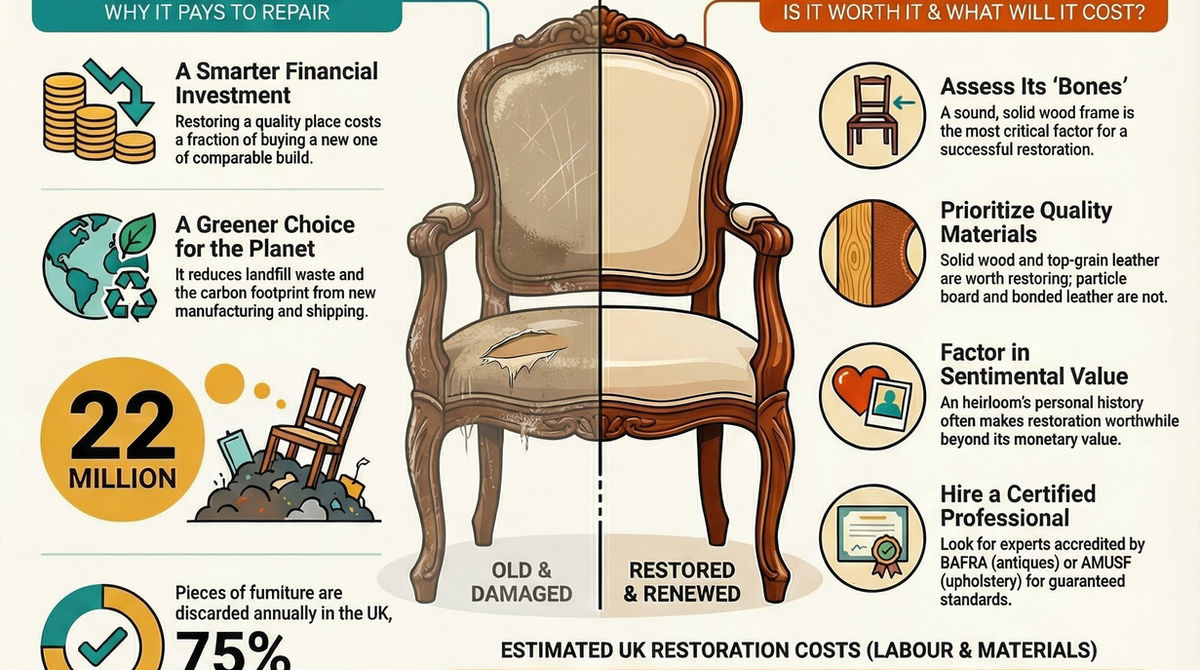
Whether you are dealing with a vintage heirloom or a modern designer suite, having a professional handle the removal and transport of cushions prevents common issues like torn zips, lost positioning tags, or the spread of hidden allergens and mould throughout your home.
Prices for cushion removal vary based on the size of the suite and whether the cushions are loose or integrated into the frame. Most professionals charge a minimum call-out fee to cover travel and the first hour of onsite assessment.
| Item | Low £ | High £ | Notes |
|---|---|---|---|
| Call-out / Initial Assessment | £65 | £95 | Includes travel and first 45 mins. |
| Labour (per hour) | £40 | £70 | For complex removals or large sets. |
| Protective Materials | £10 | £35 | Heavy-duty bags, tags, and PPE. |
| Disposal Fee (per item) | £15 | £45 | For contaminated or degraded foam. |
| Return & Refitting | £30 | £80 | Re-stuffing and positioning. |
| Total Project Average | £90 | £290 | Typical for a standard 3-seater sofa. |
Factors affecting the final price include the number of cushions, the presence of delicate "fixed" upholstery that requires partial deconstruction, and any specialist handling required for hazardous materials like black mould or moth infestations.
For standard loose-cushion sofas with working zips, DIY removal is straightforward. However, if your furniture features fixed upholstery, delicate vintage silks, or shows signs of mould, a professional is essential. Professionals possess the tools to unpick staples or tension springs without damaging the frame and understand how to handle materials that may no longer meet modern fire safety standards if altered incorrectly.
Expert Tip: Never force a stuck zip on a high-value sofa. A professional can use specialist lubricants or "sliders" to open the cushion without tearing the surrounding fabric, which is often irreplaceable.
Yes, this is known as "fixed upholstery." A professional restorer will carefully unpick the stitching or remove staples from the underside of the frame to release the tension and remove the internal pads without damaging the visible fabric.
If you plan to sell the furniture or are a landlord, missing fire labels are a legal issue. A professional can advise on whether the foam needs replacing with modern CMHR (Combustion Modified High Resilience) foam to ensure compliance.
This usually happens if the internal "dacron" wrap has slipped or if the foam has lost its "loft." A professional will typically add a new layer of wadding during the refitting process to restore the crisp, plump look of the furniture.
Removing the cushions allows for a deep clean of the "deck" (the area under the seats) where pet hair and dander accumulate. It also allows the foam to be deodorised or replaced, which is where most stubborn smells are trapped.
It is highly recommended. You will need to sign off on the initial damage report during removal and check that the cushions have been refitted to your satisfaction, ensuring zips are hidden and the "sit" of the sofa is correct.
This guide was written with AI assistance and is intended for general information only. Prices are estimates based on UK averages and may vary by region. Always get at least three quotes and consult a qualified professional before starting any work.
Ask follow-ups in plain English. The AI explains options, sequencing and what to ask the furniture repair — so you walk in informed.
Restoring a cherished piece of furniture is often more cost-effective and sustainable than buying new. Whether it is a family heirloom or a high-quality find th...
READ GUIDE →GuideTable revarnishing is one of the most effective ways to breathe new life into tired furniture. Whether it is a cherished family heirloom, a sturdy oak dining ta...
READ GUIDE →GuideA high-quality sofa is often a significant investment, making professional repair a far more sustainable and cost-effective choice than replacement. Whether it ...
READ GUIDE →GuideA coffee table is often the focal point of a British living room, but years of tea spills, hot mugs, and general wear can leave it looking tired. Restoring a hi...
READ GUIDE →GuideMoth damage can be a distressing discovery for UK homeowners, often affecting expensive wool carpets, heirloom upholstery, or high-end cashmere garments. While ...
READ GUIDE →GuideReupholstering a cherished armchair is a sustainable way to breathe new life into high-quality furniture that has seen better days. Many older UK-made chairs fe...
READ GUIDE →