Instant
01 · Ask
Ask the AI a follow-up
Got more questions about dining table and chairs restoration? Describe the bit you're unsure about — the AI explains options, sequencing and what to ask the furniture repair.

Full set restoration — table top sanded and lacquered, chairs recovered and re-finished.
You've read the brief on dining table and chairs restoration. Now lean on us to find the right furniture repair — and stay in control of the job.
Got more questions about dining table and chairs restoration? Describe the bit you're unsure about — the AI explains options, sequencing and what to ask the furniture repair.
Costs, timelines, pitfalls and the right questions to ask before any furniture repair starts on dining table and chairs restoration.
Itemised quotes from up to 3 local furniture repairs on dining table and chairs restoration — so you can compare like-for-like, not lump sums.
Ready when you are
Enter your postcode and get free quotes from local pros.
Four moves that separate a smooth job from a nightmare.
Previous use of cheap "spray-on" polishes can cause new finishes to "fish-eye" or peel, requiring specialist chemical cleaning.
Flight holes may be visible, but structural damage inside the timber is often only found once the finish is removed.
Aggressive DIY sanding can destroy the thin layer of decorative wood, making the repair significantly more expensive.
Failing to remove 100% of old, brittle glue before re-gluing will cause the joint to fail again very quickly.
Indicative UK ranges and what affects price.
By job type
Quote spread is typically ± 18% — always get 3 quotes.
Furniture Repair quick-view
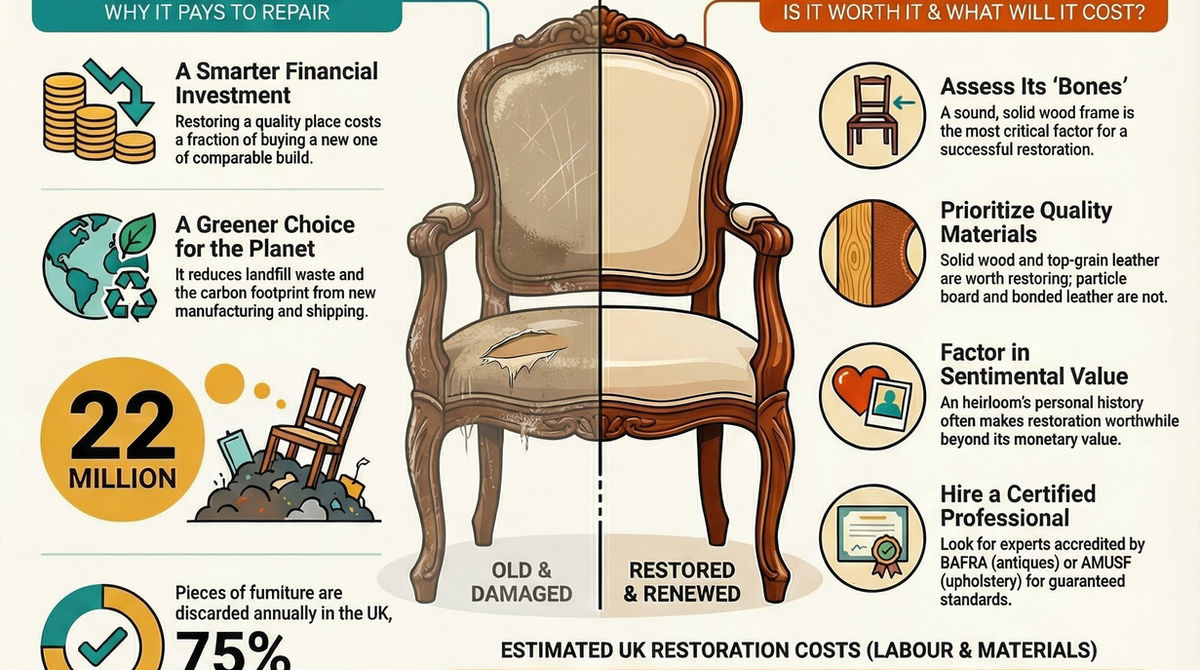
Whether you are dealing with heat marks on a tabletop or wobbly chair legs, a skilled restorer can return the set to its former glory. This guide covers the essential steps, costs, and considerations for UK homeowners looking to invest in furniture longevity.
| Item | Low £ | High £ | Notes |
|---|---|---|---|
| Single Chair (Re-glue & Polish) | £65 | £160 | Depends on complexity and carving |
| Dining Table Refinish | £275 | £650 | Based on size and surface damage |
| Chair Reupholstery (Labour) | £45 | £100 | Per seat; excludes fabric costs |
| Full Set (Table + 4-6 Chairs) | £700 | £1,600 | Comprehensive structural & surface work |
| Collection & Delivery | £40 | £120 | Based on distance and vehicle size |
Prices vary based on the timber type, the severity of the damage, and the chosen finish. Fine antiques or intricate marquetry will command higher rates due to the specialist skills and time required.
While minor scratches can be masked with wax sticks, full restoration is a precision task. Amateurs often "sand through" thin veneers or use modern varnishes that ruin the patina of an antique piece.
Professional restorers have the tools to ensure joints are perfectly square and finishes are durable enough for daily use. Furthermore, any upholstery work must comply with strict UK fire safety regulations, which a professional will guarantee.
Yes, white rings are usually trapped moisture in the top layer of finish. A professional can often "bloom" these out or lightly sand and re-polish the area without a full strip-down.
Value is subjective, but solid wood furniture is almost always higher quality than modern flat-pack equivalents. Restoration is often cheaper than buying a new solid oak or mahogany set.
Typically, a standard dining chair seat requires about 0.5 to 0.75 metres of fabric. Your restorer will provide an exact "meterage" based on the pattern repeat and seat size.
It is possible to lighten wood through chemical stripping and "liming" or using a light-tinted oil, though the natural species of the wood will dictate the final result.
Most major restoration is done in a workshop to control dust and fumes. If minor work is done onsite, ensure the room is well-ventilated and pets are kept away.
This guide was written with AI assistance and is intended for general information only. Prices are estimates based on UK averages and may vary by region. Always get at least three quotes and consult a qualified professional before starting any work.
Ask follow-ups in plain English. The AI explains options, sequencing and what to ask the furniture repair — so you walk in informed.
Restoring a cherished piece of furniture is often more cost-effective and sustainable than buying new. Whether it is a family heirloom or a high-quality find th...
READ GUIDE →GuideTable revarnishing is one of the most effective ways to breathe new life into tired furniture. Whether it is a cherished family heirloom, a sturdy oak dining ta...
READ GUIDE →GuideA high-quality sofa is often a significant investment, making professional repair a far more sustainable and cost-effective choice than replacement. Whether it ...
READ GUIDE →GuideA coffee table is often the focal point of a British living room, but years of tea spills, hot mugs, and general wear can leave it looking tired. Restoring a hi...
READ GUIDE →GuideMoth damage can be a distressing discovery for UK homeowners, often affecting expensive wool carpets, heirloom upholstery, or high-end cashmere garments. While ...
READ GUIDE →GuideReupholstering a cherished armchair is a sustainable way to breathe new life into high-quality furniture that has seen better days. Many older UK-made chairs fe...
READ GUIDE →