Instant
01 · Ask
Ask the AI a follow-up
Got more questions about dining table repair? Describe the bit you're unsure about — the AI explains options, sequencing and what to ask the furniture repair.

Wobbly leg, water mark, scratch or split top — restored by furniture specialists.
You've read the brief on dining table repair. Now lean on us to find the right furniture repair — and stay in control of the job.
Got more questions about dining table repair? Describe the bit you're unsure about — the AI explains options, sequencing and what to ask the furniture repair.
Costs, timelines, pitfalls and the right questions to ask before any furniture repair starts on dining table repair.
Itemised quotes from up to 3 local furniture repairs on dining table repair — so you can compare like-for-like, not lump sums.
Ready when you are
Enter your postcode and get free quotes from local pros.
Four moves that separate a smooth job from a nightmare.
Applying a new oil over an old wax finish will result in a sticky, non-drying mess that must be stripped back.
Moisture trapped under a new finish can cause white cloudy marks; this usually happens if the environment is too humid during application.
Wood naturally darkens or fades with age; a restorer who doesn't account for "patina" will produce a repair that looks like a bright patch.
Using the wrong glue (like standard PVA on an antique that requires hide glue) can prevent future repairs and cause the wood to split.
Indicative UK ranges and what affects price.
By job type
Quote spread is typically ± 18% — always get 3 quotes.
Furniture Repair quick-view
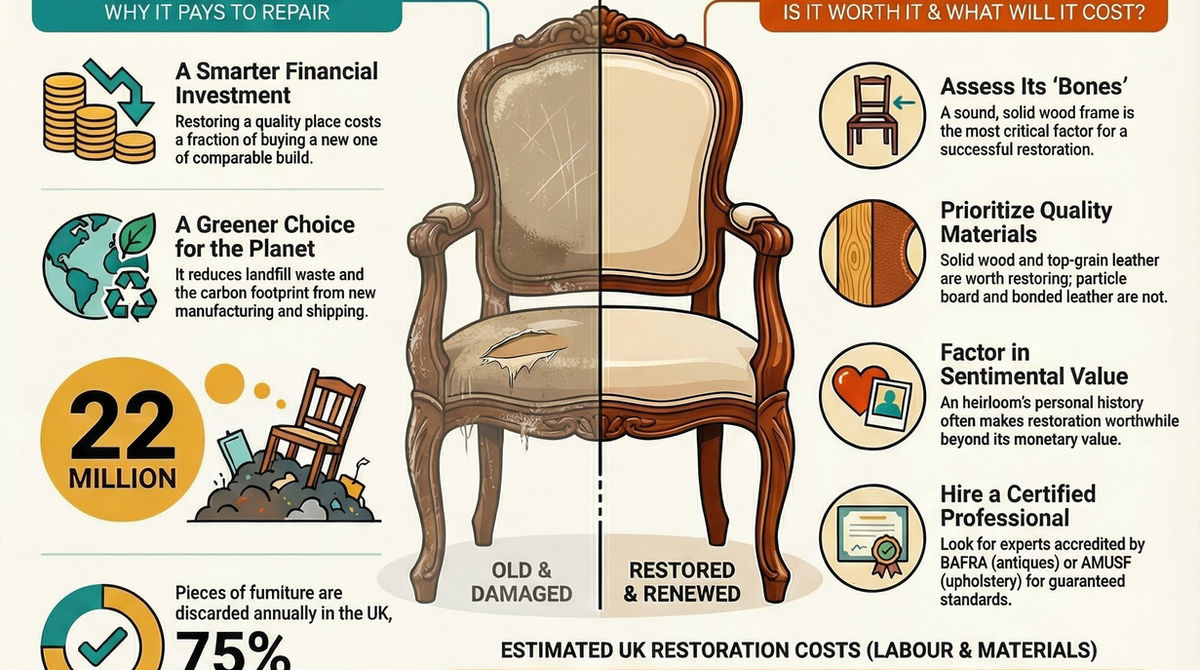
Repairing or restoring a quality dining table is almost always more cost-effective and environmentally friendly than buying a mass-produced replacement. Whether it is a cherished antique or a modern oak centerpiece, professional restoration can return it to its former glory while ensuring it remains structurally sound for decades to come.
The cost of dining table repair depends heavily on the extent of the damage and the type of finish required. Specialist techniques like French polishing or intricate veneer matching will naturally command a higher price point.
| Item | Low £ | High £ | Notes |
|---|---|---|---|
| Call-out / Assessment Fee | £60 | £120 | Often deducted from the final bill if work proceeds. |
| Minor Structural Repair (e.g., wobbly leg) | £80 | £150 | Simple re-gluing and clamping of a single joint. |
| Surface Scratch & Heat Mark Removal | £120 | £250 | Localised sanding and colour blending. |
| Full Table Top Refinishing | £300 | £650 | Stripping, sanding, and multi-coat protective finish. |
| Veneer Replacement (per section) | £100 | £300 | Includes sourcing matching timber and grain. |
| Antique Restoration (Specialist) | £450 | £1,200+ | Period-accurate materials and hand-finishing. |
Prices generally include VAT and materials. Factors such as the rarity of the wood, the size of the table, and whether the work is done on-site or in a workshop will influence the final quote.
While minor scratches can often be masked with a retail touch-up pen, structural repairs and full refinishing are best left to professionals. Modern finishes like factory-applied lacquers are notoriously difficult to patch-repair without leaving visible "halos."
Structural integrity is vital for safety; a poorly repaired dining table leg can collapse under the weight of a heavy meal, causing injury or further damage.
Professional restorers have the specific clamps, heat guns, and chemical strippers required to achieve a seamless finish. Furthermore, if your table is a valuable antique, a botched DIY job can significantly reduce its market value.
Often, yes. A professional can use specific heat treatments or "amalgamators" to draw the moisture out of the finish. However, if the heat has scorched the wood fibers beneath the finish, a full sand and reseal will be necessary.
If the table is made of solid timber (oak, mahogany, walnut) or high-quality veneer, it is almost always worth repairing. Most modern flat-pack furniture is made of MDF or chipboard, which lacks the longevity and repairability of traditional furniture.
A skilled restorer can make most structural repairs and many surface repairs virtually invisible. However, deep gouges that cross the grain or very old, faded veneers may still show a slight "scar" depending on the light.
Avoid silicone-based supermarket polishes, as these build up a residue. Instead, use a high-quality beeswax or the specific oil recommended by your restorer, and always use coasters and heat mats.
Warping is difficult but not impossible to fix. It usually involves controlled moisture application and weighting, or in extreme cases, "kerfing" the underside of the wood to allow it to be pulled flat again.
This guide was written with AI assistance and is intended for general information only. Prices are estimates based on UK averages and may vary by region. Always get at least three quotes and consult a qualified professional before starting any work.
Ask follow-ups in plain English. The AI explains options, sequencing and what to ask the furniture repair — so you walk in informed.
Restoring a cherished piece of furniture is often more cost-effective and sustainable than buying new. Whether it is a family heirloom or a high-quality find th...
READ GUIDE →GuideTable revarnishing is one of the most effective ways to breathe new life into tired furniture. Whether it is a cherished family heirloom, a sturdy oak dining ta...
READ GUIDE →GuideA high-quality sofa is often a significant investment, making professional repair a far more sustainable and cost-effective choice than replacement. Whether it ...
READ GUIDE →GuideA coffee table is often the focal point of a British living room, but years of tea spills, hot mugs, and general wear can leave it looking tired. Restoring a hi...
READ GUIDE →GuideMoth damage can be a distressing discovery for UK homeowners, often affecting expensive wool carpets, heirloom upholstery, or high-end cashmere garments. While ...
READ GUIDE →GuideReupholstering a cherished armchair is a sustainable way to breathe new life into high-quality furniture that has seen better days. Many older UK-made chairs fe...
READ GUIDE →