Instant
01 · Ask
Ask the AI a follow-up
Got more questions about footstool leg replacement? Describe the bit you're unsure about — the AI explains options, sequencing and what to ask the furniture repair.

Snapped or wobbly footstool leg — turned, matched and fitted by a furniture restorer.
You've read the brief on footstool leg replacement. Now lean on us to find the right furniture repair — and stay in control of the job.
Got more questions about footstool leg replacement? Describe the bit you're unsure about — the AI explains options, sequencing and what to ask the furniture repair.
Costs, timelines, pitfalls and the right questions to ask before any furniture repair starts on footstool leg replacement.
Itemised quotes from up to 3 local furniture repairs on footstool leg replacement — so you can compare like-for-like, not lump sums.
Ready when you are
Enter your postcode and get free quotes from local pros.
Four moves that separate a smooth job from a nightmare.
Buying "universal" legs only to find they are M10 (10mm) while your footstool requires M8 (8mm).
Replacing only one broken leg with a "similar" one, resulting in a footstool that wobbles or sits at an angle.
New legs without proper glides or felt pads can scratch laminate or hardwood flooring.
Over-tightening legs can strip the internal threads, requiring a more expensive frame repair.
Indicative UK ranges and what affects price.
By job type
Quote spread is typically ± 18% — always get 3 quotes.
Furniture Repair quick-view
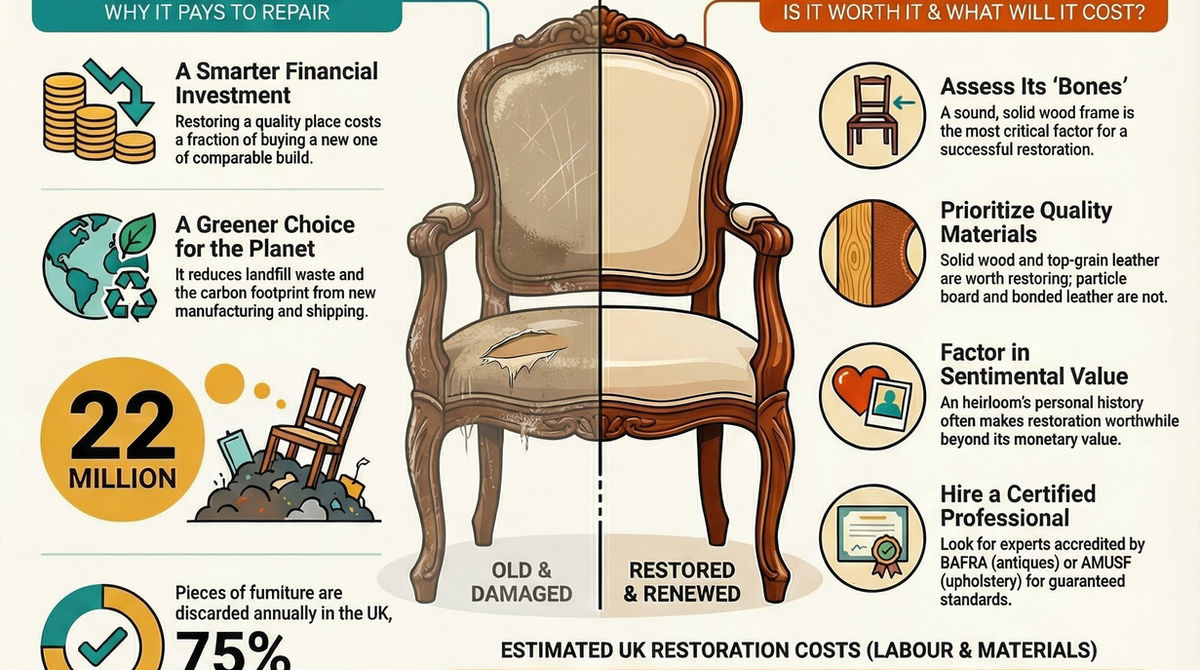
Replacing the legs is a cost-effective and sustainable alternative to buying new furniture. Whether you are looking to update the style of an ottoman or restore a cherished antique, a professional furniture restorer can ensure the structural integrity of the piece remains intact.
Prices for footstool leg replacement vary based on whether you are buying "off-the-shelf" legs or requiring bespoke timber turning. Labour costs are generally higher if the restorer needs to strip back the dust cover or upholstery to access the internal frame.
| Item | Low £ | High £ | Notes |
|---|---|---|---|
| Standard Replacement Legs (Set of 4) | £25 | £80 | Mass-produced turned wood or metal legs. |
| Bespoke Hand-Turned Leg (Per Leg) | £45 | £120 | Custom timber matching and specialist turning. |
| Labour (Simple Screw-in) | £40 | £70 | Includes call-out and basic fitting. |
| Structural Frame Repair | £60 | £150 | Required if the internal wood has split. |
| Total Project Cost | £85 | £350+ | Includes VAT and materials. |
Note: Most professional restorers have a minimum call-out charge of £50–£75 to cover travel and the first hour of bench time.
If your footstool uses standard screw-in legs and the internal threads are undamaged, this is a straightforward DIY task. You simply need to identify the bolt size—most modern UK furniture uses 8mm (M8) threads.
However, professional help is essential if the wood has split or if the footstool is a valuable antique. A professional restorer understands how to reinforce the frame without compromising the upholstery. Crucially, if the repair involves opening the upholstery, a professional will ensure the work complies with UK fire safety standards.
While leg replacement is largely cosmetic, there are two key areas to consider:
Yes, but be careful. Increasing the height significantly changes the centre of gravity, which can make a small footstool prone to tipping. It may also put extra leverage on the mounting points, potentially causing the frame to crack.
Most UK furniture uses M8 (8mm) bolts. You can check this by trying to fit a standard 8mm nut onto the bolt of your existing leg. If it's slightly larger, it is likely an M10.
Yes. A furniture restorer can "plug" the damaged area with a hardwood insert and glue, then drill a new hole for a fresh mounting plate or T-nut. This is often stronger than the original factory finish.
Usually, yes. However, castors require a very sturdy mounting point because they apply lateral (sideways) pressure when the stool is moved. The restorer may need to add corner bracing to the frame first.
A professional restorer will attempt to match the species of wood (e.g., Oak, Beech, or Mahogany) and use stains to match the grain pattern and colour as closely as possible to the remaining legs.
This guide was written with AI assistance and is intended for general information only. Prices are estimates based on UK averages and may vary by region. Always get at least three quotes and consult a qualified professional before starting any work.
Ask follow-ups in plain English. The AI explains options, sequencing and what to ask the furniture repair — so you walk in informed.
Restoring a cherished piece of furniture is often more cost-effective and sustainable than buying new. Whether it is a family heirloom or a high-quality find th...
READ GUIDE →GuideTable revarnishing is one of the most effective ways to breathe new life into tired furniture. Whether it is a cherished family heirloom, a sturdy oak dining ta...
READ GUIDE →GuideA high-quality sofa is often a significant investment, making professional repair a far more sustainable and cost-effective choice than replacement. Whether it ...
READ GUIDE →GuideA coffee table is often the focal point of a British living room, but years of tea spills, hot mugs, and general wear can leave it looking tired. Restoring a hi...
READ GUIDE →GuideMoth damage can be a distressing discovery for UK homeowners, often affecting expensive wool carpets, heirloom upholstery, or high-end cashmere garments. While ...
READ GUIDE →GuideReupholstering a cherished armchair is a sustainable way to breathe new life into high-quality furniture that has seen better days. Many older UK-made chairs fe...
READ GUIDE →