Instant
01 · Ask
Ask the AI a follow-up
Got more questions about furniture Refinishing Services? Describe the bit you're unsure about — the AI explains options, sequencing and what to ask the furniture repair.

Strip, sand, stain or paint — refresh tired furniture without buying new.
You've read the brief on furniture Refinishing Services. Now lean on us to find the right furniture repair — and stay in control of the job.
Got more questions about furniture Refinishing Services? Describe the bit you're unsure about — the AI explains options, sequencing and what to ask the furniture repair.
Costs, timelines, pitfalls and the right questions to ask before any furniture repair starts on furniture Refinishing Services.
Itemised quotes from up to 3 local furniture repairs on furniture Refinishing Services — so you can compare like-for-like, not lump sums.
Ready when you are
Enter your postcode and get free quotes from local pros.
Four moves that separate a smooth job from a nightmare.
Using an orbital sander too aggressively on modern furniture can reveal the chipboard underneath, which is very difficult to hide.
If you have used modern aerosol polishes (like Pledge) for years, the silicone can "pit" the new finish, creating "fish-eyes."
Softwoods like pine or cherry absorb stain unevenly; professionals use "wash coats" or conditioners to prevent this.
Old tannins or mahogany dyes can seep through new paint or light stains; a specialist primer or sealer is required to block this.
Indicative UK ranges and what affects price.
By job type
Quote spread is typically ± 18% — always get 3 quotes.
Furniture Repair quick-view
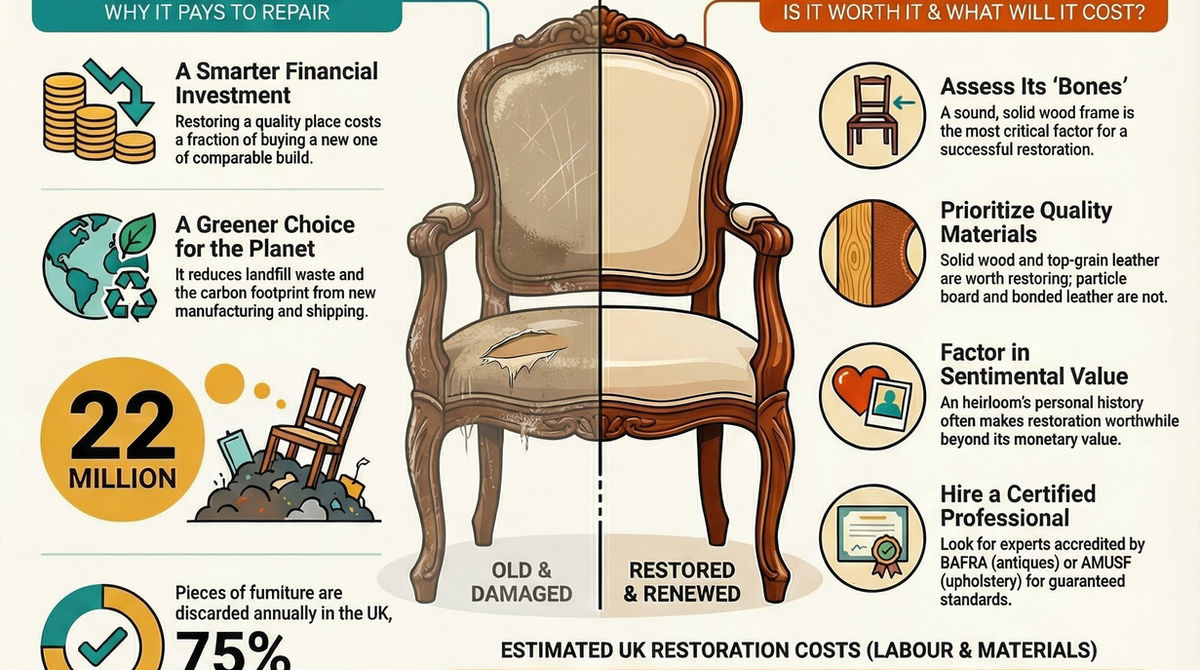
A professional refinisher doesn't just apply a new coat of varnish; they understand the chemistry of old finishes and the biology of different wood species. Whether it is a mid-century sideboard or a Victorian heirloom, professional restoration preserves the integrity of the piece while ensuring it survives another generation of use.
The cost of furniture refinishing is primarily driven by labour. Intricate carvings, multiple drawers, and the removal of modern "tough" finishes like polyurethane will increase the price significantly.
| Item / Service | Low £ | High £ | Notes |
|---|---|---|---|
| Dining Chair | £120 | £250 | Higher end for spindle-back or intricate designs. |
| Coffee Table | £200 | £450 | Depends on the size and presence of drawers. |
| Chest of Drawers | £450 | £850 | Includes stripping individual drawer fronts. |
| Dining Table (6-seater) | £600 | £1,100 | Large flat surfaces require perfect finishing. |
| Sideboard | £550 | £1,200 | Complexity of doors and internal shelves affects price. |
| Minimum Call-out Fee | £75 | £150 | Often covers small scratch repairs or assessments. |
Prices include VAT and standard materials. Expect to pay a premium for specialist finishes like hand-applied French polish or high-gloss "piano" finishes, which require dozens of micro-layers.
While small projects like sanding a rustic pine stool are suitable for DIY, high-value or antique pieces should be left to professionals. DIYers often "sand through" thin veneers, causing irreparable damage to the piece's value. Professionals use industrial-grade dust extraction and HVLP (High Volume Low Pressure) spray systems that produce a finish impossible to replicate with a brush.
Professional Tip: If your furniture was made before 1960, it may have been finished with lead-based products or volatile nitrocellulose. Professionals are equipped to handle these hazardous materials safely under COSHH regulations.
Yes, but it is labour-intensive. It requires complete stripping and often a "two-part" chemical bleach to remove the natural pigments from the wood fibres before applying a light lime-wash or clear oil.
Generally, no. Refinishing relies on having a real wood surface. MDF and chipboard with plastic laminates cannot be stripped or sanded in the same way, though they can sometimes be professionally painted.
A modern lacquer or hard-wax oil finish should last 10–20 years with proper care. Traditional wax or oil finishes may need a "refresh" coat every 12–24 months to maintain their lustre.
Often, yes. White rings are usually moisture trapped in the top layer of the finish. A professional can sometimes "blush" the finish to release the moisture without a full strip and sand.
Refinishing is a bespoke, hand-crafted service. While mass-produced furniture is cheap, refinishing restores high-quality timber and joinery that would cost thousands of pounds to buy new today.
This guide was written with AI assistance and is intended for general information only. Prices are estimates based on UK averages and may vary by region. Always get at least three quotes and consult a qualified professional before starting any work.
Ask follow-ups in plain English. The AI explains options, sequencing and what to ask the furniture repair — so you walk in informed.
Restoring a cherished piece of furniture is often more cost-effective and sustainable than buying new. Whether it is a family heirloom or a high-quality find th...
READ GUIDE →GuideTable revarnishing is one of the most effective ways to breathe new life into tired furniture. Whether it is a cherished family heirloom, a sturdy oak dining ta...
READ GUIDE →GuideA high-quality sofa is often a significant investment, making professional repair a far more sustainable and cost-effective choice than replacement. Whether it ...
READ GUIDE →GuideA coffee table is often the focal point of a British living room, but years of tea spills, hot mugs, and general wear can leave it looking tired. Restoring a hi...
READ GUIDE →GuideMoth damage can be a distressing discovery for UK homeowners, often affecting expensive wool carpets, heirloom upholstery, or high-end cashmere garments. While ...
READ GUIDE →GuideReupholstering a cherished armchair is a sustainable way to breathe new life into high-quality furniture that has seen better days. Many older UK-made chairs fe...
READ GUIDE →