Instant
01 · Ask
Refurbish, repair or full restore?
Modern reupholster, antique tidy-up, full conservation? Describe the piece and the AI tells you which specialist you need.

Joinery, upholstery and finish repairs — fixed on-site or workshop-restored.
Read the brief on inspection, finishes and antique value — then let three BAFRA restorers quote.
Modern reupholster, antique tidy-up, full conservation? Describe the piece and the AI tells you which specialist you need.
Finish types, period-correct repair, transport insurance, BAFRA standards. Know what 'right' means.
Three BAFRA restorers quote on the same piece — inspection, finish, materials — so the heirloom is preserved, not patched.
Ready when you are
Enter your postcode and get free quotes from local pros.
Four moves that separate a smooth job from a nightmare.
Furniture restoration costs depend entirely on hidden damage. Anyone quoting over the phone is guessing — insist on in-person inspection.
French polish, oil, lacquer, wax — each gives a different look and resilience. Get the finish on the quote.
Replacing a Victorian leg with a modern reproduction halves the value. Insist on like-for-like restoration on antiques.
Antique furniture in transit needs declared-value insurance. Get this in writing before they take it away.
Indicative UK ranges and what affects price.
By job type
Quote spread is typically ± 18% — always get 3 quotes.
Furniture Repair quick-view
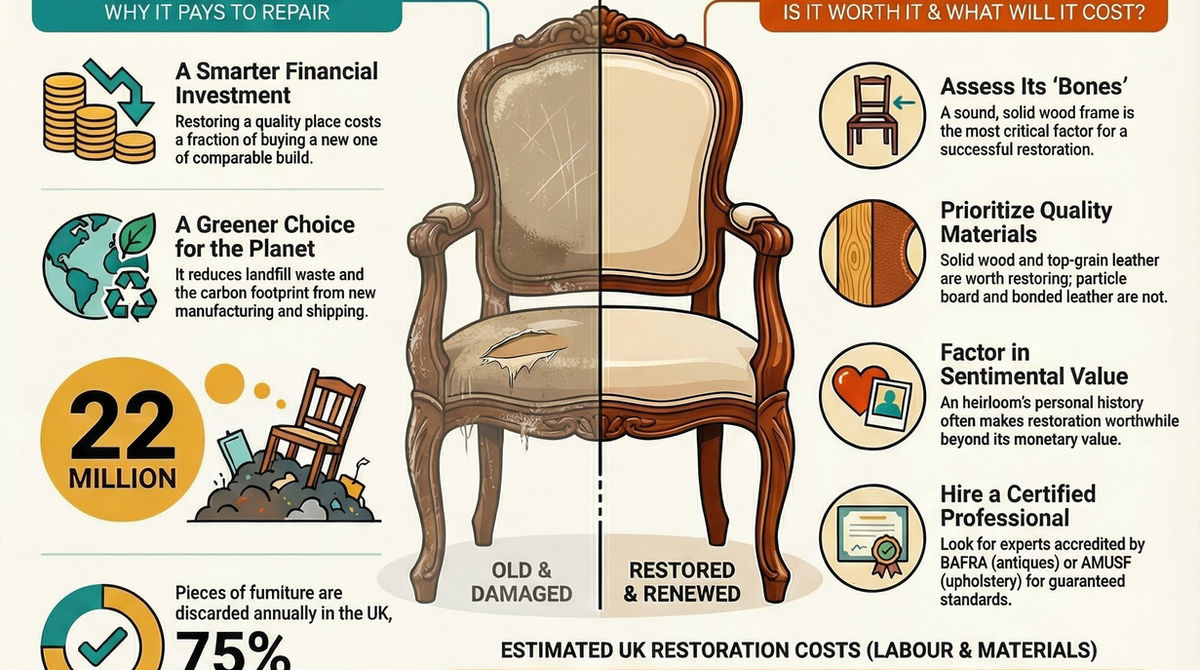
Furniture repair in the UK covers everything from a wobbly dining chair (£40–£80) to full restoration of a Georgian bureau (£800–£3,000). Typical jobs and prices: £60–£250 for chairs, dining and occasional tables; £150–£500 for sofas and armchairs (excluding reupholstery); £300–£1,500+ for cabinets, wardrobes and antique pieces.
The decision tree is simple: any piece that originally cost £400+ new, or has sentimental / antique value, is almost always worth repairing. Flat-pack and high-street furniture under £200 is typically not — replacement is usually cheaper than the callout.
| Repair | Typical price |
|---|---|
| Wobbly / loose chair joints (per chair) | £40–£90 |
| Re-glue dining table | £80–£180 |
| Drawer runner / slide replacement | £40–£120 per drawer |
| Veneer chip / blister repair | £60–£200 per area |
| Polish / restore French polish | £200–£800 per piece |
| Sofa / armchair re-stuffing (per cushion) | £60–£140 |
| Sofa reupholstery (3-seat, fabric supplied) | £700–£1,800 |
| Wardrobe hinge / sliding-door repair | £60–£200 |
| Antique restoration (typical bureau / table) | £600–£2,500 |
Furniture repair isn't one trade. Choose by what's broken:
For mixed-material pieces (fabric chair with wood frame), a single furniture restorer may handle everything; otherwise, you may need to coordinate two trades.
The most common woodwork repairs:
Usually no. Most flat-pack uses chipboard or MDF that doesn't hold replacement screws well, and the original cost is often less than a tradesperson's callout. Exceptions: real-wood IKEA pieces (Stockholm, Malm in solid pine) and the Pax wardrobe system, which have replaceable parts available cheaply.
Almost always re-gluable. Loose joints are the single most common chair fault and are textbook woodworker repair work. £40–£90 per chair, much cheaper than a new set.
In-home repairs (loose joints, drawer runners, polish touch-ups): 1–3 hours, often same-day. Workshop repairs (refinishing, reupholstery): 2–6 weeks depending on the restorer's queue. Antique restoration can run several months.
Sympathetic repair using period-correct techniques typically maintains or increases value (broken antiques are worth less than restored ones). Heavy-handed modern repair (wood filler, modern lacquer over French polish) reduces value considerably. Use an antique-specialist restorer for valuable pieces.
For small repairs (loose joints, surface scratches), most restorers offer in-home service. For major work (refinishing, reupholstery), the piece typically goes to the workshop. Many restorers offer collection and delivery for £40–£100 each way.
Word of mouth is best. Otherwise: BAFRA (British Antique Furniture Restorers' Association) for antiques; the Association of Master Upholsterers for upholstery; local-area carpenter recommendations for general pieces. Always see examples of recent work before committing.
Want a local pro to handle this? A specialist furniture restorer will assess what's economic, give an honest "repair vs replace" call, and turn around most jobs in a couple of weeks. Worth doing for any piece you'd be sad to lose.
This guide was written with AI assistance and is intended for general information only. Prices are estimates based on UK averages and may vary by region. Always get at least three quotes and consult a qualified professional before starting any work.
Ask follow-ups in plain English. The AI explains options, sequencing and what to ask the furniture repair — so you walk in informed.
Restoring a cherished piece of furniture is often more cost-effective and sustainable than buying new. Whether it is a family heirloom or a high-quality find th...
READ GUIDE →GuideTable revarnishing is one of the most effective ways to breathe new life into tired furniture. Whether it is a cherished family heirloom, a sturdy oak dining ta...
READ GUIDE →GuideA high-quality sofa is often a significant investment, making professional repair a far more sustainable and cost-effective choice than replacement. Whether it ...
READ GUIDE →GuideA coffee table is often the focal point of a British living room, but years of tea spills, hot mugs, and general wear can leave it looking tired. Restoring a hi...
READ GUIDE →GuideMoth damage can be a distressing discovery for UK homeowners, often affecting expensive wool carpets, heirloom upholstery, or high-end cashmere garments. While ...
READ GUIDE →GuideReupholstering a cherished armchair is a sustainable way to breathe new life into high-quality furniture that has seen better days. Many older UK-made chairs fe...
READ GUIDE →