Instant
01 · Ask
Refurbish, repair or full restore?
Modern reupholster, antique tidy-up, full conservation? Describe the piece and the AI tells you which specialist you need.

Cracked, faded or scuffed leather — cleaned, colour-restored and re-finished on-site.
Read the brief on inspection, finishes and antique value — then let three BAFRA restorers quote.
Modern reupholster, antique tidy-up, full conservation? Describe the piece and the AI tells you which specialist you need.
Finish types, period-correct repair, transport insurance, BAFRA standards. Know what 'right' means.
Three BAFRA restorers quote on the same piece — inspection, finish, materials — so the heirloom is preserved, not patched.
Ready when you are
Enter your postcode and get free quotes from local pros.
Four moves that separate a smooth job from a nightmare.
Furniture restoration costs depend entirely on hidden damage. Anyone quoting over the phone is guessing — insist on in-person inspection.
French polish, oil, lacquer, wax — each gives a different look and resilience. Get the finish on the quote.
Replacing a Victorian leg with a modern reproduction halves the value. Insist on like-for-like restoration on antiques.
Antique furniture in transit needs declared-value insurance. Get this in writing before they take it away.
Indicative UK ranges and what affects price.
By job type
Quote spread is typically ± 18% — always get 3 quotes.
Furniture Repair quick-view
Leather restoration in the UK falls into two distinct services: colour and surface restoration (re-dyeing, scratch repair, sealing) at £150–£700 per piece, and full reupholstery (new hide cut and stitched onto the existing frame) at £900–£3,500 for a typical 3-seat sofa or pair of armchairs. Knowing which you actually need saves a lot of money.
Most leather sofas can be restored rather than reupholstered, provided the underlying hide is real leather (not bonded or PU). The main exception is heavy structural damage, deep tears, or full replacement of failing bonded-leather pieces.
Visual test: scratch a hidden corner gently. Real leather shows a slight indent that recovers; bonded shows white fabric backing or flakes. Real leather almost always restorable; bonded almost never.
| Service | Typical price |
|---|---|
| Single seat / cushion colour restoration | £100–£250 |
| Whole sofa colour restoration (3-seat) | £300–£700 |
| Scratch / scuff repair (per area) | £60–£150 |
| Tear repair (under 5 cm) | £90–£220 |
| Reupholstery 3-seat sofa (mid-range hide) | £900–£1,800 |
| Reupholstery 3-seat sofa (premium hide) | £1,800–£3,500 |
| Reupholstery armchair (mid-range) | £500–£1,000 |
| New foam / cushion fillings (per cushion) | £60–£140 |
| Conditioning / annual maintenance | £60–£150 per piece |
For a sofa or chair that's faded, worn or scratched but otherwise intact, a typical restoration:
For a 3-seat sofa, allow 6–10 hours work, often spread over 2 days for drying time.
Full leather reupholstery means stripping the original hide off the frame, replacing foam and springs as needed, and cutting/stitching a new hide to fit. The frame is typically retained; the hide and fillings are new.
Hide cost is a big variable. Mid-range Italian or Spanish hide for a 3-seat sofa: £400–£800 in material. Premium UK or Bridge of Weir hide: £700–£1,500. Designer / aniline hides: £1,000–£2,500. Add £400–£900 in labour.
For surface issues (colour, light wear, scratches) — yes, often indistinguishable from new. For structural problems (broken springs, failed foam, torn hide) — no, reupholstery is the only durable answer. Match the service to the actual problem.
Properly applied colour on real leather is permanent — the new pigment bonds with the hide and ages with it. Heavy daily use will show new wear within 5–10 years; light or occasional use can stay looking fresh for 15+ years.
Yes — light to dark is straightforward (cover the original colour). Dark to light is harder and may need stripping the existing finish first. Allow extra cost for radical colour changes; match-to-existing is the most common service.
Aniline: dyed-through with no surface coating, softest and most natural feel, shows every mark. Semi-aniline: light protective coating, more durable. Pigmented (or "protected"): heavier surface coating, most durable, less natural feel. Restoration approach varies by leather type — discuss with the restorer.
Almost always yes — manufacturer warranties typically don't cover work by third parties. Check before commissioning, particularly on newer premium pieces. For sofas more than 3 years old, the warranty is usually expired anyway.
Clean with a damp cloth weekly, no household cleaners. Condition every 6 months with a quality leather cream (Furniture Clinic, Connolly, Lord Sheraton). Keep away from direct sunlight and radiators. Don't sit on freshly restored leather for 24–48 hours after the finish coat.
Want a local pro to handle this? A specialist leather restorer or upholsterer will assess what your piece needs, give an honest "restoration vs reupholstery" call, and execute properly. Worth checking 2–3 quotes — quality varies considerably.
This guide was written with AI assistance and is intended for general information only. Prices are estimates based on UK averages and may vary by region. Always get at least three quotes and consult a qualified professional before starting any work.
Ask follow-ups in plain English. The AI explains options, sequencing and what to ask the furniture repair — so you walk in informed.
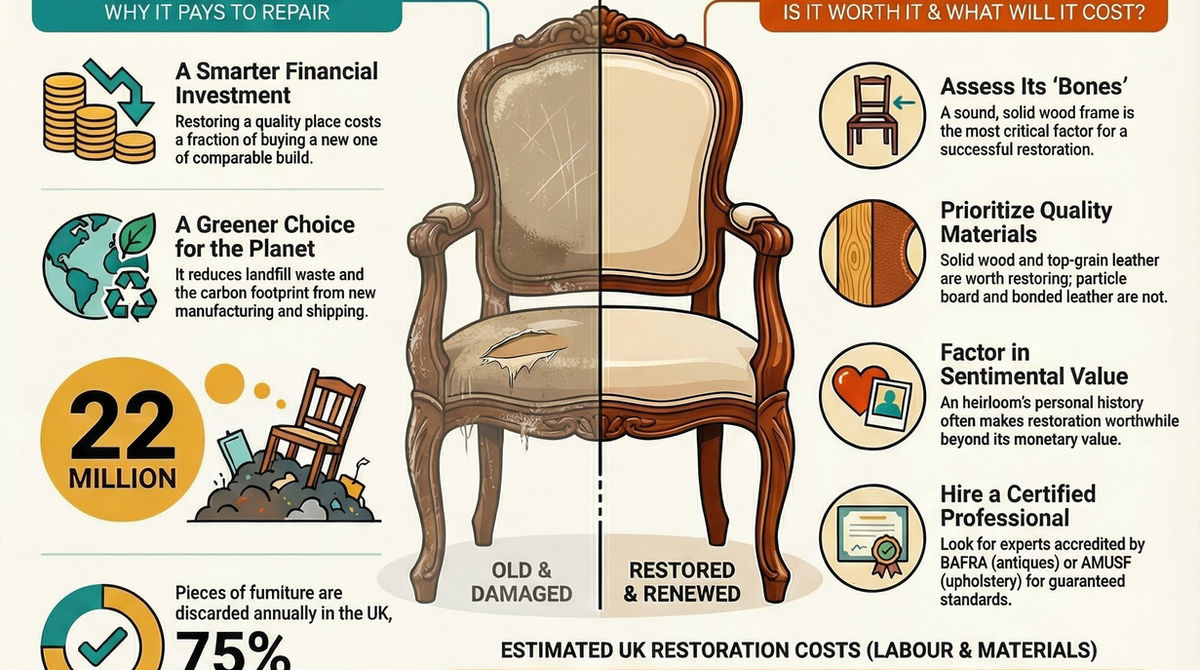
Restoring a cherished piece of furniture is often more cost-effective and sustainable than buying new. Whether it is a family heirloom or a high-quality find th...
READ GUIDE →GuideTable revarnishing is one of the most effective ways to breathe new life into tired furniture. Whether it is a cherished family heirloom, a sturdy oak dining ta...
READ GUIDE →GuideA high-quality sofa is often a significant investment, making professional repair a far more sustainable and cost-effective choice than replacement. Whether it ...
READ GUIDE →GuideA coffee table is often the focal point of a British living room, but years of tea spills, hot mugs, and general wear can leave it looking tired. Restoring a hi...
READ GUIDE →GuideMoth damage can be a distressing discovery for UK homeowners, often affecting expensive wool carpets, heirloom upholstery, or high-end cashmere garments. While ...
READ GUIDE →GuideReupholstering a cherished armchair is a sustainable way to breathe new life into high-quality furniture that has seen better days. Many older UK-made chairs fe...
READ GUIDE →