Instant
01 · Ask
Ask the AI a follow-up
Got more questions about reupholstery service? Describe the bit you're unsure about — the AI explains options, sequencing and what to ask the furniture repair.

Sofa, chair, headboard or footstool — fabric supplied or bring-your-own, specialist hand work.
You've read the brief on reupholstery service. Now lean on us to find the right furniture repair — and stay in control of the job.
Got more questions about reupholstery service? Describe the bit you're unsure about — the AI explains options, sequencing and what to ask the furniture repair.
Costs, timelines, pitfalls and the right questions to ask before any furniture repair starts on reupholstery service.
Itemised quotes from up to 3 local furniture repairs on reupholstery service — so you can compare like-for-like, not lump sums.
Ready when you are
Enter your postcode and get free quotes from local pros.
Four moves that separate a smooth job from a nightmare.
Once the fabric is removed, "surprises" like woodworm or cracked rails can emerge, increasing the cost.
Poorly planned cutting can lead to off-centre patterns or stripes that don't line up across cushions.
Using cheap, low-density foam results in cushions that lose their shape and support within just a few months.
Homeowners often underestimate the yardage needed, especially when matching large floral or geometric patterns.
Indicative UK ranges and what affects price.
By job type
Quote spread is typically ± 18% — always get 3 quotes.
Furniture Repair quick-view
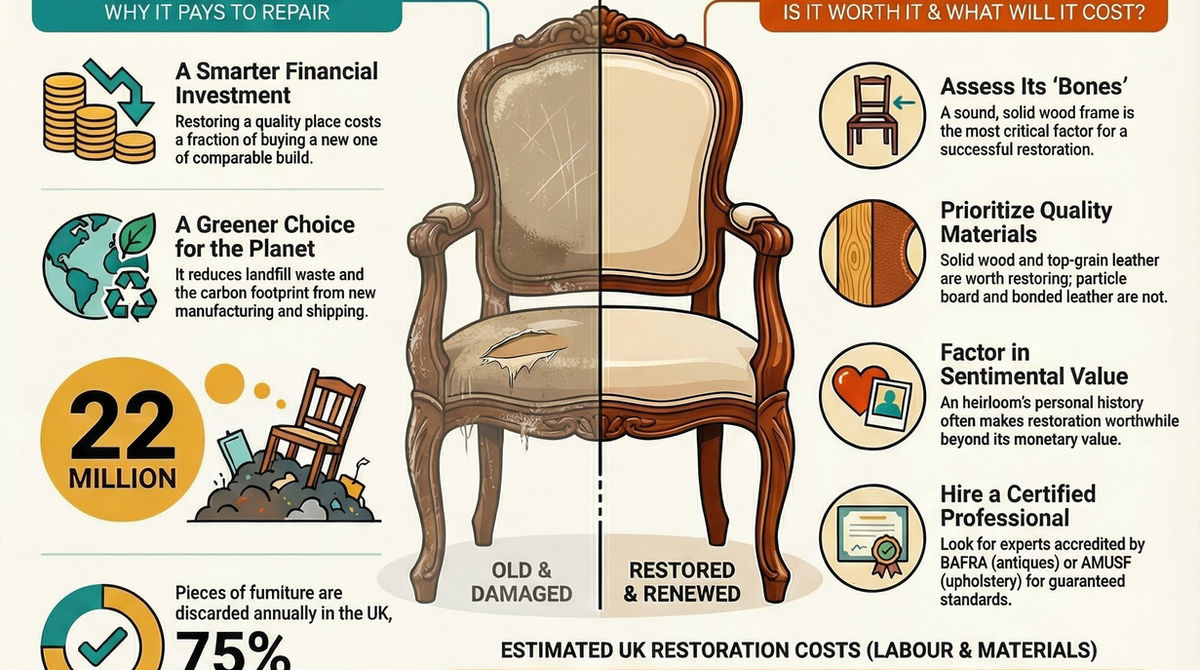
Beyond simple aesthetics, professional reupholstery ensures your furniture remains structurally sound and compliant with modern safety standards. Whether it is a mid-century armchair or a traditional Chesterfield, a skilled upholsterer can transform a tired item into a bespoke centrepiece that outlasts modern "fast furniture" alternatives.
The cost of reupholstery is split between labour and materials. While labour rates are relatively fixed based on the complexity of the piece, fabric prices can range from £20 to over £200 per metre, significantly impacting the final bill.
| Item | Low £ | High £ | Notes |
|---|---|---|---|
| Dining Chair (Seat Only) | £50 | £120 | Excludes fabric; price per chair. |
| Armchair (Standard) | £450 | £950 | Includes basic foam/webbing; excludes top fabric. |
| Wingback/Cocktail Chair | £550 | £1,100 | Higher cost for curved backs and piping. |
| 3-Seater Sofa | £900 | £2,500 | Complexity and cushion count affect labour. |
| Footstool | £100 | £300 | Simple shapes are cheaper; deep buttoning adds cost. |
| Fabric (per metre) | £30 | £150 | Average sofa needs 12-18 metres. |
Factors such as the condition of the internal frame, the choice of natural vs. synthetic fillings, and the intricacy of the fabric pattern (which requires more material for matching) will all influence your final quote.
Simple projects like drop-in dining chair seats are excellent entry-level DIY tasks. However, complex pieces involving sprung seats, deep buttoning, or expensive fabrics should be left to professionals. A professional ensures the fabric tension is perfect and, crucially, that the piece meets UK Fire Safety Regulations.
Professional reupholstery is an investment in quality. While DIY can save money on simple items, a botched job on a high-end sofa can devalue the piece and result in an uncomfortable, unsightly finish.
Reupholstering a high-quality, solid wood frame is usually cheaper or comparable to buying a new piece of similar quality. However, it is almost always more expensive than buying "budget" flat-pack or mass-market furniture.
Most upholsterers allow this, but they may charge a "cutting fee" or "handle fee." You must ensure the fabric is suitable for upholstery and meets UK fire safety standards.
Recovering simply replaces the top fabric layer. Reupholstering involves stripping the piece to the frame and replacing the internal paddings, springs, and supports.
If the frame is heavy, made of solid hardwood (like beech or oak), and has lasted 10-15 years already, it is likely a candidate for reupholstery. Lightweight, stapled chipboard frames are rarely worth the investment.
Yes, provided you opt for a full reupholstery service where all old foam, fabric, and wadding are removed. The bare frame can also be treated to ensure no odours remain.
This guide was written with AI assistance and is intended for general information only. Prices are estimates based on UK averages and may vary by region. Always get at least three quotes and consult a qualified professional before starting any work.
Ask follow-ups in plain English. The AI explains options, sequencing and what to ask the furniture repair — so you walk in informed.
Restoring a cherished piece of furniture is often more cost-effective and sustainable than buying new. Whether it is a family heirloom or a high-quality find th...
READ GUIDE →GuideTable revarnishing is one of the most effective ways to breathe new life into tired furniture. Whether it is a cherished family heirloom, a sturdy oak dining ta...
READ GUIDE →GuideA high-quality sofa is often a significant investment, making professional repair a far more sustainable and cost-effective choice than replacement. Whether it ...
READ GUIDE →GuideA coffee table is often the focal point of a British living room, but years of tea spills, hot mugs, and general wear can leave it looking tired. Restoring a hi...
READ GUIDE →GuideMoth damage can be a distressing discovery for UK homeowners, often affecting expensive wool carpets, heirloom upholstery, or high-end cashmere garments. While ...
READ GUIDE →GuideReupholstering a cherished armchair is a sustainable way to breathe new life into high-quality furniture that has seen better days. Many older UK-made chairs fe...
READ GUIDE →