Instant
01 · Ask
Ask the AI a follow-up
Got more questions about upholstered chair repair? Describe the bit you're unsure about — the AI explains options, sequencing and what to ask the furniture repair.

Frame, padding, springs or fabric — repaired on-site or workshop-restored.
You've read the brief on upholstered chair repair. Now lean on us to find the right furniture repair — and stay in control of the job.
Got more questions about upholstered chair repair? Describe the bit you're unsure about — the AI explains options, sequencing and what to ask the furniture repair.
Costs, timelines, pitfalls and the right questions to ask before any furniture repair starts on upholstered chair repair.
Itemised quotes from up to 3 local furniture repairs on upholstered chair repair — so you can compare like-for-like, not lump sums.
Ready when you are
Enter your postcode and get free quotes from local pros.
Four moves that separate a smooth job from a nightmare.
You might only discover a cracked rail or woodworm infestation once the old fabric is removed. Always set aside a small contingency budget for "hidden" repairs.
Inexperienced upholsterers may fail to "centre" a pattern, leading to a lopsided look on the backrest or seat.
Using foam that is too soft will lead to "bottoming out," while foam that is too hard makes the chair uncomfortable.
Simply replacing fabric over old, stretched webbing will result in the chair sagging again within months.
Indicative UK ranges and what affects price.
By job type
Quote spread is typically ± 18% — always get 3 quotes.
Furniture Repair quick-view
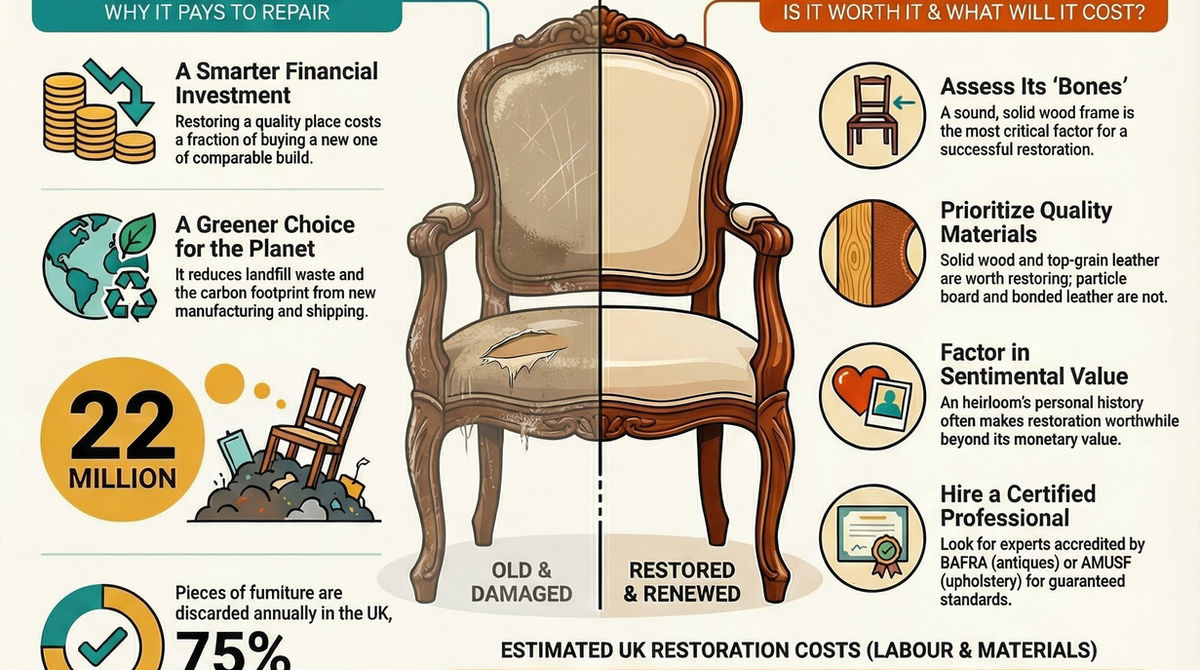
Whether you are dealing with a saggy seat, worn-out fabric, or a wobbly frame, professional restoration can return a piece to its former glory. This guide covers the essential steps, costs, and regulations involved in upholstered chair repair across the UK.
The cost of chair repair varies significantly based on the size of the piece and the complexity of the upholstery. Prices below include VAT and reflect 2025/26 UK market rates for professional services.
| Item / Service | Low £ | High £ | Notes |
|---|---|---|---|
| Dining Chair (Seat Only) | £60 | £150 | Simple drop-in or screw-on seat pad. |
| Standard Armchair | £350 | £800 | Labour only; excludes fabric costs. |
| Wingback or Chesterfield | £600 | £1,500 | Complex deep buttoning and curves. |
| Fabric (per metre) | £25 | £120 | Requires 2m for a seat, 5-8m for an armchair. |
| Spring/Webbing Repair | £80 | £180 | Standalone fix for "saggy" seats. |
| Frame Joint Repair | £50 | £120 | Per joint or major structural reinforcement. |
Labour is the primary cost driver, as reupholstery is a time-intensive manual skill. Fabric choice also plays a huge role; premium velvets or leathers can easily double the total project price.
Simple projects like re-covering a flat dining chair seat are well within the reach of a confident DIYer with a staple gun. However, structural repairs, spring tensioning, and complex fabric patterns (like stripes or large florals) require professional expertise to avoid a "homemade" look.
Professional upholsterers ensure your furniture meets modern UK fire safety standards, which is vital for both insurance purposes and your family's safety.
Upholstery is a specialist craft. Look for professionals with specific experience in your style of furniture, whether it is mid-century modern or Victorian antique.
Domestic upholstered furniture in the UK must comply with the Furniture and Furnishings (Fire) (Safety) Regulations 1988. This is one of the strictest standards in the world.
For high-quality or sentimental furniture, reupholstery is worth the cost. However, for cheap, modern flat-pack chairs, the cost of professional labour and fabric often exceeds the price of a brand-new replacement.
Most upholsterers allow "Customers Own Material" (COM), but they may charge a small cutting fee. Ensure the fabric is upholstery-grade and meets UK fire regulations before purchasing.
Re-covering simply puts new fabric over the old. Full reupholstery involves stripping the chair to the frame, repairing the "innards," and rebuilding the comfort layers from scratch.
Yes. If you ever intend to sell the chair or are a landlord renting a furnished property, the fire safety label is a legal requirement in the UK.
Lift the chair; if it feels heavy and solid, it likely has a hardwood frame (like beech or oak) worth saving. If it feels very light or "stapled" together, it may be low-grade chipboard or plywood.
This guide was written with AI assistance and is intended for general information only. Prices are estimates based on UK averages and may vary by region. Always get at least three quotes and consult a qualified professional before starting any work.
Ask follow-ups in plain English. The AI explains options, sequencing and what to ask the furniture repair — so you walk in informed.
Restoring a cherished piece of furniture is often more cost-effective and sustainable than buying new. Whether it is a family heirloom or a high-quality find th...
READ GUIDE →GuideTable revarnishing is one of the most effective ways to breathe new life into tired furniture. Whether it is a cherished family heirloom, a sturdy oak dining ta...
READ GUIDE →GuideA high-quality sofa is often a significant investment, making professional repair a far more sustainable and cost-effective choice than replacement. Whether it ...
READ GUIDE →GuideA coffee table is often the focal point of a British living room, but years of tea spills, hot mugs, and general wear can leave it looking tired. Restoring a hi...
READ GUIDE →GuideMoth damage can be a distressing discovery for UK homeowners, often affecting expensive wool carpets, heirloom upholstery, or high-end cashmere garments. While ...
READ GUIDE →GuideReupholstering a cherished armchair is a sustainable way to breathe new life into high-quality furniture that has seen better days. Many older UK-made chairs fe...
READ GUIDE →