Instant
01 · Ask
Ask the AI a follow-up
Got more questions about emergency Door Unlocking? Describe the bit you're unsure about — the AI explains options, sequencing and what to ask the locksmith.

Locked out, no spare key — 24-hour locksmith arrives quickly, opens without damage.
You've read the brief on emergency Door Unlocking. Now lean on us to find the right locksmith — and stay in control of the job.
Got more questions about emergency Door Unlocking? Describe the bit you're unsure about — the AI explains options, sequencing and what to ask the locksmith.
Costs, timelines, pitfalls and the right questions to ask before any locksmith starts on emergency Door Unlocking.
Itemised quotes from up to 3 local locksmiths on emergency Door Unlocking — so you can compare like-for-like, not lump sums.
Ready when you are
Enter your postcode and get free quotes from local pros.
Four moves that separate a smooth job from a nightmare.
A common burglary method in the UK. If your locksmith is replacing a cylinder, ensure they fit an "Anti-Snap" version.
Often, the lock isn't broken, but the door has dropped. A professional can realign the hinges to make the lock work again.
Caused by worn keys or "tight" cylinders. Professional extraction tools can usually remove the fragment without replacing the lock.
Fitting a non-BS3621 lock on a timber door can lead to insurance claims being rejected after a break-in.
Indicative UK ranges and what affects price.
By job type
Quote spread is typically ± 18% — always get 3 quotes.
Locksmith quick-view
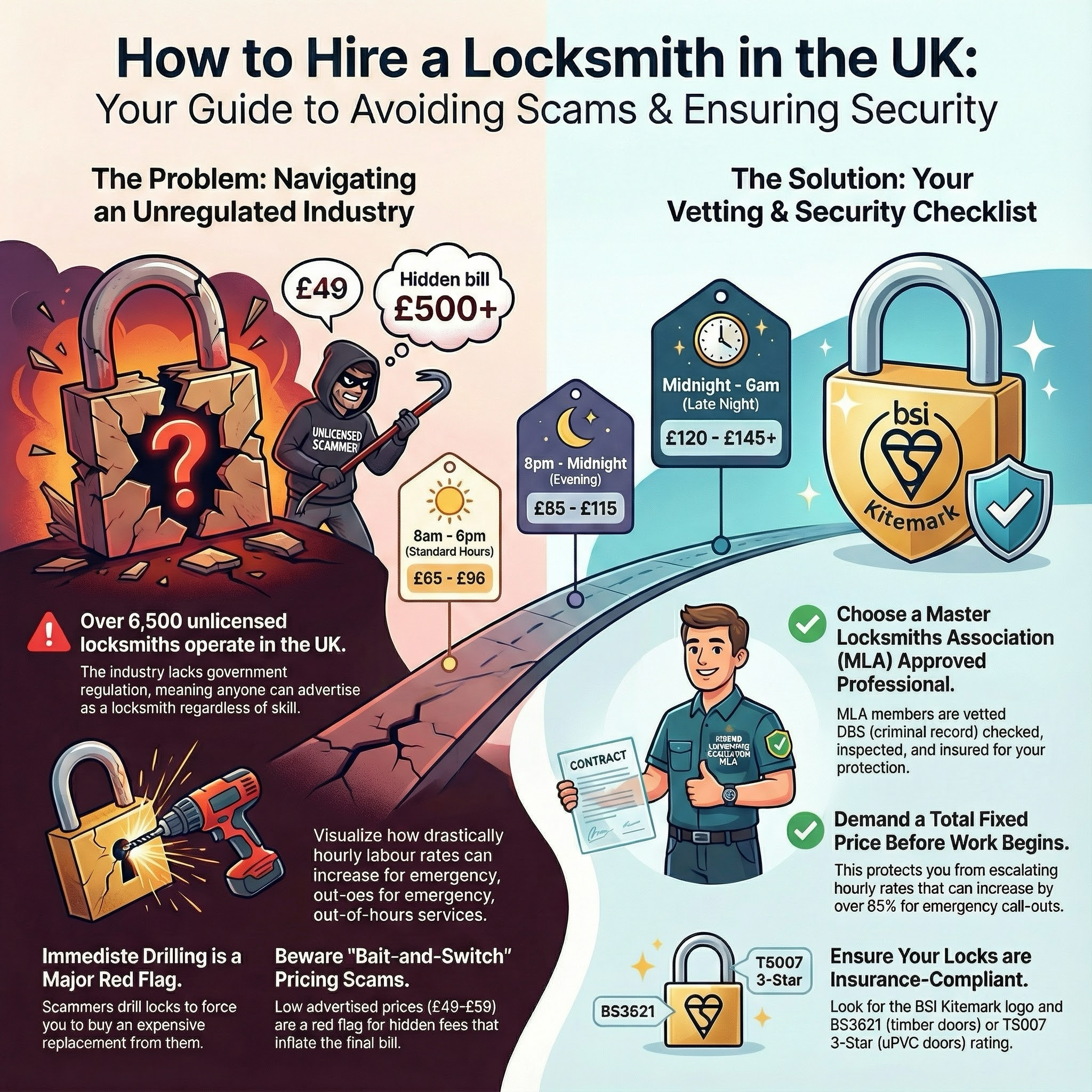
Locksmith explained
Professional emergency unlocking focuses on non-destructive entry, ensuring you can get back into your property without needing a new door or frame. This guide outlines the costs, processes, and standards you should expect when calling out a locksmith in the UK.
Prices for emergency locksmith services vary significantly based on your location (London and the South East are more expensive) and the time of day. Most locksmiths charge a fixed call-out fee plus an hourly labour rate.
| Item | Low £ | High £ | Notes |
|---|---|---|---|
| Emergency Call-Out (Daytime) | £60 | £90 | Flat fee to attend the property. |
| Emergency Call-Out (Night/Weekend) | £100 | £180 | Premium rates for out-of-hours service. |
| Labour (per hour) | £70 | £120 | Most lockouts are resolved within one hour. |
| Replacement Cylinder (Standard) | £30 | £60 | Basic security for timber or uPVC doors. |
| High-Security Cylinder (Anti-Snap) | £70 | £130 | British Standard (BS3621) compliant. |
| Full Multi-Point Mechanism | £150 | £300 | Required if the internal uPVC gearing has failed. |
Factors affecting the final bill include the complexity of the lock, whether parts need replacing, and the distance the locksmith has to travel. Always ask for a total estimate including VAT before work begins to avoid "bait and switch" pricing.
Locksmithing is a highly skilled trade that requires specialised tools. Attempting to "kick the door in" or drill the lock yourself usually results in expensive damage to the door leaf or frame, which can cost upwards of £600 to replace.
Professional locksmiths aim for non-destructive entry in over 90% of cases, saving you the cost of replacement hardware.
In the UK, there is no government licensing for locksmiths, which makes it even more important to hire a professional. A DIY approach may also void your home insurance if the door is left insecure or if you install a non-compliant lock.
Questions to ask: "Are you a member of the MLA?", "Do you carry spare British Standard locks on your van?", and "Will your work come with a written guarantee?"
A professional locksmith aims for non-destructive entry. In most cases, they can open the door using picking or bypass tools, leaving the door and lock completely unharmed. Drilling is only used as a last resort if the lock is broken internally.
Yes, for security and insurance purposes, it is highly recommended. You have no way of knowing who might find your keys. Replacing the cylinder is a quick job that ensures only you have access.
Most independent and local locksmiths offer a 24-hour service. However, expect to pay a significantly higher call-out fee for arrivals between 10 PM and 6 AM.
It is a lock that has been tested against common burglary techniques. Look for the "Kitemark" symbol on the faceplate of the lock. Most home insurance policies in the UK mandate these for external doors.
Yes. This usually indicates a failure of the multi-point locking mechanism (the gearbox). A locksmith can manually retract the bolts to open the door and then replace the failed internal components.
A driving licence with the correct address is ideal. If your ID is locked inside, the locksmith may gain entry first but will require you to show proof of residency (utility bill or ID) immediately upon entering.
This guide was written with AI assistance and is intended for general information only. Prices are estimates based on UK averages and may vary by region. Always get at least three quotes and consult a qualified professional before starting any work.
Ask follow-ups in plain English. The AI explains options, sequencing and what to ask the locksmith — so you walk in informed.
Van crime in the UK remains a significant concern for tradespeople and homeowners alike, with tool theft occurring every few minutes. Standard factory-fitted lo...
READ GUIDE →GuideGetting locked out of your vehicle is a stressful experience, whether you have left the keys in the ignition, trapped them in the boot, or lost them entirely. M...
READ GUIDE →GuideGetting locked out of your home is a stressful experience that requires a fast, reliable solution. Whether you have lost your keys, snapped one in the barrel, o...
READ GUIDE →GuideA stiff or misaligned door is more than a daily nuisance; it is a significant security vulnerability. For UK homeowners, a door that doesn't latch properly can ...
READ GUIDE →GuideGetting locked out of your vehicle is more than a minor inconvenience; in the UK, it often happens at the most inopportune moments, from rain-swept supermarket ...
READ GUIDE →GuideFor UK tradespeople and homeowners, a Ford Transit is often more than just a vehicle; it is a mobile workshop and a livelihood. Unfortunately, the Transit remai...
READ GUIDE →