Instant
01 · Ask
Ask the AI a follow-up
Got more questions about lock and handle fitting? Describe the bit you're unsure about — the AI explains options, sequencing and what to ask the locksmith.

Door handle and lock fitted together — supplied, drilled and aligned to clean reveal.
You've read the brief on lock and handle fitting. Now lean on us to find the right locksmith — and stay in control of the job.
Got more questions about lock and handle fitting? Describe the bit you're unsure about — the AI explains options, sequencing and what to ask the locksmith.
Costs, timelines, pitfalls and the right questions to ask before any locksmith starts on lock and handle fitting.
Itemised quotes from up to 3 local locksmiths on lock and handle fitting — so you can compare like-for-like, not lump sums.
Ready when you are
Enter your postcode and get free quotes from local pros.
Four moves that separate a smooth job from a nightmare.
Using a cheap cylinder that protrudes from the handle, making it easy for intruders to snap. Always opt for "Anti-Snap" 3-star cylinders.
A door that "needs a shoulder" to lock. This puts immense pressure on the mechanism and will eventually cause it to fail.
Buying a lock that is too deep or shallow for the existing door holes, leading to unsightly gaps or structural weakness.
Timber doors expanding in winter, causing the deadbolt to catch. A professional will allow for seasonal movement during fitting.
Indicative UK ranges and what affects price.
By job type
Quote spread is typically ± 18% — always get 3 quotes.
Locksmith quick-view
Locksmith explained
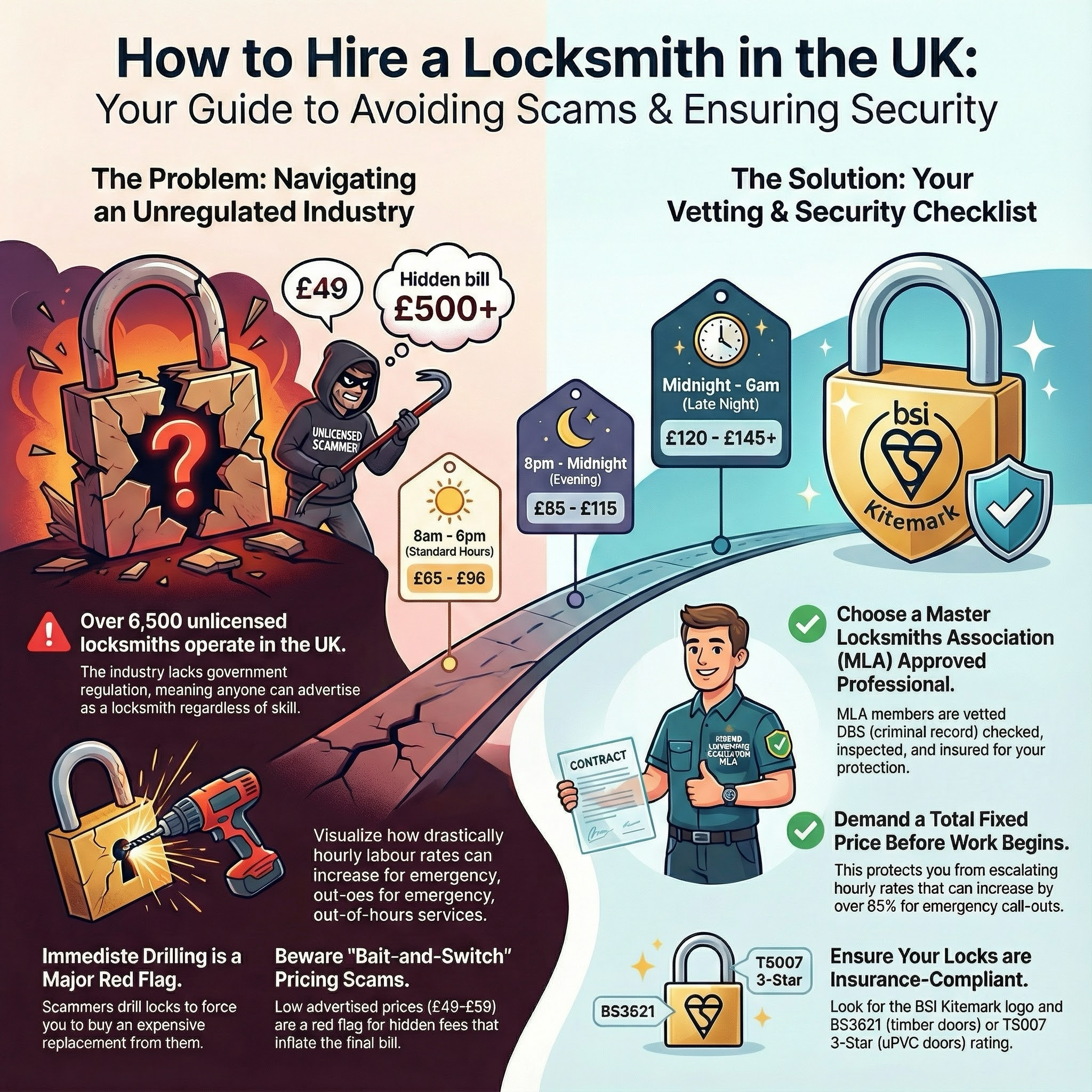
In the UK, many home insurance policies mandate specific security standards, such as British Standard BS3621 for timber doors. A professional locksmith doesn't just swap parts; they ensure the internal mechanism aligns perfectly with the frame, preventing long-term wear and potential lockouts.
Prices for lock and handle fitting vary based on the security rating of the hardware and whether the job is a simple "like-for-like" swap or a fresh installation requiring carpentry.
| Item | Low £ | High £ | Notes |
|---|---|---|---|
| Call-out Fee (Standard Hours) | £70 | £110 | Often covers the first 30-60 mins of labour. |
| Labour (Hourly Rate) | £50 | £90 | Regional variations apply (London is higher). |
| Standard Euro Cylinder | £25 | £50 | Basic security for internal or low-risk doors. |
| 3-Star Anti-Snap Cylinder | £60 | £110 | High-security, insurance-approved (TS007). |
| BS3621 Mortice Lock | £45 | £95 | 5-lever deadlocks for timber external doors. |
| Designer Door Handles (Pair) | £20 | £150+ | Varies wildly by finish and material. |
| Total Average Project | £140 | £450 | Includes basic parts, labour, and VAT. |
Factors affecting the final price include the number of locks being keyed alike (one key for multiple doors), emergency out-of-hours call-outs, and whether the door requires significant modification to accept a modern lock size.
While changing a basic handle is a common DIY task, fitting the lock mechanism itself is best left to a professional. Incorrectly fitted locks can void your home insurance if a burglary occurs. Furthermore, UK building regulations and fire safety standards (especially in flats) require specific hardware that a professional locksmith will be trained to identify and install correctly.
Note: If you have a UPVC or composite door, the multi-point locking system is complex. Forcing a DIY fit can lead to a jammed door that is expensive to rectify.
A 3-star rating (TS007) is the highest security level for cylinders. It protects against snapping, drilling, and bumping. If you have a UPVC or composite door, most UK insurers now prefer or require a 3-star cylinder or a 1-star cylinder paired with 2-star security handles.
Yes, this is called "Keyed Alike." A locksmith can supply multiple cylinders (even of different sizes) that all operate with the same key. This is convenient and reduces the bulk on your keyring, though it usually costs slightly more per cylinder.
If the new handles have a smaller "backplate" than the old ones, you may see a "tide mark" or old screw holes. It is best to measure your existing handles and choose a replacement with a similar or larger footprint to avoid the need for repainting.
Look for the "Kitemark" symbol engraved on the faceplate (the metal part visible when the door is open). It should also have the code BS3621 stamped next to it. If it doesn't have this, it likely doesn't meet the minimum security requirements for most UK insurers.
Usually, this is an alignment issue rather than a faulty lock. The door may have dropped on its hinges, or the strike plate may have shifted. A locksmith can often "service" the door by realigning it, which is cheaper than a full replacement.
This guide was written with AI assistance and is intended for general information only. Prices are estimates based on UK averages and may vary by region. Always get at least three quotes and consult a qualified professional before starting any work.
Ask follow-ups in plain English. The AI explains options, sequencing and what to ask the locksmith — so you walk in informed.
Van crime in the UK remains a significant concern for tradespeople and homeowners alike, with tool theft occurring every few minutes. Standard factory-fitted lo...
READ GUIDE →GuideGetting locked out of your vehicle is a stressful experience, whether you have left the keys in the ignition, trapped them in the boot, or lost them entirely. M...
READ GUIDE →GuideGetting locked out of your home is a stressful experience that requires a fast, reliable solution. Whether you have lost your keys, snapped one in the barrel, o...
READ GUIDE →GuideA stiff or misaligned door is more than a daily nuisance; it is a significant security vulnerability. For UK homeowners, a door that doesn't latch properly can ...
READ GUIDE →GuideGetting locked out of your vehicle is more than a minor inconvenience; in the UK, it often happens at the most inopportune moments, from rain-swept supermarket ...
READ GUIDE →GuideFor UK tradespeople and homeowners, a Ford Transit is often more than just a vehicle; it is a mobile workshop and a livelihood. Unfortunately, the Transit remai...
READ GUIDE →