Instant
01 · Ask
Lockout, change or upgrade?
Lost keys, moving in, insurance upgrade? Describe and the AI tells you what kind of locksmith and what spec.

Sticking, broken or worn locks — what they cost to repair vs replace, by lock type.
Read the brief on MLA membership, BS3621 locks and bait-and-switch quotes — then let Three local locksmiths quote.
Lost keys, moving in, insurance upgrade? Describe and the AI tells you what kind of locksmith and what spec.
MLA membership, BS3621, PAS 24, anti-snap cylinders, smart lock standards. Know the protection levels.
Three local locksmiths quote on the same spec — hardware, fit, warranty — so the cheapest isn't accidentally insecure.
Ready when you are
Enter your postcode and get free quotes from local pros.
Four moves that separate a smooth job from a nightmare.
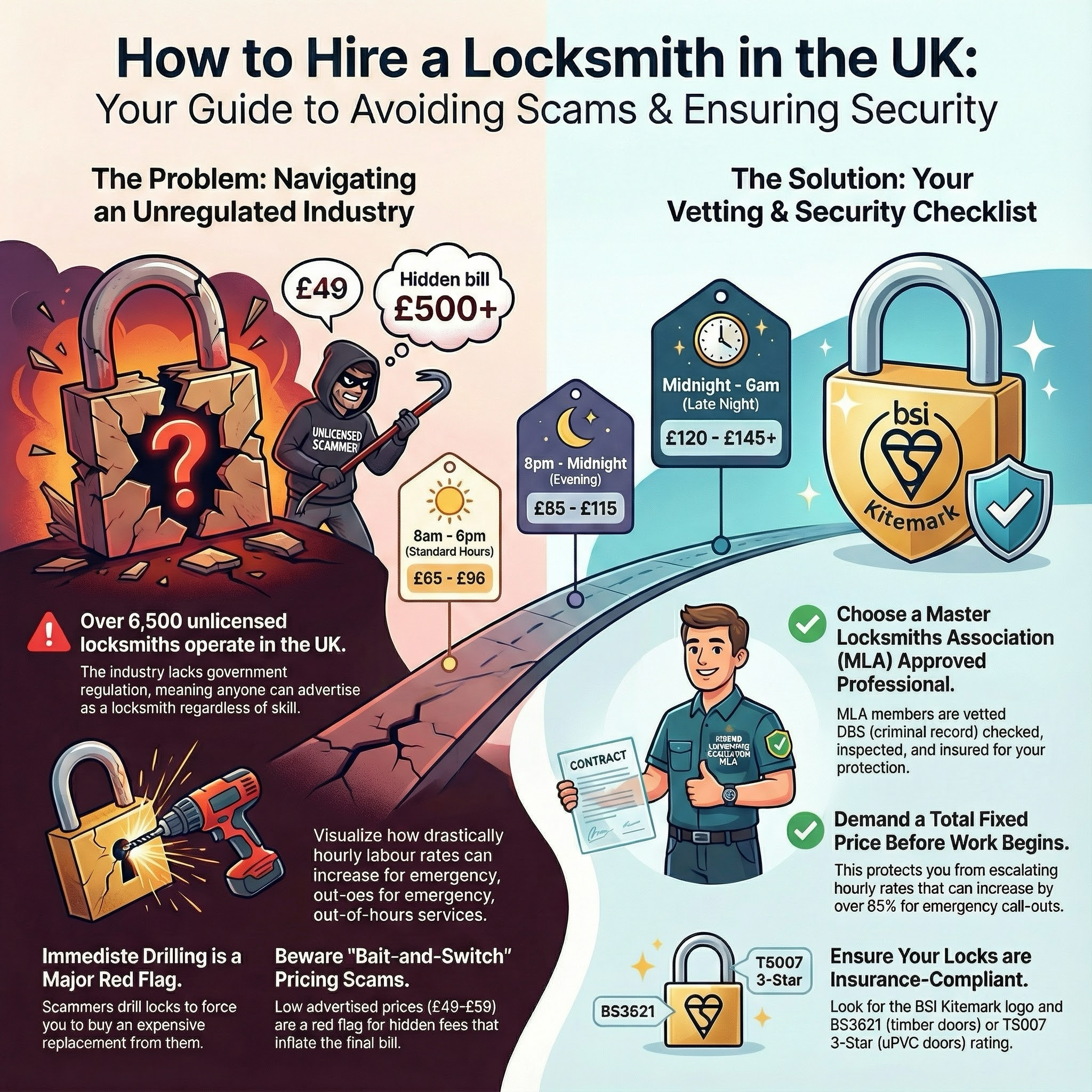
Anyone can call themselves a locksmith. MLA (Master Locksmiths Association) means vetted, DBS-checked, insured. Insist on it.
Some 'locksmith' adverts quote £29 then charge £350 on-site. MLA members quote upfront. If the price isn't fixed before they arrive, walk.
Most home insurers require BS3621 mortice deadlocks or PAS 24 multi-points on external doors. Without these, claims can be refused.
Standard euro cylinders snap in seconds. Anti-snap / Sold Secure SS312 Diamond rated are the upgrade. £30 hardware, massive security gain.
Indicative UK ranges and what affects price.
By job type
Quote spread is typically ± 18% — always get 3 quotes.
Locksmith quick-view
Locksmith explained
Lock repair and maintenance in the UK typically costs £40–£180 for routine servicing and minor repairs — a fraction of the cost of replacement. A bit of regular care extends lock life from 5-7 years (typical for neglected locks) to 15-25 years for premium lock systems.
Most lock failures aren't the lock — they're worn keys, dirty mechanisms, or hinges that have dropped putting strain on the lock. Diagnose properly before replacing.
| Problem | Typical cost |
|---|---|
| Lock service / maintenance (per lock) | £40–£90 |
| Multi-point lock realignment | £60–£140 |
| Stuck or jammed lock fix | £50–£120 |
| Broken key extraction | £60–£140 |
| Worn lever / pin tumbler repair | £70–£160 |
| Door alignment adjustment (related issue) | £50–£130 |
| Lubrication-only service (multiple locks) | £40–£90 |
Repair when:
Replace when:
Multi-point locks (the locking mechanism along the edge of UPVC and composite doors) develop classic symptoms with age:
UPVC multi-point gearbox replacement typically £140-£300 fitted. A locksmith with experience in your specific brand (Yale, ERA, Avocet, Lockmaster) is essential.
Routine domestic locks: lubrication annually, deeper inspection every 3-5 years. Premium / restricted-key systems: annual service worth the £40-£90 spend. Outdoor locks (gate, garage, padlocks): every 6-12 months due to weather.
Three common causes: dirty mechanism (lubricate first), worn key (cut a fresh one from the original spec), or worn lock (may need repair or replacement). Try lubrication; if no improvement, get a locksmith assessment.
Mostly repairable for premium locks under 10 years old with a specific fault. For budget locks, multiple faults, or major mechanical failure, replacement is usually cheaper.
Graphite powder for traditional pin tumbler locks (no oily residue, doesn't attract dust). PTFE-based dry lubricant for modern locks. Avoid WD-40 (water displacer, not lubricant) and oil-based products (gunk up over months).
Standard domestic locks: 7-15 years. Premium / restricted-key systems with regular maintenance: 20-30 years. UPVC multi-point mechanisms: 8-12 years before gearbox attention. Cylinders specifically: 5-15 years depending on use intensity.
Don't try to extract with pliers — usually pushes the broken piece deeper. Locksmith with extraction tools usually recovers without damage to the lock. £60-£140 typical. If extraction fails, the cylinder needs drilling out and replacing — much more expensive.
Want a local pro to handle this? A locksmith specialising in your door type (timber, UPVC, composite) handles repair and maintenance more cost-effectively than replacement. The MLA directory finds vetted local specialists.
This guide was written with AI assistance and is intended for general information only. Prices are estimates based on UK averages and may vary by region. Always get at least three quotes and consult a qualified professional before starting any work.
Ask follow-ups in plain English. The AI explains options, sequencing and what to ask the locksmith — so you walk in informed.
Van crime in the UK remains a significant concern for tradespeople and homeowners alike, with tool theft occurring every few minutes. Standard factory-fitted lo...
READ GUIDE →GuideGetting locked out of your vehicle is a stressful experience, whether you have left the keys in the ignition, trapped them in the boot, or lost them entirely. M...
READ GUIDE →GuideGetting locked out of your home is a stressful experience that requires a fast, reliable solution. Whether you have lost your keys, snapped one in the barrel, o...
READ GUIDE →GuideA stiff or misaligned door is more than a daily nuisance; it is a significant security vulnerability. For UK homeowners, a door that doesn't latch properly can ...
READ GUIDE →GuideGetting locked out of your vehicle is more than a minor inconvenience; in the UK, it often happens at the most inopportune moments, from rain-swept supermarket ...
READ GUIDE →GuideFor UK tradespeople and homeowners, a Ford Transit is often more than just a vehicle; it is a mobile workshop and a livelihood. Unfortunately, the Transit remai...
READ GUIDE →