Instant
01 · Ask
Ask the AI a follow-up
Got more questions about lock repair and replacement? Describe the bit you're unsure about — the AI explains options, sequencing and what to ask the locksmith.

Standard cylinder, mortice or multipoint lock — repaired where possible, replaced where not. Insurance-grade.
You've read the brief on lock repair and replacement. Now lean on us to find the right locksmith — and stay in control of the job.
Got more questions about lock repair and replacement? Describe the bit you're unsure about — the AI explains options, sequencing and what to ask the locksmith.
Costs, timelines, pitfalls and the right questions to ask before any locksmith starts on lock repair and replacement.
Itemised quotes from up to 3 local locksmiths on lock repair and replacement — so you can compare like-for-like, not lump sums.
Ready when you are
Enter your postcode and get free quotes from local pros.
Four moves that separate a smooth job from a nightmare.
This is a major issue in the UK where intruders snap uPVC cylinders. Avoid this by installing SS312 Diamond approved or TS007 3-star cylinders.
If you have to lift the handle to lock the door, the door has likely dropped. Forcing it will eventually break the internal gearbox.
Often caused by poor quality key cutting or debris in the lock. Use a graphite-based lubricant rather than WD-40, which can gum up the pins.
Buying a replacement mortice lock with the wrong "backset" (distance from the edge to the keyhole) will leave you with unsightly holes in your door.
Indicative UK ranges and what affects price.
By job type
Quote spread is typically ± 18% — always get 3 quotes.
Locksmith quick-view
Locksmith explained
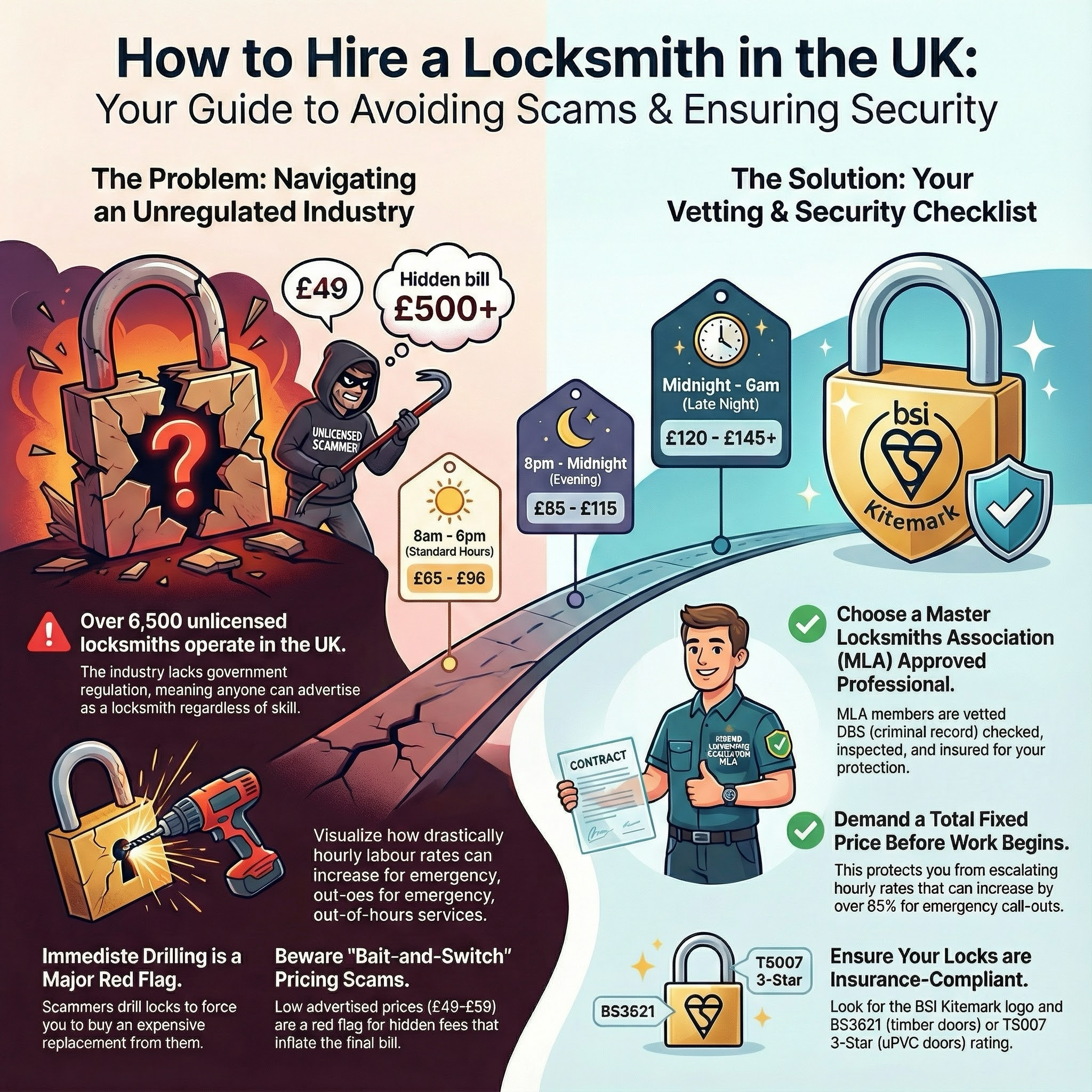
In the UK, locksmithing isn't just about getting a door open; it involves navigating British Standards (BS3621) and ensuring your home insurance remains valid. This guide breaks down the costs, timelines, and technical requirements for maintaining your property's security.
| Item | Low £ | High £ | Notes |
|---|---|---|---|
| Standard Call-out Fee | £80 | £120 | Covers travel and first 30-60 mins of labour. |
| Euro Cylinder (Standard) | £30 | £60 | Basic replacement for uPVC/Composite doors. |
| High-Security Cylinder (3-Star) | £75 | £140 | Anti-snap/Anti-drill with Kitemark. |
| Mortice Sash/Deadlock (BS3621) | £60 | £110 | Standard for timber front doors. |
| Multipoint Lock Mechanism | £150 | £350 | Full strip replacement for uPVC doors. |
| Hourly Labour Rate | £65 | £95 | Applied after the initial call-out period. |
Prices vary significantly based on your location and the time of day; emergency "out-of-hours" calls typically incur a 50-100% premium on the call-out fee. Always confirm if the quote includes VAT and how many keys are provided as standard.
While changing a basic Euro cylinder is technically simple, it is easy to measure incorrectly, leaving the lock protruding and vulnerable to "lock snapping." Professionals ensure the lock is flush and meets British Standard BS3621, which is a mandatory requirement for many UK home insurance policies.
For uPVC doors, DIY attempts often lead to misaligned mechanisms that eventually burn out the gearbox, leading to a much more expensive repair. A professional locksmith will "toe and heel" the door if necessary to ensure perfect alignment.
Insurance Warning: If you fit a non-approved lock and suffer a break-in, your insurer may refuse to pay out. Always look for the Kitemark symbol.
Only if the lock you install meets the specific standards outlined in your policy (usually BS3621). If you install it incorrectly or use a sub-standard part, your insurer may reject a future claim.
Anti-snap cylinders are designed with a sacrificial cut. If an intruder tries to snap the lock, only the front portion breaks off, leaving the internal locking mechanism intact and the door secure.
Most retail locks come with 2 or 3 keys. High-security cylinders often come with a security card that you must present to an authorised dealer to get additional copies made.
In the majority of cases, yes. Professional locksmiths use picking, bumping, or bypass tools to open doors non-destructively. Drilling is usually a last resort for failed mechanisms or high-security locks.
This allows you to have one key that opens every door in your house (front, back, garage, and padlocks) while still maintaining individual security for each door if required.
Not necessarily. A floppy handle usually indicates a broken spring in the handle itself or a failing spring in the multipoint gearbox. A locksmith can usually replace just the faulty component rather than the whole system.
This guide was written with AI assistance and is intended for general information only. Prices are estimates based on UK averages and may vary by region. Always get at least three quotes and consult a qualified professional before starting any work.
Ask follow-ups in plain English. The AI explains options, sequencing and what to ask the locksmith — so you walk in informed.
Van crime in the UK remains a significant concern for tradespeople and homeowners alike, with tool theft occurring every few minutes. Standard factory-fitted lo...
READ GUIDE →GuideGetting locked out of your vehicle is a stressful experience, whether you have left the keys in the ignition, trapped them in the boot, or lost them entirely. M...
READ GUIDE →GuideGetting locked out of your home is a stressful experience that requires a fast, reliable solution. Whether you have lost your keys, snapped one in the barrel, o...
READ GUIDE →GuideA stiff or misaligned door is more than a daily nuisance; it is a significant security vulnerability. For UK homeowners, a door that doesn't latch properly can ...
READ GUIDE →GuideGetting locked out of your vehicle is more than a minor inconvenience; in the UK, it often happens at the most inopportune moments, from rain-swept supermarket ...
READ GUIDE →GuideFor UK tradespeople and homeowners, a Ford Transit is often more than just a vehicle; it is a mobile workshop and a livelihood. Unfortunately, the Transit remai...
READ GUIDE →