Instant
01 · Ask
Ask the AI a follow-up
Got more questions about industrial Oven Degreasing? Describe the bit you're unsure about — the AI explains options, sequencing and what to ask the oven cleaning.

Restaurant, bakery or food-production oven — TR19-compliant deep clean with certificate.
You've read the brief on industrial Oven Degreasing. Now lean on us to find the right oven cleaning — and stay in control of the job.
Got more questions about industrial Oven Degreasing? Describe the bit you're unsure about — the AI explains options, sequencing and what to ask the oven cleaning.
Costs, timelines, pitfalls and the right questions to ask before any oven cleaning starts on industrial Oven Degreasing.
Itemised quotes from up to 3 local oven cleanings on industrial Oven Degreasing — so you can compare like-for-like, not lump sums.
Ready when you are
Enter your postcode and get free quotes from local pros.
Four moves that separate a smooth job from a nightmare.
If too much water or chemical enters the element housing, it can cause the RCD to trip. Ensure your technician uses "dry" cleaning methods around electrical components.
Using overly aggressive scrapers on certain brands of ovens can chip the enamel; always hire a specialist familiar with your specific brand.
If chemicals aren't properly rinsed, the oven may produce acrid fumes when first heated. A professional should always perform a "burn-off" check.
Old door seals can become brittle; a professional should alert you to this rather than cleaning over a failing part.
Indicative UK ranges and what affects price.
By job type
Quote spread is typically ± 18% — always get 3 quotes.
Oven Cleaning quick-view
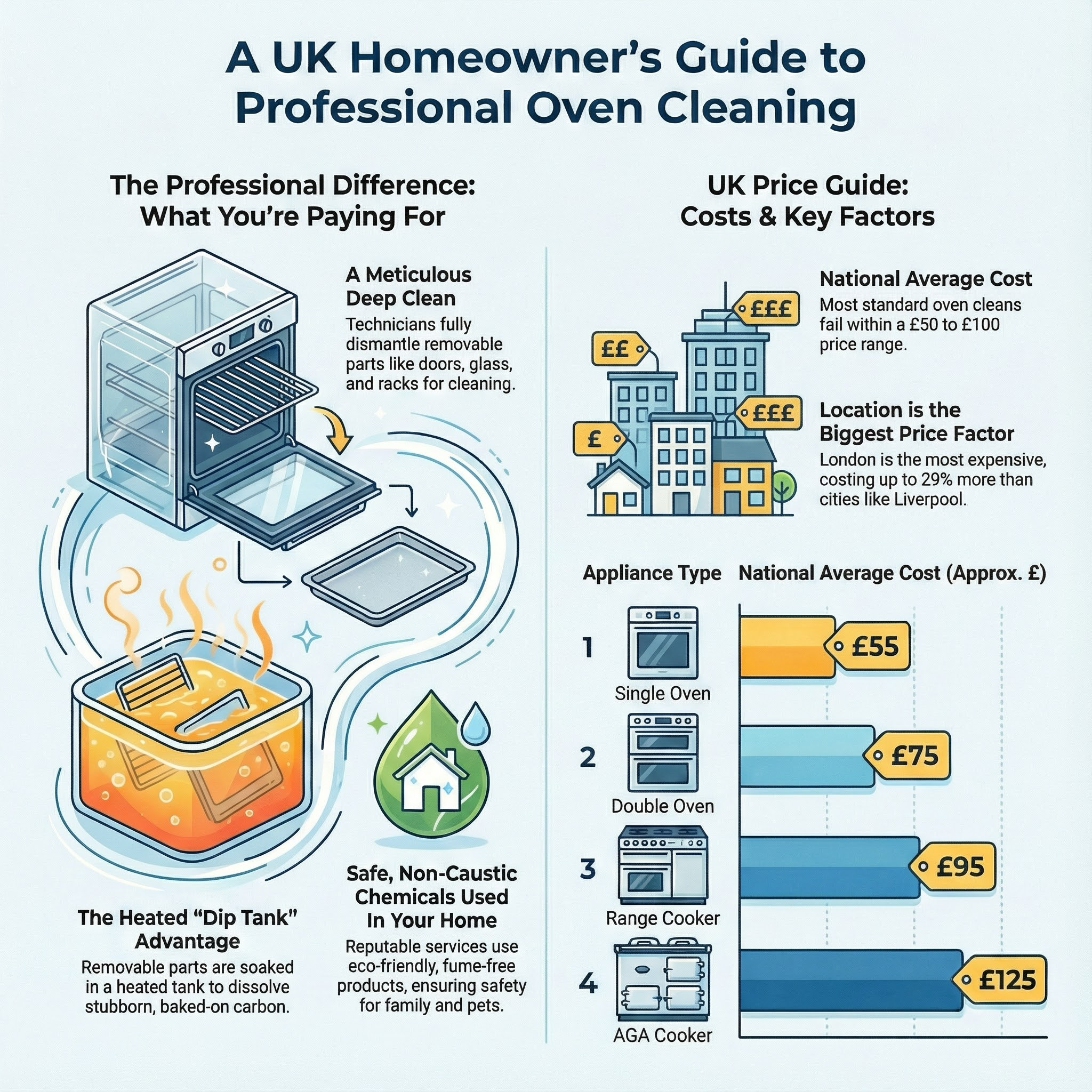
Oven Cleaning explained
This service goes beyond aesthetics; it involves the removal of baked-on grease from internal components that are usually inaccessible. By using specialised equipment and industrial-grade chemicals, a technician can return a heavily soiled appliance to near-showroom condition in a single visit.
| Item / Service Type | Low £ | High £ | Notes |
|---|---|---|---|
| Standard Large Range (90cm-110cm) | £150 | £220 | Includes dip-tank treatment for all racks. |
| Commercial 6-Burner Unit | £220 | £380 | Price varies by level of carbon build-up. |
| AGA / Rayburn (Full Deep Clean) | £180 | £280 | Requires the unit to be turned off in advance. |
| Extractor Hood & Filters | £60 | £110 | Often discounted if booked with the oven. |
| Minimum Call-out Charge | £90 | £150 | Covers travel and initial setup for small jobs. |
Pricing is primarily influenced by the size of the appliance and the degree of "carbonisation." If the oven has not been professionally cleaned for several years, technicians may charge a "heavy soil" premium due to the extra time and chemicals required.
Pro Tip: Most UK technicians offer a discount for "bundled" services, such as cleaning the hob and extractor fan at the same time as the main oven.
While domestic DIY kits are available, they lack the "dip tank" technology that allows professionals to get racks and fans perfectly clean without hours of scrubbing. Industrial degreasers can be hazardous; professionals are trained to handle caustic substances and ensure they are fully neutralised before you cook food.
For commercial-grade appliances, a professional clean is often a requirement of building insurance or food hygiene standards. Improper DIY cleaning can also damage delicate heating elements or scratch expensive enamel finishes, leading to rust.
In most cases, you can use the oven immediately. Because professionals use specialised rinsing agents and neutralisers, there is no need to wait, though a 10-minute "test heat" is usually recommended.
Yes. AGAs must be completely cold to be cleaned effectively and safely. This usually means turning the unit off at least 24 hours in advance.
Most modern professional technicians use non-caustic, fume-free solutions in the home. The only smell might be a faint "clean" scent, though the dip tank in the van may produce some steam outside.
Yes, a proper industrial degrease includes removing the back plate to clean the fan blades. Grease build-up here is a common cause of noisy fans and uneven cooking.
For busy family kitchens or range cookers, once every 6 to 12 months is standard. For light commercial environments, quarterly cleaning is often required for fire safety compliance.
This guide was written with AI assistance and is intended for general information only. Prices are estimates based on UK averages and may vary by region. Always get at least three quotes and consult a qualified professional before starting any work.
Ask follow-ups in plain English. The AI explains options, sequencing and what to ask the oven cleaning — so you walk in informed.
Professional oven cleaning is more than just a cosmetic fix; it is a vital maintenance task for any UK household. Over time, carbonised grease and burnt-on food...
READ GUIDE →GuideA professional heavy-duty oven clean is a transformative service that goes far beyond a standard domestic wipe-down. For UK homeowners, it is an essential maint...
READ GUIDE →GuideProfessional electric oven cleaning is one of the most effective ways to restore your kitchen's efficiency and hygiene. Over time, carbon deposits and burnt-on ...
READ GUIDE →GuideOven Cleaning Cost Guide Scope of Works Survey & protect surrounding worktops/floor with heat‑proof sheets. Remove racks, trays, glass panels and fan guard ...
READ GUIDE →GuideProfessional oven cleaning is one of the most popular home maintenance services in the UK, transforming a greasy, carbon-caked appliance back to near-showroom c...
READ GUIDE →GuideIn the high-pressure environment of a UK commercial kitchen, a standard domestic scrub simply won't cut it. Professional restaurant oven cleaning is a specialis...
READ GUIDE →