Instant
01 · Ask
Ask the AI a follow-up
Got more questions about oven Cleaning Service? Describe the bit you're unsure about — the AI explains options, sequencing and what to ask the oven cleaning.

Professional deep clean — strip, dip, polish and refit. Restores oven to factory-fresh in 2-3 hours.
You've read the brief on oven Cleaning Service. Now lean on us to find the right oven cleaning — and stay in control of the job.
Got more questions about oven Cleaning Service? Describe the bit you're unsure about — the AI explains options, sequencing and what to ask the oven cleaning.
Costs, timelines, pitfalls and the right questions to ask before any oven cleaning starts on oven Cleaning Service.
Itemised quotes from up to 3 local oven cleanings on oven Cleaning Service — so you can compare like-for-like, not lump sums.
Ready when you are
Enter your postcode and get free quotes from local pros.
Four moves that separate a smooth job from a nightmare.
Rubber seals can become brittle over time; a professional should alert you if a seal is likely to fail during cleaning.
In rare cases, moisture can get into an older heating element during cleaning, causing it to trip the electrics. A good pro will dry the area thoroughly before testing.
Using the wrong grade of blade or abrasive scourer can permanently scratch the oven interior.
If chemicals aren't rinsed properly, they can smoke or smell the first time you use the oven after cleaning.
Indicative UK ranges and what affects price.
By job type
Quote spread is typically ± 18% — always get 3 quotes.
Oven Cleaning quick-view
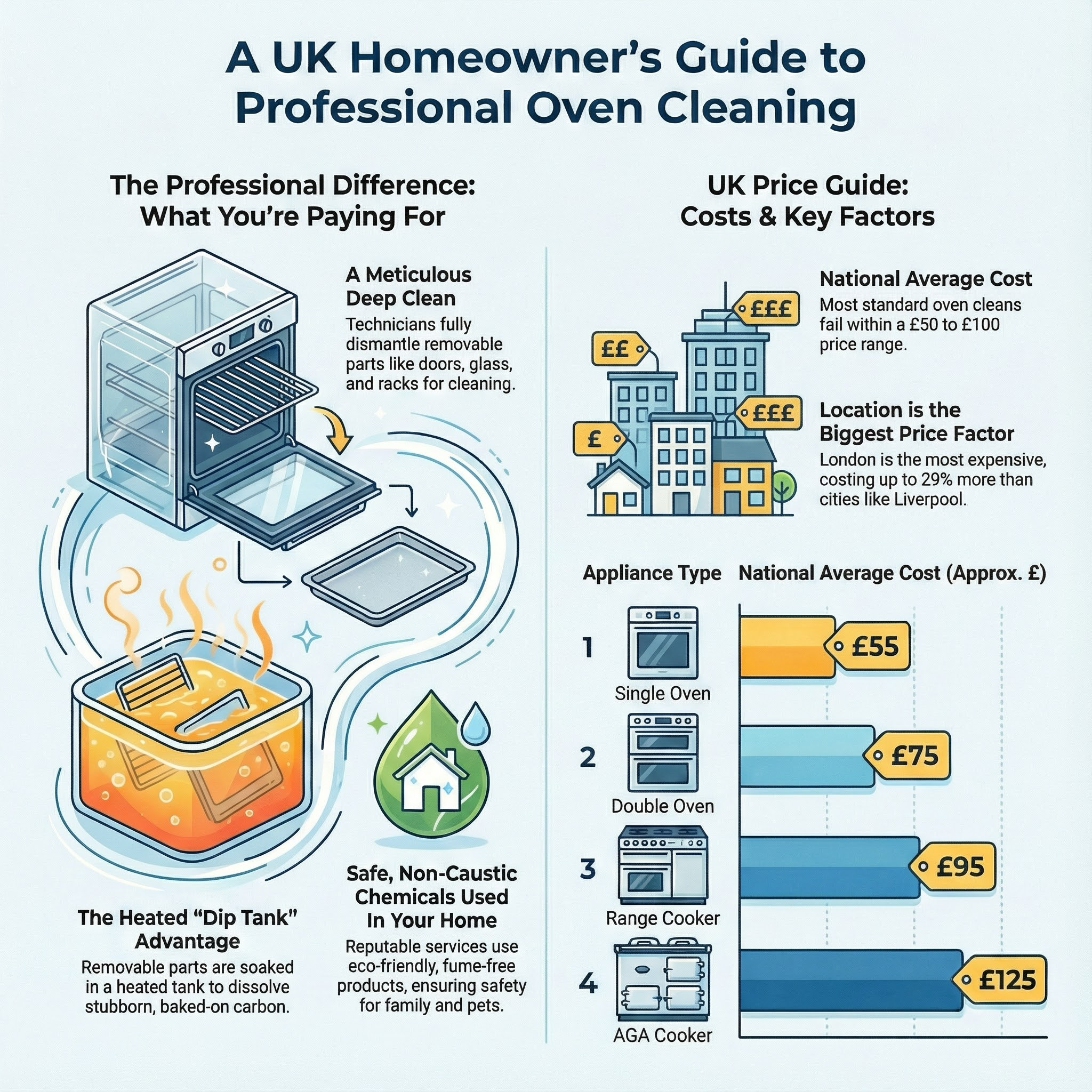
Oven Cleaning explained
A deep clean does more than just make your kitchen look better. It improves energy efficiency by allowing heat to circulate properly, removes fire hazards caused by grease build-up, and ensures your food isn't tainted by the smell of burnt carbon.
Oven cleaning prices in the UK are generally fixed based on the size of the appliance rather than an hourly rate. Regional variations apply, with prices in London and the South East typically 15-20% higher than the national average.
| Appliance Type | Low £ | High £ | Notes |
|---|---|---|---|
| Single Oven | £50 | £75 | Standard 60cm width. |
| Double Oven | £70 | £95 | Includes built-in or stacked units. |
| Range Cooker (Small) | £100 | £140 | Usually 90cm - 110cm widths. |
| AGA / Rayburn | £150 | £250 | Price depends on the number of ovens. |
| Hob (Gas or Electric) | £15 | £30 | Often discounted when booked with an oven. |
| Extractor Hood | £20 | £40 | Includes filter replacement or degreasing. |
Factors that influence the final price include the level of carbon build-up, the need for replacement bulbs or seals, and whether you require extras like microwave or BBQ cleaning. Most technicians have a minimum call-out fee of around £50.
While DIY oven cleaning is possible with supermarket kits, it rarely achieves the same results as a professional service. Home kits often contain caustic chemicals that require heavy ventilation and can damage the oven's enamel if left on too long.
Professional cleaners use heated dip tanks that strip grease from racks effortlessly, and their non-caustic solutions are safe for children and pets. Unless you are prepared for several hours of intense physical labour and have the tools to dismantle the door glass safely, hiring a professional is usually the better investment.
Pro Tip: Professional cleaning is particularly valuable if you are a tenant moving out of a rental property, as it helps guarantee the return of your deposit regarding kitchen cleanliness.
3 Questions to Ask:
There are no specific statutory licenses required for oven cleaning in the UK, but there are standards that should be followed:
Yes. Because professional cleaners typically use non-caustic, fume-free products, you can turn the oven on and cook straight away. The technician will usually heat the oven for a few minutes at the end of the service to ensure everything is dry.
Catalytic liners are designed to burn off grease at high temperatures. Professionals will usually clean the areas around them but avoid using heavy chemicals on the liners themselves, as this can strip the special coating that makes them functional.
For an average family of four, a professional deep clean every 6 to 12 months is recommended. If you roast meat frequently or use the oven daily, you may find a 6-month schedule keeps the appliance in better condition and prevents permanent carbon staining.
Modern professional oven cleaning is virtually odourless. Technicians use "fume-free" solutions that don't produce the choking chemical smells associated with supermarket aerosols, making it safe to stay in the house during the process.
You don't need to pre-scrub, but clearing the area around the oven and ensuring the sink is clear can be helpful. It is also important to ensure the oven is completely cool before the technician arrives so they can start work immediately.
Many oven cleaning specialists carry a stock of universal bulbs and can replace them for a small fee. Some also offer a seal replacement service, but it is best to mention this when booking so they can check if they have the correct part for your specific model.
This guide was written with AI assistance and is intended for general information only. Prices are estimates based on UK averages and may vary by region. Always get at least three quotes and consult a qualified professional before starting any work.
Ask follow-ups in plain English. The AI explains options, sequencing and what to ask the oven cleaning — so you walk in informed.
Professional oven cleaning is more than just a cosmetic fix; it is a vital maintenance task for any UK household. Over time, carbonised grease and burnt-on food...
READ GUIDE →GuideFor UK homeowners with high-end range cookers, such as AGAs, Wolf, or Lacanche, or those managing light commercial kitchens, standard supermarket sprays rarely ...
READ GUIDE →GuideA professional heavy-duty oven clean is a transformative service that goes far beyond a standard domestic wipe-down. For UK homeowners, it is an essential maint...
READ GUIDE →GuideProfessional electric oven cleaning is one of the most effective ways to restore your kitchen's efficiency and hygiene. Over time, carbon deposits and burnt-on ...
READ GUIDE →GuideOven Cleaning Cost Guide Scope of Works Survey & protect surrounding worktops/floor with heat‑proof sheets. Remove racks, trays, glass panels and fan guard ...
READ GUIDE →GuideIn the high-pressure environment of a UK commercial kitchen, a standard domestic scrub simply won't cut it. Professional restaurant oven cleaning is a specialis...
READ GUIDE →