Instant
01 · Ask
Ask the AI a follow-up
Got more questions about emergency Water Damage Repair? Describe the bit you're unsure about — the AI explains options, sequencing and what to ask the surface repair.

Water-marked timber, plaster or laminate — restored or replaced after a leak or flood.
You've read the brief on emergency Water Damage Repair. Now lean on us to find the right surface repair — and stay in control of the job.
Got more questions about emergency Water Damage Repair? Describe the bit you're unsure about — the AI explains options, sequencing and what to ask the surface repair.
Costs, timelines, pitfalls and the right questions to ask before any surface repair starts on emergency Water Damage Repair.
Itemised quotes from up to 3 local surface repairs on emergency Water Damage Repair — so you can compare like-for-like, not lump sums.
Ready when you are
Enter your postcode and get free quotes from local pros.
Four moves that separate a smooth job from a nightmare.
Peeling wallpaper and warped wood often occur days after the initial leak if humidity levels aren't controlled.
Surfaces may feel dry to the touch while the "core" of the material remains saturated, leading to future rot.
Disturbing mouldy materials without proper containment can spread spores throughout the rest of your home.
Failing to document the damage properly or using uncertified tradespeople can lead to insurance claims being denied.
Indicative UK ranges and what affects price.
By job type
Quote spread is typically ± 18% — always get 3 quotes.
Surface Repair quick-view
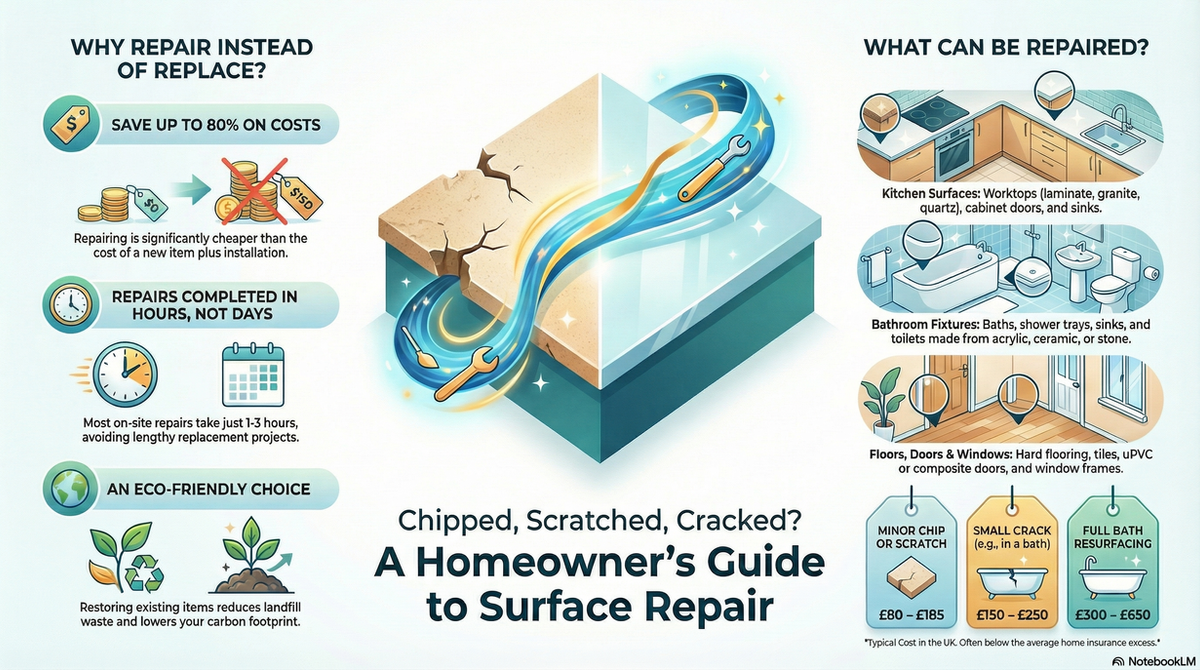
Surface Repair explained
Professional surface repair in the wake of water damage focuses on stabilising the environment and restoring affected materials. This guide covers the essential steps, costs, and regulations involved in getting your home back to its best after a leak or flood.
The cost of water damage repair varies significantly based on the volume of water and the materials affected. Emergency call-out fees usually cover the first hour of labour and the initial assessment.
| Item | Low £ | High £ | Notes |
|---|---|---|---|
| Emergency Call-Out (24/7) | £150 | £350 | Includes initial 1-hour assessment. |
| Labour (per hour) | £60 | £100 | Specialist technician rate. |
| Dehumidifier Hire (per week) | £120 | £250 | Industrial grade LGR units. |
| Air Mover Hire (per week) | £40 | £80 | Per unit; multiple units often required. |
| Moisture Survey & Report | £250 | £500 | Often required for insurance claims. |
| Small Room Restoration | £800 | £2,500 | Drying and minor surface repairs. |
Factors affecting the final bill include the category of water (clean, grey, or black), the duration the water was left standing, and the accessibility of the affected area. Prices include VAT at 20%.
While mopping up a minor spill is a DIY task, emergency water damage repair almost always requires professional intervention. Hidden moisture trapped behind skirting boards or under floorboards can lead to dry rot or toxic mould if not addressed with industrial drying equipment.
Warning: Always consult a professional if water has come into contact with electrical sockets, fuse boxes, or if the water is contaminated (e.g., sewage).
Questions to ask:
Most UK buildings insurance policies cover "escape of water," but they may not cover gradual leaks or "ingress" (water coming from outside). Always check your policy and take photos of everything before work begins.
Professionals use "dry standards" by comparing the affected area to a known dry part of the building. They will use deep-probe moisture meters to ensure the internal structure is dry, not just the surface.
In most cases, yes, though industrial dehumidifiers and air movers are very loud and generate significant heat. If the kitchen or bathroom is out of action, your insurance may cover "alternative accommodation."
Usually, no. Professional drying relies on a "closed drying circuit" where dehumidifiers control the environment. Opening windows can introduce more moisture from the outside air, making the equipment less effective.
Clean water comes from mains pipes or tanks. Black water is contaminated (sewage or floodwater) and poses a serious health risk, requiring specialist biohazard cleaning before any surface repairs can start.
Mould spores can begin to colonise damp surfaces within 24 to 48 hours. This is why rapid extraction and the use of antimicrobial sprays are critical in the first day of the incident.
This guide was written with AI assistance and is intended for general information only. Prices are estimates based on UK averages and may vary by region. Always get at least three quotes and consult a qualified professional before starting any work.
Ask follow-ups in plain English. The AI explains options, sequencing and what to ask the surface repair — so you walk in informed.
Damaged bathroom tiles are more than just an eyesore; they can lead to significant structural issues if water penetrates the substrate. Whether it is a hairline...
READ GUIDE →GuideKitchen Countertop Replacement Guide Scope of Works Pre‑visit survey & templating – measure runs, confirm joins, splashback height and hob/sink cut‑outs. Di...
READ GUIDE →GuideLaminate flooring is a popular choice for UK homeowners due to its durability and aesthetic appeal. However, despite its tough wear layer, it is not indestructi...
READ GUIDE →GuideWood hole filling is an essential maintenance task for UK homeowners looking to preserve the aesthetic and structural integrity of their timber. From repairing ...
READ GUIDE →GuideCeramic Surface Repair: A Guide for UK Homeowners Ceramic surfaces—from bathroom tiles and kitchen splashbacks to porcelain sinks and floor tiles—are incredibly...
READ GUIDE →GuideA cracked or chipped shower tray is more than just a cosmetic eyesore; it is a significant risk to your home’s structural integrity. Even a hairline fracture ca...
READ GUIDE →