Instant
01 · Ask
Ask the AI a follow-up
Got more questions about floor repair? Describe the bit you're unsure about — the AI explains options, sequencing and what to ask the surface repair.

Wood, laminate, tile or vinyl floor damage — patched, replaced or refinished to match.
You've read the brief on floor repair. Now lean on us to find the right surface repair — and stay in control of the job.
Got more questions about floor repair? Describe the bit you're unsure about — the AI explains options, sequencing and what to ask the surface repair.
Costs, timelines, pitfalls and the right questions to ask before any surface repair starts on floor repair.
Itemised quotes from up to 3 local surface repairs on floor repair — so you can compare like-for-like, not lump sums.
Ready when you are
Enter your postcode and get free quotes from local pros.
Four moves that separate a smooth job from a nightmare.
New timber is much lighter than old, oxidised wood. A pro will use professional stains or "aged" reclaimed wood to prevent the repair from looking like a patch.
Often caused by using the wrong fixings. Modern flooring screws are better than traditional nails for preventing "floorboard creep" and noise.
Repairing a rotten board without fixing the leaking pipe or damp subfloor will result in the new wood rotting within months.
Wood expands and contracts with UK humidity. Failing to leave a 10-15mm gap at the perimeter can cause the floor to buckle or "peak."
Indicative UK ranges and what affects price.
By job type
Quote spread is typically ± 18% — always get 3 quotes.
Surface Repair quick-view
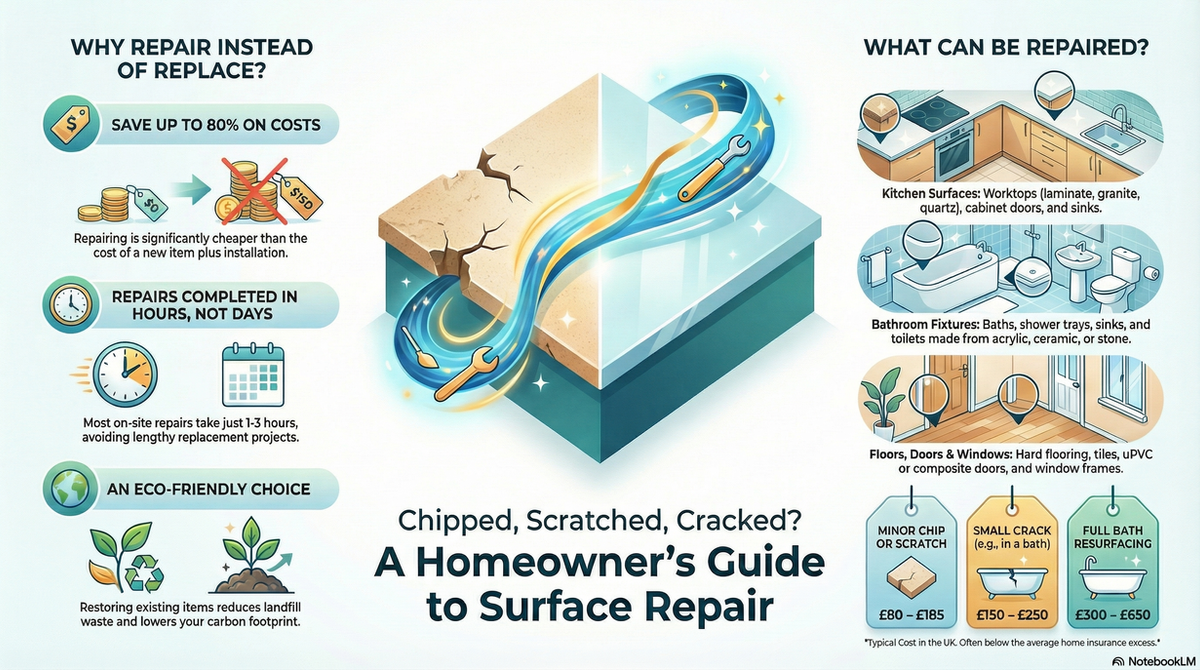
Surface Repair explained
Floor repairs in the UK vary significantly depending on the age of the property and the materials used. From breathable timber subfloors in period properties to modern screeded bases with underfloor heating, understanding the specific requirements of your floor type is essential for a lasting fix.
The cost of floor repair in the UK depends heavily on the material and whether structural work is required beneath the surface. Prices below include VAT and reflect 2025/26 market rates.
| Item | Low £ | High £ | Notes |
|---|---|---|---|
| Call-out / Minimum Charge | £80 | £150 | Covers travel and the first hour of assessment/small repair. |
| Labour (per hour) | £45 | £75 | Higher rates in London and the South East. |
| Softwood Board Replacement | £150 | £350 | Small patch repair including materials and labour. |
| Hardwood/Parquet Repair | £300 | £800 | Requires specialist matching and intricate fitting. |
| Joist Reinforcement | £250 | £600 | Per section; involves lifting significant portions of the floor. |
| Waste Disposal | £40 | £100 | Removal of old timber, carpets, or screed debris. |
Factors that will push your quote toward the higher end include the need for reclaimed timber (which is often more expensive than new wood), the complexity of the pattern (such as herringbone or chevron), and the presence of pipework or electrical cables directly beneath the damage.
While a confident DIYer can handle minor laminate repairs or filling small gaps in floorboards, structural repairs should always be left to a professional joiner or flooring specialist. If you discover "bouncy" floors or suspect rot, a pro is required to ensure the integrity of the building is maintained.
Warning: If your repair involves moving radiators to lift boards, you must use a Gas Safe registered engineer. Similarly, any electrical cables disturbed under the floorboards should be handled by a Part P qualified electrician.
Questions to ask:
Yes, but it is difficult. Because the planks are interlocked, a professional usually has to "cut out" the damaged plank and replace it by removing the locking tongues on the new piece and using high-strength adhesive to bond it in place.
This is usually caused by joist issues—either "notching" for pipes has weakened them, or moisture has caused rot. In some cases, it may be due to the joist ends "settling" into the masonry. A structural assessment is required.
Squeaks are caused by boards rubbing against nails or other boards. Usually, replacing old nails with wood screws (and ensuring they hit the joist) solves the problem. If the squeak is under a carpet, a specialist "squeeek-no-more" kit can be used.
Not always, but it is the only way to get a 100% perfect match. A skilled tradesperson can "feather" a repair by blending the finish into the surrounding area, but there will often be a slight difference in sheen or tone.
Yes, but extreme care is needed. The tradesperson must use thermal imaging or original installation maps to locate the pipes or electric mats before cutting or screwing into the floor to avoid catastrophic leaks or shorts.
This guide was written with AI assistance and is intended for general information only. Prices are estimates based on UK averages and may vary by region. Always get at least three quotes and consult a qualified professional before starting any work.
Ask follow-ups in plain English. The AI explains options, sequencing and what to ask the surface repair — so you walk in informed.
Damaged bathroom tiles are more than just an eyesore; they can lead to significant structural issues if water penetrates the substrate. Whether it is a hairline...
READ GUIDE →GuideKitchen Countertop Replacement Guide Scope of Works Pre‑visit survey & templating – measure runs, confirm joins, splashback height and hob/sink cut‑outs. Di...
READ GUIDE →GuideLaminate flooring is a popular choice for UK homeowners due to its durability and aesthetic appeal. However, despite its tough wear layer, it is not indestructi...
READ GUIDE →GuideWood hole filling is an essential maintenance task for UK homeowners looking to preserve the aesthetic and structural integrity of their timber. From repairing ...
READ GUIDE →GuideCeramic Surface Repair: A Guide for UK Homeowners Ceramic surfaces—from bathroom tiles and kitchen splashbacks to porcelain sinks and floor tiles—are incredibly...
READ GUIDE →GuideA cracked or chipped shower tray is more than just a cosmetic eyesore; it is a significant risk to your home’s structural integrity. Even a hairline fracture ca...
READ GUIDE →