Instant
01 · Ask
Ask the AI a follow-up
Got more questions about window sill repair consultation? Describe the bit you're unsure about — the AI explains options, sequencing and what to ask the surface repair.

Rotten, cracked or damaged window sill — consulted with treatment plan and cost estimate.
You've read the brief on window sill repair consultation. Now lean on us to find the right surface repair — and stay in control of the job.
Got more questions about window sill repair consultation? Describe the bit you're unsure about — the AI explains options, sequencing and what to ask the surface repair.
Costs, timelines, pitfalls and the right questions to ask before any surface repair starts on window sill repair consultation.
Itemised quotes from up to 3 local surface repairs on window sill repair consultation — so you can compare like-for-like, not lump sums.
Ready when you are
Enter your postcode and get free quotes from local pros.
Four moves that separate a smooth job from a nightmare.
Paint or debris filling the groove on the underside of the sill, causing water to soak into the brickwork.
Applying filler over damp wood without removing the rot first, which allows the decay to continue invisibly beneath the surface.
Using cheap interior silicone instead of high-modulus external sealant, leading to leaks within months.
Using untreated pine for an external sill, which will likely rot again within 3-5 years in the UK climate.
Indicative UK ranges and what affects price.
By job type
Quote spread is typically ± 18% — always get 3 quotes.
Surface Repair quick-view
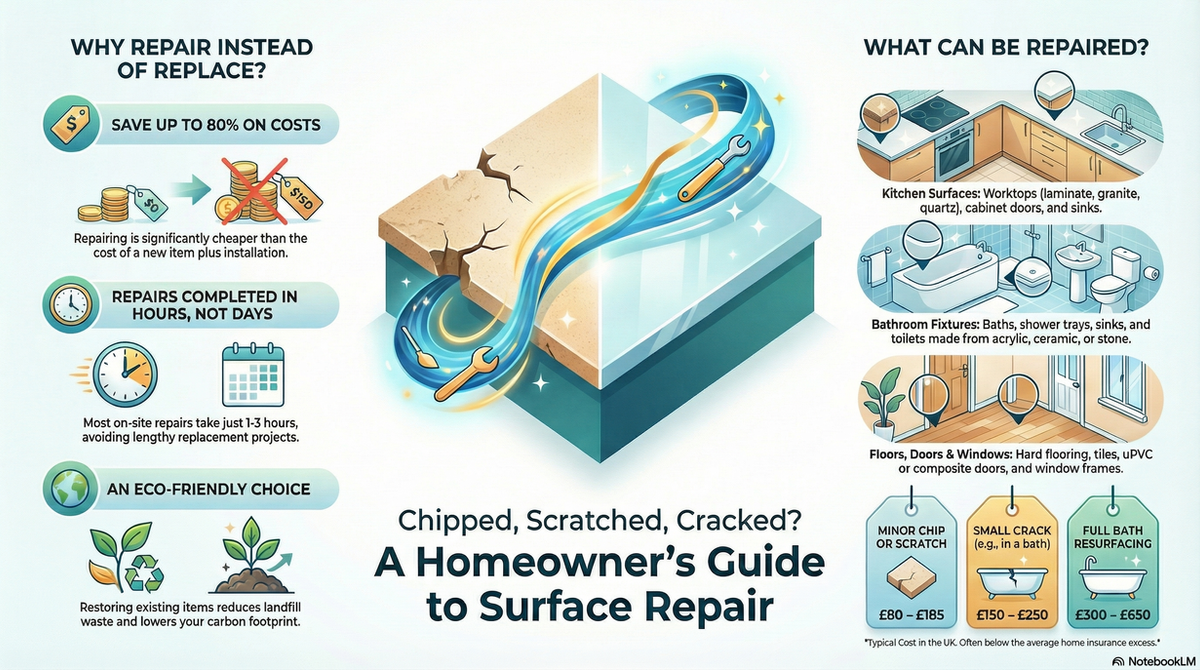
Surface Repair explained
A professional window sill consultation identifies the extent of decay before it spreads to the main window frame or wall cavity. Whether you have traditional timber, Victorian stone, or modern uPVC, an expert assessment ensures you choose the most cost-effective long-term solution rather than a temporary patch.
| Item | Low £ | High £ | Notes |
|---|---|---|---|
| Initial Consultation/Survey | £75 | £150 | Often waived if you proceed with the repair work. |
| Resin Repair (Per Sill) | £180 | £350 | Filling and sanding minor rot using specialist epoxy. |
| Timber Sill Replacement | £450 | £850 | Full removal and replacement with hardwood or treated softwood. |
| Stone/Concrete Sill Repair | £250 | £600 | Includes specialist mortar matching and reinforcement. |
| Scaffolding (Per Lift) | £300 | £750 | Necessary for safe access to upper-floor windows. |
| Waste Disposal | £40 | £100 | Removal of old timber, lead, or masonry debris. |
Prices vary significantly based on material choices; for example, a bespoke oak sill will cost considerably more than a standard softwood equivalent. Accessibility is the other major factor, as upper-floor repairs often require scaffolding or a mobile elevated work platform (MEWP) to comply with UK safety standards.
Small surface cracks or minor paint peeling can be handled by a competent DIYer using a high-quality exterior wood filler. However, if the wood feels soft when pressed or the "drip" is no longer functioning, a professional joiner or surface specialist is essential.
Structural repairs to window sills often involve "making good" the surrounding masonry and ensuring a watertight seal; if done incorrectly by a DIYer, it can trap moisture inside the wall, leading to dry rot.
Professional surface repairers use industrial-grade resins that expand and contract with the window, whereas domestic fillers often crack after one winter. For stone sills, matching the original profile and colour requires a specialist stonemason to maintain the property's kerb appeal and value.
Repairing with specialist resin is usually 50-70% cheaper than a full replacement, especially for large windows. However, if more than 30% of the sill is rotten, a full replacement is often the more cost-effective long-term solution.
While some internal assessments can be made, the actual repair work must be carried out from the exterior to ensure the weather seal and drip groove are correctly formed. Upper-floor windows will require external access via scaffolding or ladders.
If your property was built before 1960, there is a high chance of lead paint. A professional can use a simple chemical test kit during the consultation to confirm this, as it requires specific PPE and disposal methods.
This is often due to "spalling," caused by water soaking into the stone and freezing. It can also be caused by using the wrong type of hard cement mortar for previous repairs, which traps moisture inside the softer stone.
Timber repairs should be primed and painted as soon as the resin or wood has reached the correct moisture level. Leaving bare wood or filler exposed to the rain for even a few days can compromise the bond of the paint.
This guide was written with AI assistance and is intended for general information only. Prices are estimates based on UK averages and may vary by region. Always get at least three quotes and consult a qualified professional before starting any work.
Ask follow-ups in plain English. The AI explains options, sequencing and what to ask the surface repair — so you walk in informed.
Damaged bathroom tiles are more than just an eyesore; they can lead to significant structural issues if water penetrates the substrate. Whether it is a hairline...
READ GUIDE →GuideKitchen Countertop Replacement Guide Scope of Works Pre‑visit survey & templating – measure runs, confirm joins, splashback height and hob/sink cut‑outs. Di...
READ GUIDE →GuideLaminate flooring is a popular choice for UK homeowners due to its durability and aesthetic appeal. However, despite its tough wear layer, it is not indestructi...
READ GUIDE →GuideWood hole filling is an essential maintenance task for UK homeowners looking to preserve the aesthetic and structural integrity of their timber. From repairing ...
READ GUIDE →GuideCeramic Surface Repair: A Guide for UK Homeowners Ceramic surfaces—from bathroom tiles and kitchen splashbacks to porcelain sinks and floor tiles—are incredibly...
READ GUIDE →GuideA cracked or chipped shower tray is more than just a cosmetic eyesore; it is a significant risk to your home’s structural integrity. Even a hairline fracture ca...
READ GUIDE →