Instant
01 · Ask
Ask the AI a follow-up
Got more questions about wood table repair? Describe the bit you're unsure about — the AI explains options, sequencing and what to ask the surface repair.

Wobbly leg, water mark, scratch or split top — restored without replacing the table.
You've read the brief on wood table repair. Now lean on us to find the right surface repair — and stay in control of the job.
Got more questions about wood table repair? Describe the bit you're unsure about — the AI explains options, sequencing and what to ask the surface repair.
Costs, timelines, pitfalls and the right questions to ask before any surface repair starts on wood table repair.
Itemised quotes from up to 3 local surface repairs on wood table repair — so you can compare like-for-like, not lump sums.
Ready when you are
Enter your postcode and get free quotes from local pros.
Four moves that separate a smooth job from a nightmare.
Inexperienced repairers can easily sand through thin modern veneers, exposing the MDF or plywood underneath, which is often irreparable.
This occurs when moisture is trapped under a new finish, creating a cloudy or white haze that requires the finish to be stripped back again.
If you have used "spray-on" supermarket polishes, the silicone can cause new finishes to "fish-eye" or fail to bond, requiring intensive chemical cleaning.
Using the wrong filler or timber species for a repair can make the patch look like a permanent blemish rather than a seamless fix.
Indicative UK ranges and what affects price.
By job type
Quote spread is typically ± 18% — always get 3 quotes.
Surface Repair quick-view
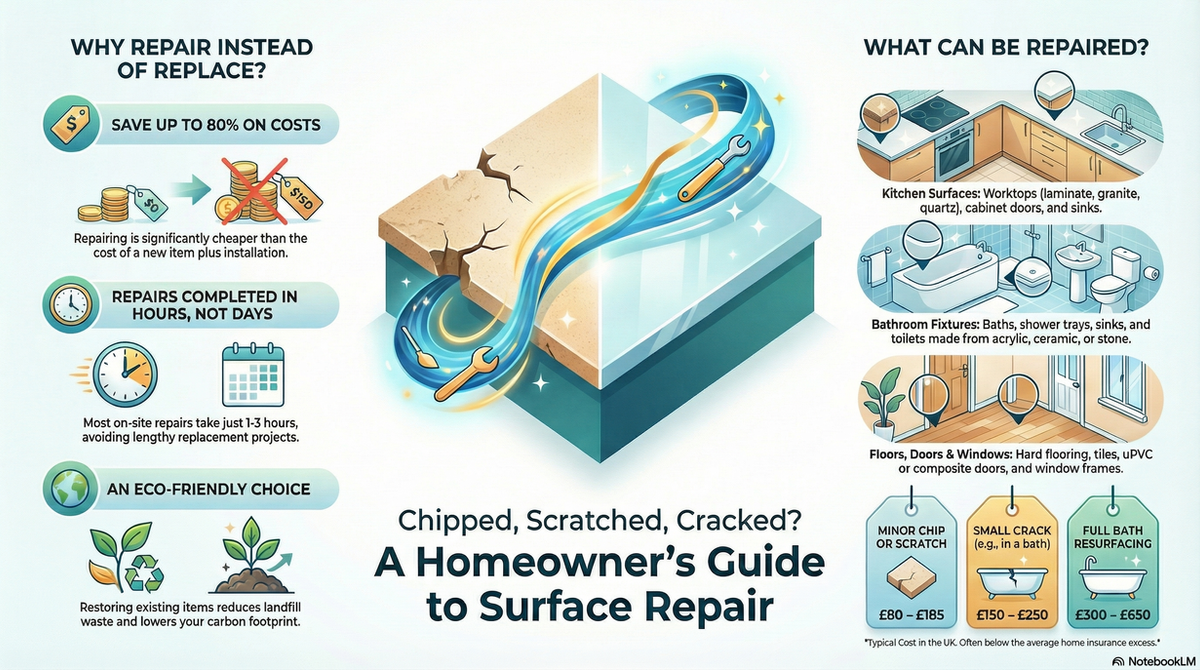
Surface Repair explained
Professional surface repair and restoration can breathe new life into tired furniture, preserving its heritage and value. Rather than replacing a solid timber piece with a modern flat-pack alternative, a specialist can often restore it to its original glory for a fraction of the cost.
| Item | Low £ | High £ | Notes |
|---|---|---|---|
| Call-out / Assessment | £80 | £130 | Covers travel and the first hour of on-site work. |
| Minor Scratch/Ring Repair | £120 | £250 | Localised repair without stripping the entire top. |
| Structural Joint Repair | £150 | £350 | Fixing wobbly legs or split table-tops. |
| Full Strip & Refinish (Dining Table) | £450 | £1,200 | Depends on size, wood type, and finish complexity. |
| Specialist Veneer Patching | £200 | £500 | Sourcing and matching vintage veneers. |
Prices vary significantly based on the timber species and the existing finish. For example, a French Polish finish on an antique mahogany table requires significantly more labour and skill than applying a modern polyurethane lacquer to a contemporary oak table.
Small surface scratches or light water marks can often be treated with high-street "scratch cover" products or furniture wax. However, if the damage has penetrated the finish or if the table is a valuable antique, DIY attempts often lead to "patchy" results that are harder for a professional to fix later.
Professional intervention is essential for: structural instability, lifting veneers, deep heat burns, or when working with high-gloss finishes. Professionals have access to industrial-grade HVLP (High Volume Low Pressure) spray equipment and specialist stains that provide a far more durable finish than retail products.
Yes, white marks are usually moisture trapped in the top layer of the finish. A professional can often "draw out" the moisture using heat or specialist solvents without needing to strip the entire table.
It depends on the quality. High-end vintage furniture often uses thick, beautiful veneers that are well worth restoring. However, cheap modern flat-pack furniture with paper-thin veneers may cost more to repair than to replace.
Avoid silicone-based sprays. Instead, use a damp (not wet) microfibre cloth for cleaning and a high-quality beeswax or specialist furniture cream once or twice a year, depending on the finish type.
A skilled restorer can achieve a 90-95% invisible repair. While total invisibility is rare under close scrutiny, the repair should not be noticeable to the casual observer or under normal lighting conditions.
Almost always. Wobbles are usually caused by failing glue or loose mechanical fixings. A professional will disassemble the joint, clean off the old brittle glue, and re-bond it using modern high-strength adhesives.
This guide was written with AI assistance and is intended for general information only. Prices are estimates based on UK averages and may vary by region. Always get at least three quotes and consult a qualified professional before starting any work.
Ask follow-ups in plain English. The AI explains options, sequencing and what to ask the surface repair — so you walk in informed.
Damaged bathroom tiles are more than just an eyesore; they can lead to significant structural issues if water penetrates the substrate. Whether it is a hairline...
READ GUIDE →GuideKitchen Countertop Replacement Guide Scope of Works Pre‑visit survey & templating – measure runs, confirm joins, splashback height and hob/sink cut‑outs. Di...
READ GUIDE →GuideLaminate flooring is a popular choice for UK homeowners due to its durability and aesthetic appeal. However, despite its tough wear layer, it is not indestructi...
READ GUIDE →GuideWood hole filling is an essential maintenance task for UK homeowners looking to preserve the aesthetic and structural integrity of their timber. From repairing ...
READ GUIDE →GuideCeramic Surface Repair: A Guide for UK Homeowners Ceramic surfaces—from bathroom tiles and kitchen splashbacks to porcelain sinks and floor tiles—are incredibly...
READ GUIDE →GuideA cracked or chipped shower tray is more than just a cosmetic eyesore; it is a significant risk to your home’s structural integrity. Even a hairline fracture ca...
READ GUIDE →