Instant
01 · Ask
Ask the AI a follow-up
Got more questions about wooden table burn mark removal? Describe the bit you're unsure about — the AI explains options, sequencing and what to ask the surface repair.

Cigarette or hot-pan burn on a wooden table — sanded back, colour-matched, refinished.
You've read the brief on wooden table burn mark removal. Now lean on us to find the right surface repair — and stay in control of the job.
Got more questions about wooden table burn mark removal? Describe the bit you're unsure about — the AI explains options, sequencing and what to ask the surface repair.
Costs, timelines, pitfalls and the right questions to ask before any surface repair starts on wooden table burn mark removal.
Itemised quotes from up to 3 local surface repairs on wooden table burn mark removal — so you can compare like-for-like, not lump sums.
Ready when you are
Enter your postcode and get free quotes from local pros.
Four moves that separate a smooth job from a nightmare.
A visible ring around the repair site caused by poor blending of the new finish with the old.
Applying a lacquer over an oiled surface (or vice versa) can cause the finish to peel or bubble.
If the table sits in direct sunlight, the repaired area may age differently than the original wood over time.
If the filler isn't tinted to match the surrounding grain lines, the repair will look like a flat, solid patch.
Indicative UK ranges and what affects price.
By job type
Quote spread is typically ± 18% — always get 3 quotes.
Surface Repair quick-view
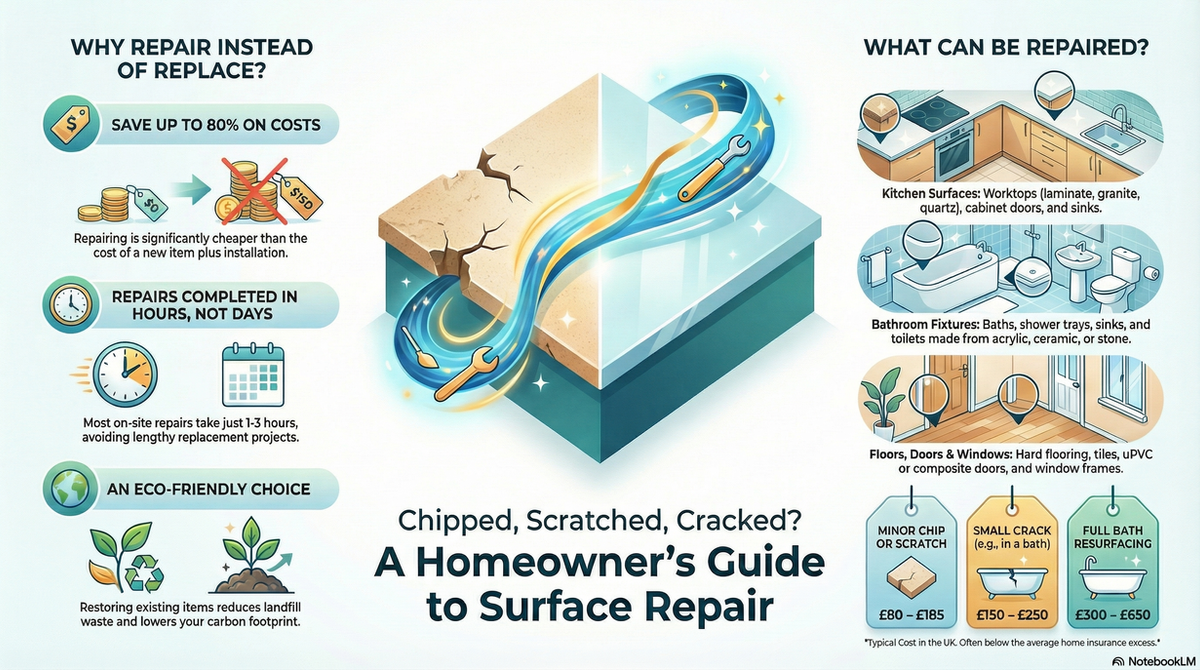
Surface Repair explained
Modern repair techniques allow technicians to target the damaged area specifically, blending the repair into the surrounding grain and finish. This guide covers what to expect when hiring a UK professional to erase burn marks and restore your furniture's value.
Most surface repair specialists charge a minimum call-out fee which covers the first hour of work. Complex repairs involving intricate wood grains or high-gloss finishes will sit at the higher end of the scale.
| Item | Low £ | High £ | Notes |
|---|---|---|---|
| Call-out / Minimum Charge | £60 | £120 | Covers travel and the first 60 minutes. |
| Labour (per hour) | £40 | £70 | Specialist restorer or surface technician rate. |
| Materials & Sundries | £15 | £85 | Specialist resins, pigments, and lacquers. |
| Deep Burn / Timber Inlay | £150 | £450 | For damage requiring replacement wood sections. |
| Total Project Cost | £120 | £400 | Most minor to mid-sized burns fall here. |
Prices are influenced by the size of the burn and the type of finish; for example, a high-gloss "piano" finish is significantly more labour-intensive to repair than a simple waxed oak surface.
While DIY "repair sticks" are available, they often result in a visible "blob" that highlights the damage rather than hiding it. Professional restorers use grain-matching techniques that are very difficult for amateurs to replicate.
If your table is a valuable antique or features a high-gloss lacquer, always hire a professional. A botched DIY repair often costs more to fix than the original burn.
Professionals also have access to industrial-grade finishes that are more durable and heat-resistant than those found in local hardware stores.
Yes, but it is delicate work. Because veneer is a very thin layer of real wood, the technician must be careful not to sand through it to the MDF or chipboard beneath. Deep burns in veneer often require a small "patch" of matching veneer to be inlaid.
A high-quality professional repair is usually invisible to the naked eye from a standing position. Under certain lighting angles or with a magnifying glass, a slight difference might be detectable, but for daily use, it should be seamless.
Usually not. Sanding and refinishing an entire table is a massive job that creates significant dust and requires much more material. Spot repairs are faster, cleaner, and generally more cost-effective.
No, but you should ensure the room is well-ventilated. Some professional lacquers have a strong odour during application, though many modern specialists use water-based, low-odour products.
White marks are usually moisture trapped in the finish rather than a true burn. A professional can often remove these using "blush eraser" sprays or gentle heat treatments much faster than a deep black burn.
This guide was written with AI assistance and is intended for general information only. Prices are estimates based on UK averages and may vary by region. Always get at least three quotes and consult a qualified professional before starting any work.
Ask follow-ups in plain English. The AI explains options, sequencing and what to ask the surface repair — so you walk in informed.
Damaged bathroom tiles are more than just an eyesore; they can lead to significant structural issues if water penetrates the substrate. Whether it is a hairline...
READ GUIDE →GuideKitchen Countertop Replacement Guide Scope of Works Pre‑visit survey & templating – measure runs, confirm joins, splashback height and hob/sink cut‑outs. Di...
READ GUIDE →GuideLaminate flooring is a popular choice for UK homeowners due to its durability and aesthetic appeal. However, despite its tough wear layer, it is not indestructi...
READ GUIDE →GuideWood hole filling is an essential maintenance task for UK homeowners looking to preserve the aesthetic and structural integrity of their timber. From repairing ...
READ GUIDE →GuideCeramic Surface Repair: A Guide for UK Homeowners Ceramic surfaces—from bathroom tiles and kitchen splashbacks to porcelain sinks and floor tiles—are incredibly...
READ GUIDE →GuideA cracked or chipped shower tray is more than just a cosmetic eyesore; it is a significant risk to your home’s structural integrity. Even a hairline fracture ca...
READ GUIDE →