Instant
01 · Ask
Ask the AI a follow-up
Got more questions about radiator Installation? Describe the bit you're unsure about — the AI explains options, sequencing and what to ask the central heating.

Sized to the room (BTU-calculated), fitted with TRV and isolation valve — same-day on most jobs.
You've read the brief on radiator Installation. Now lean on us to find the right central heating — and stay in control of the job.
Got more questions about radiator Installation? Describe the bit you're unsure about — the AI explains options, sequencing and what to ask the central heating.
Costs, timelines, pitfalls and the right questions to ask before any central heating starts on radiator Installation.
Itemised quotes from up to 3 local central heatings on radiator Installation — so you can compare like-for-like, not lump sums.
Ready when you are
Enter your postcode and get free quotes from local pros.
Four moves that separate a smooth job from a nightmare.
Output too low for room volume — room never warms. Use BTU calculator (online from Stelrad, Mr Central Heating).
All new radiators in domestic should have TRV (regulation since 2018). One reference radiator should have manual valve only.
Radiators should sit 100–150mm above floor for proper convection. Cheap installs sit too low.
After multiple radiator changes, flow rates need rebalancing. Cold-spot in some rooms = unbalanced.
Indicative UK ranges and what affects price.
By job type
Quote spread is typically ± 18% — always get 3 quotes.
Central Heating quick-view
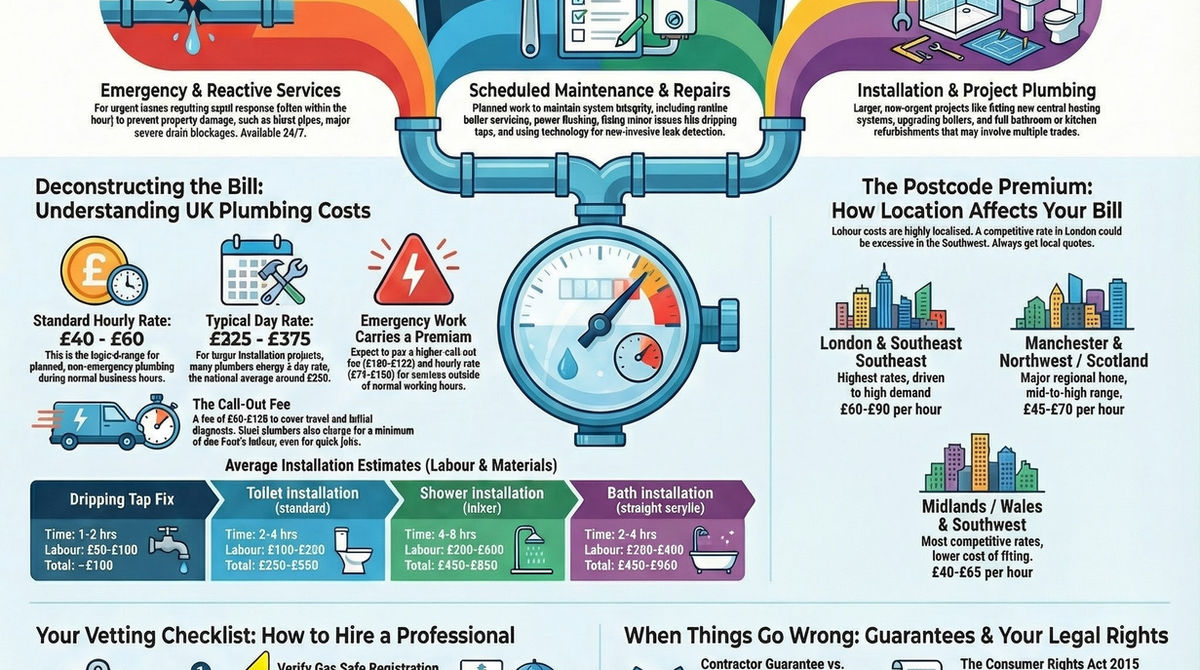
Replacing or upgrading radiators transforms heating efficiency and room aesthetics. Expect to pay £180–£600 per radiator fitted in the UK depending on type and pipework changes. Designer radiators cost more but add character.
Heat-loss calculation per room determines required BTU output. Existing radiator drained, removed, pipework adjusted if size differs. New radiator hung on wall (mounted on brackets at correct height). Pipework connected — flow and return on opposite sides typically. TRV (thermostatic radiator valve) fitted. System refilled, balanced, vented.
| Item | Low (£) | High (£) | Notes |
|---|---|---|---|
| Single-panel radiator 1200mm, supply | 50 | 120 | Standard white |
| Double-panel radiator 1200mm, supply | 80 | 200 | Higher output |
| Vertical/tall radiator, supply | 180 | 500 | Designer style |
| Cast iron radiator, supply | 250 | 900 | Heritage, multi-section |
| Heated towel rail, supply | 80 | 400 | Chrome, black, brass |
| TRV (thermostatic valve) supply | 15 | 60 | Per radiator |
| Install labour per radiator | 120 | 300 | Plus radiator |
| Single radiator full swap fitted | 180 | 600 | Including TRV |
Like-for-like radiator swap: 1–2 hours. Whole-house radiator upgrade (8–10 radiators): 2–3 days. With pipework chasing: longer.
Like-for-like swap is DIY-able for a competent householder — system needs to be drained and refilled. New pipework or boiler-side changes need a Gas Safe / G3 plumber.
A plumber or heating engineer. For Gas Safe boiler-side work, gas registration needed. Designer radiator suppliers (Stelrad, Bisque, Reina) often have installer recommendations.
No specific Building Regs for individual radiator change. Whole-system changes may trigger Part L. Heritage radiators in listed buildings may need consent.
Calculate room volume (length × width × height in m³) then multiply by BTU factor (50 for living room, 60 for bedroom, 80 for kitchen, 100 for bathroom). Most rooms need 5,000–8,000 BTU.
Single: lower output, slimmer profile. Double: higher output, can be 50% more BTU in same footprint. Double for cold rooms or where space is at a premium.
Designer (vertical, anthracite, glass) costs 2–4x standard but transforms rooms. Standard is fine if hidden behind furniture.
Yes — TRVs (£15–£60 each) save 10–20% on heating by allowing per-room temperature control. Required by 2018 regulations on new installations.
Sludge build-up. Power-flush the system or chemically clean. Then fit a MagnaClean magnetic filter to catch future sludge.
Steel: cheap, heavy, lasts 20–30 years. Aluminium: more expensive, lighter, heats up and cools quicker. Aluminium is the modern designer choice.
This guide was written with AI assistance and is intended for general information only. Prices are estimates based on UK averages and may vary by region. Always get at least three quotes and consult a qualified professional before starting any work.
Ask follow-ups in plain English. The AI explains options, sequencing and what to ask the central heating — so you walk in informed.
A heater matrix is essentially a small radiator located deep behind your vehicle's dashboard. It is a critical component of your car's heating system, responsib...
READ GUIDE →GuideGround source heat pumps (GSHPs) are widely considered the "gold standard" of renewable heating for UK homeowners. By extracting solar energy stored in the eart...
READ GUIDE →GuideA reliable heating system is the backbone of any UK home, especially during the damp winter months. When a boiler fails or radiators stay cold, it often signals...
READ GUIDE →GuideFor the four million UK households not connected to the mains gas grid, oil-fuelled central heating remains one of the most reliable and cost-effective ways to ...
READ GUIDE →GuideAn oil leak is a serious matter for any UK homeowner. Beyond the immediate loss of expensive heating fuel, a leak poses significant fire risks and can cause dev...
READ GUIDE →GuideAir source heat pumps (ASHPs) have become the leading low-carbon heating solution for UK homeowners looking to move away from fossil fuels. By extracting heat f...
READ GUIDE →