Instant
01 · Ask
Repair, replace or restyle?
One blown panel, a whole side gone, or a full overhaul? Describe what you see and the AI tells you whether it's a Saturday job or a multi-day project.

Wooden trellis in any size — supplied, painted and fitted on top of an existing fence.
Read the brief on ownership, materials and planning — then let Three local fencers quote on the same spec.
One blown panel, a whole side gone, or a full overhaul? Describe what you see and the AI tells you whether it's a Saturday job or a multi-day project.
Concrete vs timber posts, gravel boards, panel grades, planning heights, gate automation rules. Know what to ask for.
Three local fencers quote on the same spec — posts, panels, gates, waste — so you can pick the right materials for your boundary.
Ready when you are
Enter your postcode and get free quotes from local pros.
Four moves that separate a smooth job from a nightmare.
Deeds usually mark which side of which boundary you own. Replacing a fence you don't own is a neighbour dispute waiting to happen.
Timber posts rot at ground level in 7–10 years. Concrete posts last 25+. The £30/post upgrade pays back the first time a panel doesn't blow away.
Soil + damp = timber rot. Insist on a gravel board (concrete or treated timber) so the panel never touches earth.
Front gardens: max 1m without permission. Rear: 2m. Above that needs planning. A gate near a public road may need extra consent.
Indicative UK ranges and what affects price.
By job type
Quote spread is typically ± 18% — always get 3 quotes.
Fencing & Gates quick-view
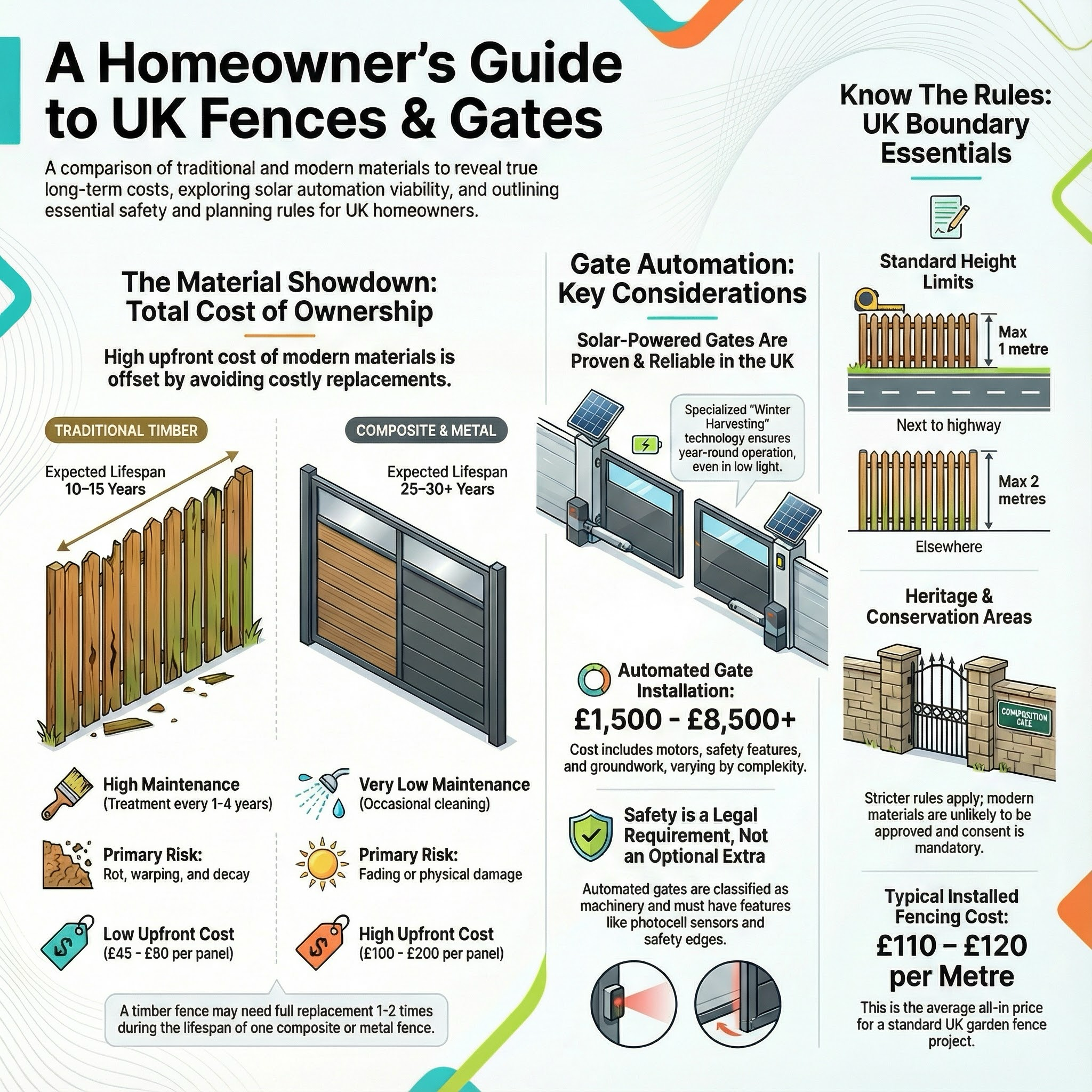
Fencing & Gates explained
Custom trellis on top of a fence or as a standalone garden divider typically costs £40–£140 per metre supplied and fitted in the UK, depending on whether you're using ready-made panels or bespoke joinery. A typical 6 m back-garden fence-top trellis run is £250–£700 fitted.
Trellis serves three jobs: extending fence height for privacy without needing planning permission, supporting climbing plants, and providing visual interest in itself. The best installs combine all three.
| Trellis type | Material £/m | Fitted £/m |
|---|---|---|
| Standard pre-made square / diamond panels | £12–£30 | £40–£75 |
| Decorative arched / shaped panels | £20–£50 | £55–£100 |
| Heavy-duty solid timber bespoke | £35–£80 | £75–£140 |
| Iroko / hardwood trellis | £60–£140 | £120–£220 |
| Steel or wire-grid garden trellis | £40–£100 | £80–£180 |
UK garden fence height for permitted development: 2 m to a back boundary (without facing a highway). Anything above needs planning permission. Trellis on top of a fence is treated as part of the fence height for planning purposes — so a 1.8 m fence with 60 cm trellis still totals 2.4 m and exceeds permitted development.
The exception: trellis with adequate gaps that genuinely allows light and visibility to pass through is sometimes treated more leniently by some councils, but always check before installing. A cooperative neighbour and a polite chat is the safest route.
If the total fence height (fence + trellis) exceeds 2 m to a back boundary, technically yes. Many homeowners install without checking and don't get challenged, but a hostile neighbour can trigger enforcement. Safer to confirm with the council planning team or stay within the 2 m total.
2 m total to a back or side boundary under permitted development. 1 m if the fence faces a highway or is at the front of the property. Above these heights requires planning permission unless you're between properties of similar height or have explicit agreement from the planning officer.
Yes, but the existing fence must be sound. Most trellis attaches to fence posts via brackets or extension spurs that bolt onto the post. Old softwood posts often need replacing with concrete spurs first.
Square pattern with 50–100 mm openings, made of timber that climbing tendrils can wrap around. Plastic and powder-coated steel can be too smooth for some climbers. Wisteria, clematis, and roses prefer wider gaps; ivy and honeysuckle work on tighter patterns.
Pre-treated softwood trellis: 5–10 years. Hardwood (oak, iroko) and quality treated softwood with regular re-staining: 12–20 years. Plastic trellis: 8–15 years before UV degradation. Match the trellis lifespan to the fence beneath.
Yes — pre-prime then use exterior wood paint. Black, dark green and white are popular. Leave the trellis to season for 3–6 months if it's freshly treated; paint over green-tinted treatment doesn't always adhere.
Want a local pro to handle this? A fence specialist or carpenter will fit trellis to existing fences, check post strength, and advise on the right design. Bespoke joinery costs more but lasts longer and looks better than chain-store panels.
This guide was written with AI assistance and is intended for general information only. Prices are estimates based on UK averages and may vary by region. Always get at least three quotes and consult a qualified professional before starting any work.
Ask follow-ups in plain English. The AI explains options, sequencing and what to ask the fencing & gates — so you walk in informed.
A high-quality garden fence is essential for UK homeowners, providing privacy, security, and a vital windbreak against the British weather. Beyond aesthetics, a...
READ GUIDE →GuideA well-installed wooden gate is more than just a boundary; it provides essential security, privacy, and kerb appeal for your property. In the UK, where wind and...
READ GUIDE →GuideA high-quality fence is more than just a boundary; it provides security, privacy, and essential shelter for your garden. In the UK, our fences must withstand ev...
READ GUIDE →GuideCrash barrier cutting, often referred to as Armco cutting, is a specialist task typically required when a barrier has been damaged by a vehicle or needs modifyi...
READ GUIDE →GuideA sturdy fence is the backbone of UK garden security, privacy, and aesthetic appeal. Whether your panels have succumbed to a winter gale or your posts have fina...
READ GUIDE →GuideA well-installed front fence does more than just mark your property boundary; it enhances kerb appeal, provides security, and keeps pets or children safe from t...
READ GUIDE →