Instant
01 · Ask
Ask the AI a follow-up
Got more questions about fence Repair Overview and Costs? Describe the bit you're unsure about — the AI explains options, sequencing and what to ask the fencing & gates.

What different fence repairs cost in 2026 — by damage, post type and panel material.
You've read the brief on fence Repair Overview and Costs. Now lean on us to find the right fencing & gates — and stay in control of the job.
Got more questions about fence Repair Overview and Costs? Describe the bit you're unsure about — the AI explains options, sequencing and what to ask the fencing & gates.
Costs, timelines, pitfalls and the right questions to ask before any fencing & gates starts on fence Repair Overview and Costs.
Itemised quotes from up to 3 local fencing & gatess on fence Repair Overview and Costs — so you can compare like-for-like, not lump sums.
Ready when you are
Enter your postcode and get free quotes from local pros.
Four moves that separate a smooth job from a nightmare.
Timber posts often rot at the "ground line" where moisture and oxygen meet. Using concrete gravel boards and posts eliminates this issue.
Solid "closeboard" fences act like sails. In high-wind areas, consider "hit and miss" fencing which allows air to flow through.
Posts set too shallow will lean over time as the soil shifts. Professional fencers always aim for a 1:3 ratio (2ft in the ground for a 6ft fence).
Concrete "boots" that hold water around a wooden post will accelerate rot. The concrete should be slightly domed at the top to shed water away from the timber.
Indicative UK ranges and what affects price.
By job type
Quote spread is typically ± 18% — always get 3 quotes.
Fencing & Gates quick-view
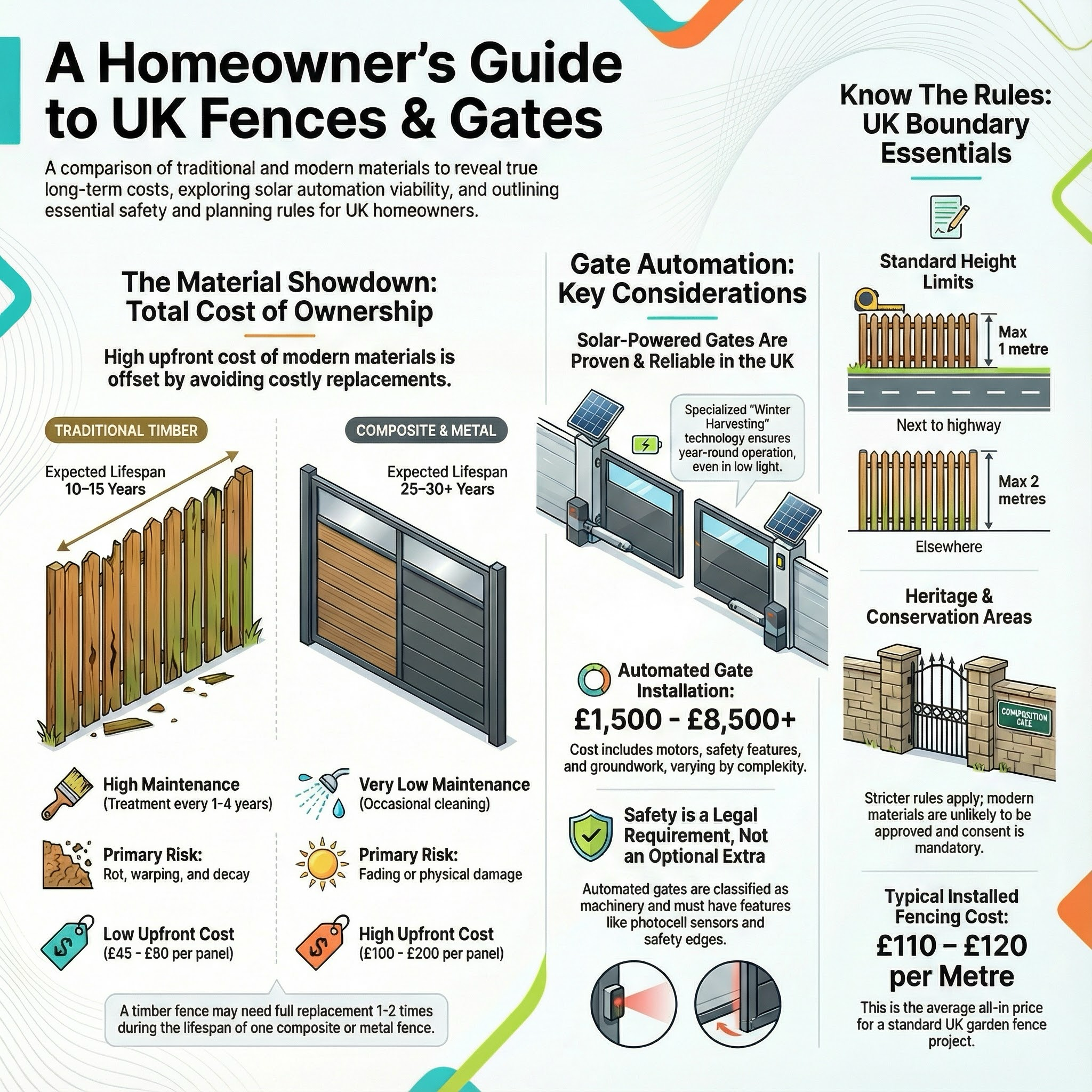
Fencing & Gates explained
Repairing your fence promptly is essential for maintaining property security, keeping pets or children safe, and preserving the privacy of your outdoor space. Addressing a leaning post or a loose panel now prevents a single failure from cascading into a total fence collapse during the next high-wind event.
| Item | Low £ | High £ | Notes |
|---|---|---|---|
| Call-out / Minimum Charge | £80 | £150 | Covers travel and the first hour of small repairs. |
| Labour (per hour) | £40 | £70 | Varies by region; London and SE are typically higher. |
| Replacement Timber Post (Supplied & Fitted) | £70 | £120 | Includes post, concrete (Postcrete), and labour. |
| Standard Lap Panel (Supplied & Fitted) | £60 | £100 | Basic 6x6 panel including waste disposal. |
| Concrete Repair Spur (Supplied & Fitted) | £60 | £90 | An economical alternative to full post replacement. |
| Full 36ft Repair (6 Panels/Posts) | £650 | £1,100 | Assumes standard timber components and average access. |
Several factors will influence your final quote. Access is the most significant; if materials have to be carried through a terraced house, labour costs will rise. The choice between timber and concrete posts also impacts the price, as does the disposal of old materials, which now incurs high commercial waste fees at UK tips.
Replacing a single fence panel is a straightforward DIY task, provided the posts are still upright and sturdy. However, replacing posts is physically demanding work that requires specialized tools like post-hole diggers, reciprocating saws, and heavy-duty pry bars.
Professional fencers ensure posts are set at the correct depth (usually 2ft) and perfectly plumb, which is vital for the longevity of the fence.
If your repair involves height changes or boundary disputes, a professional can also ensure you stay within UK planning guidelines. For most homeowners, the cost of hiring a professional is justified by the speed of the repair and the assurance that the fence won't blow down in the next storm.
Questions to ask:
Yes, you can use a concrete repair spur (often called a 'Godfather'). This is a short concrete post bolted to the remaining sound timber above ground and set in new concrete below ground. It is a cost-effective way to fix a snapped post without a full replacement.
There is no legal requirement to give your neighbour the "good" side (the side without the rails). However, it is common courtesy to do so, and some local covenants may specify the orientation. It is always best to discuss this with your neighbour before work begins.
Concrete posts are more expensive and harder to install but will never rot, potentially lasting 30+ years. Wooden posts look more natural and are cheaper, but even pressure-treated timber will eventually rot, typically within 10–15 years.
If the fence is on your land and you own it, you don't need permission. However, if the fence sits exactly on the boundary line (a party fence), you should consult them. Even if you own it, informing them is good practice as contractors may need access to their garden.
Keep the bottom of wooden panels clear of soil and vegetation to prevent moisture wicking. Apply a high-quality UV-resistant treatment every 2–3 years, and ensure that any climbing plants are not putting excessive weight on the structure.
This guide was written with AI assistance and is intended for general information only. Prices are estimates based on UK averages and may vary by region. Always get at least three quotes and consult a qualified professional before starting any work.
Ask follow-ups in plain English. The AI explains options, sequencing and what to ask the fencing & gates — so you walk in informed.
A high-quality garden fence is essential for UK homeowners, providing privacy, security, and a vital windbreak against the British weather. Beyond aesthetics, a...
READ GUIDE →GuideA well-installed wooden gate is more than just a boundary; it provides essential security, privacy, and kerb appeal for your property. In the UK, where wind and...
READ GUIDE →GuideA high-quality fence is more than just a boundary; it provides security, privacy, and essential shelter for your garden. In the UK, our fences must withstand ev...
READ GUIDE →GuideCrash barrier cutting, often referred to as Armco cutting, is a specialist task typically required when a barrier has been damaged by a vehicle or needs modifyi...
READ GUIDE →GuideA sturdy fence is the backbone of UK garden security, privacy, and aesthetic appeal. Whether your panels have succumbed to a winter gale or your posts have fina...
READ GUIDE →GuideA well-installed front fence does more than just mark your property boundary; it enhances kerb appeal, provides security, and keeps pets or children safe from t...
READ GUIDE →