Instant
01 · Ask
Ask the AI a follow-up
Got more questions about garden Gate Repair? Describe the bit you're unsure about — the AI explains options, sequencing and what to ask the fencing & gates.

Sagging, sticking or broken — gate re-hung, hardware replaced and post re-set if needed.
You've read the brief on garden Gate Repair. Now lean on us to find the right fencing & gates — and stay in control of the job.
Got more questions about garden Gate Repair? Describe the bit you're unsure about — the AI explains options, sequencing and what to ask the fencing & gates.
Costs, timelines, pitfalls and the right questions to ask before any fencing & gates starts on garden Gate Repair.
Itemised quotes from up to 3 local fencing & gatess on garden Gate Repair — so you can compare like-for-like, not lump sums.
Ready when you are
Enter your postcode and get free quotes from local pros.
Four moves that separate a smooth job from a nightmare.
Often caused by a lack of diagonal bracing. A brace should always run from the bottom hinge side to the top latch side.
Timber posts often rot at the ground line where moisture sits. Using a "post shoe" or concrete post can prevent this.
As the ground shifts or the wood swells, the latch may no longer meet the strike plate. This often requires shimmed hinges rather than moving the latch.
Cheap screws can snap inside the wood, making them difficult to remove. Always use high-quality outdoor-rated timber screws.
Indicative UK ranges and what affects price.
By job type
Quote spread is typically ± 18% — always get 3 quotes.
Fencing & Gates quick-view
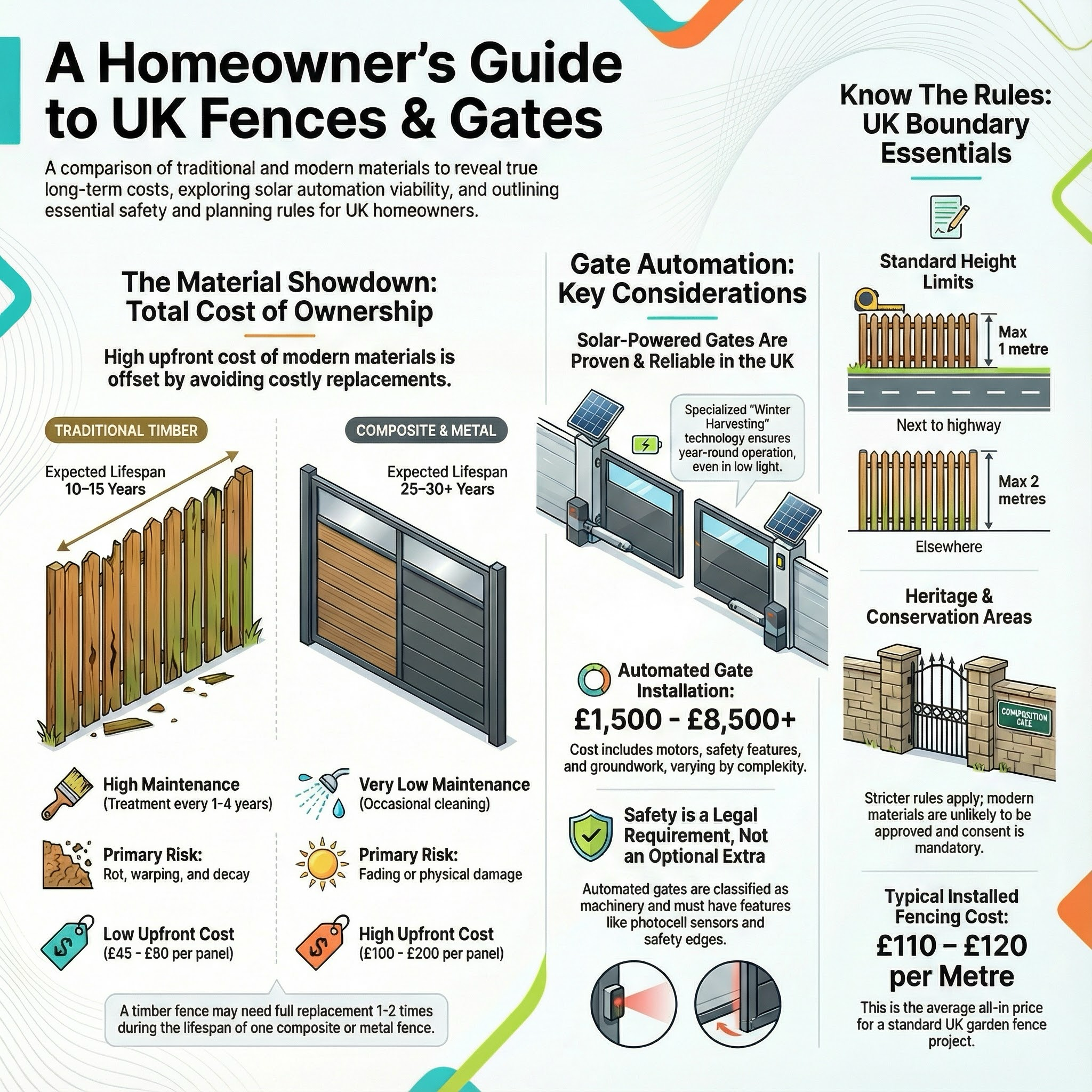
Fencing & Gates explained
Repairing a gate promptly prevents further damage to the surrounding fence or brickwork. Whether it is a simple hinge replacement or a full post excavation, ensuring your gate is structural sound keeps your property secure and accessible.
| Item | Low £ | High £ | Notes |
|---|---|---|---|
| Call-out / Minimum Charge | £60 | £120 | Covers the first hour and travel for a handyman or carpenter. |
| Labour (Hourly Rate) | £35 | £65 | Varies by region; London and South East are typically higher. |
| Hinge & Latch Hardware | £25 | £80 | Galvanised or stainless steel sets for durability. |
| Replacement Gate Post | £40 | £90 | Includes the post (timber/concrete) and Post-crete mix. |
| Waste Disposal | £0 | £50 | Removing old timber and concrete; often included in full quotes. |
| Total Repair Project | £180 | £550 | From minor hardware swaps to full post and gate realignment. |
Pricing is largely influenced by the material of the gate and the extent of the damage. Hardwood gates or bespoke ironwork require specialist fixings and more labour time compared to standard pressure-treated softwood gates.
Always insist on galvanised or powder-coated hardware. Standard steel fixings will rust within a single UK winter, leading to unsightly streaks and eventual mechanical failure.
Minor maintenance, such as oiling hinges or tightening loose screws, is a straightforward DIY task. However, if the gate has "dropped" because the post is rotting at the base, professional intervention is recommended.
Setting a gate post requires precision to ensure it is perfectly plumb; even a few millimetres of lean will cause the gate to swing open or refuse to latch. Professionals will also have the heavy-duty tools required to break out old concrete footings without damaging nearby underground services.
Timber is a natural material that absorbs moisture and expands during the wetter UK months. If the gate was fitted with tight tolerances in the summer, it will likely swell and stick in the winter; this can be fixed by planing a few millimetres off the leading edge.
If the post has snapped at the base but the rest is solid, you can use a "repair spur" (a short concrete post). This is bolted to the existing post and set in concrete to provide structural support without a full replacement.
Ensure the gate has a diagonal brace running upwards from the hinge side. For heavy gates, you can also install a "gate wheel" on the latch side or use a wire-and-turnbuckle anti-sag kit to pull the gate back into square.
Concrete or metal posts are more durable as they cannot rot. However, timber posts are often preferred for aesthetics; if choosing timber, ensure it is UC4-rated pressure-treated wood designed for permanent ground contact.
Yes, any areas that have been planed or cut must be treated with a high-quality wood preservative immediately. It is good practice to re-stain or oil your gate every 1–2 years to prevent water ingress and UV damage.
This guide was written with AI assistance and is intended for general information only. Prices are estimates based on UK averages and may vary by region. Always get at least three quotes and consult a qualified professional before starting any work.
Ask follow-ups in plain English. The AI explains options, sequencing and what to ask the fencing & gates — so you walk in informed.
A high-quality garden fence is essential for UK homeowners, providing privacy, security, and a vital windbreak against the British weather. Beyond aesthetics, a...
READ GUIDE →GuideA well-installed wooden gate is more than just a boundary; it provides essential security, privacy, and kerb appeal for your property. In the UK, where wind and...
READ GUIDE →GuideA high-quality fence is more than just a boundary; it provides security, privacy, and essential shelter for your garden. In the UK, our fences must withstand ev...
READ GUIDE →GuideCrash barrier cutting, often referred to as Armco cutting, is a specialist task typically required when a barrier has been damaged by a vehicle or needs modifyi...
READ GUIDE →GuideA sturdy fence is the backbone of UK garden security, privacy, and aesthetic appeal. Whether your panels have succumbed to a winter gale or your posts have fina...
READ GUIDE →GuideA well-installed front fence does more than just mark your property boundary; it enhances kerb appeal, provides security, and keeps pets or children safe from t...
READ GUIDE →