Instant
01 · Ask
Ask the AI a follow-up
Got more questions about metal Gate Installation? Describe the bit you're unsure about — the AI explains options, sequencing and what to ask the fencing & gates.

Welded steel or wrought iron — supplied, hung and powder-coated, with secure latch and lock.
You've read the brief on metal Gate Installation. Now lean on us to find the right fencing & gates — and stay in control of the job.
Got more questions about metal Gate Installation? Describe the bit you're unsure about — the AI explains options, sequencing and what to ask the fencing & gates.
Costs, timelines, pitfalls and the right questions to ask before any fencing & gates starts on metal Gate Installation.
Itemised quotes from up to 3 local fencing & gatess on metal Gate Installation — so you can compare like-for-like, not lump sums.
Ready when you are
Enter your postcode and get free quotes from local pros.
Four moves that separate a smooth job from a nightmare.
Occurs when footings are too shallow for the weight of the metal; ensure posts are set at least 600mm-900mm deep.
Common in non-galvanised steel; always opt for galvanisation to avoid repainting every two years.
Usually caused by ground movement or poor initial alignment; adjustable hinges can help mitigate this.
Often due to poor drainage around motor pits or pests nesting in the control box.
Indicative UK ranges and what affects price.
By job type
Quote spread is typically ± 18% — always get 3 quotes.
Fencing & Gates quick-view
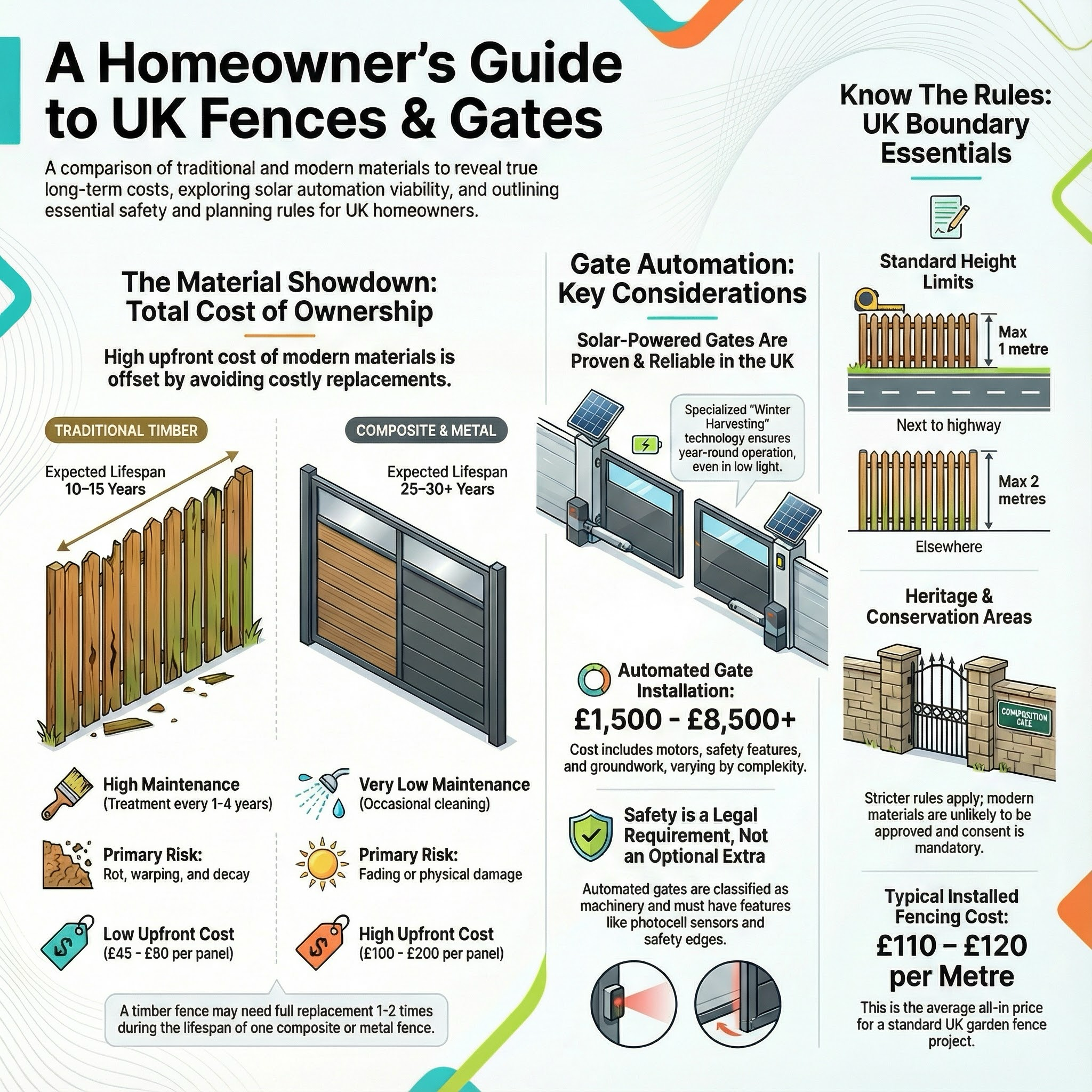
Fencing & Gates explained
Whether you are looking for a decorative wrought iron pedestrian gate or automated steel driveway gates, a professional installation ensures the structure is perfectly aligned and securely anchored. This guide covers everything from fabrication processes to the latest UK pricing for 2025.
Prices for metal gates vary significantly based on the complexity of the design and the weight of the materials used. Custom-fabricated wrought iron is generally more expensive than off-the-shelf tubular steel options.
| Item | Low £ | High £ | Notes |
|---|---|---|---|
| Single Pedestrian Gate (Supply & Fit) | £450 | £950 | Standard height, includes posts and basic lock. |
| Double Driveway Gates (Manual) | £1,500 | £4,500 | Depends on width, height, and ornate detailing. |
| Electric/Automated Upgrade | £1,200 | £3,000 | Includes motors, sensors, and control panel. |
| Labour (Daily Rate) | £250 | £450 | Per person; usually requires a two-person team. |
Material costs are the primary driver of the final price, specifically the choice between powder-coated steel and hot-dipped galvanised finishes. Bespoke scrollwork and heavy-gauge iron will push quotes toward the higher end of the spectrum.
While a very confident DIYer might manage a lightweight, pre-made garden gate, professional installation is strongly recommended for metal gates. These units are incredibly heavy; if a post is not set deep enough or the concrete mix is weak, the gate will sag and fail within months.
Professional installers have the specialised welding equipment and heavy-duty lifting gear required to ensure the gate is perfectly level and safe for years of use.
Furthermore, if you are installing automated gates, you must use a professional. These systems fall under "Machinery Directive" regulations and require specific safety sensors to prevent injury or entrapment.
If the gate is not adjacent to a public highway, you can usually install a gate up to 2 metres (approx 6.5ft) under permitted development. If it is next to a road used by vehicles, the limit is typically 1 metre.
True wrought iron is rare today and mostly found on heritage properties. Most modern "wrought iron style" gates are actually made from mild steel, which is stronger and more cost-effective but requires galvanising to prevent rust.
In most cases, yes. However, the gates must be structurally sound and swing freely. A professional will need to assess if the gate frame can handle the "push-pull" forces of an electric motor.
The best method is "Hot-Dip Galvanising," where the steel is submerged in molten zinc. Following this with a powder-coated finish provides a dual layer of protection that can last 20+ years.
Very little compared to wood. An annual wash with soapy water and greasing the hinges is usually sufficient. If you see any chips in the paint, touch them up immediately to prevent moisture from reaching the metal.
This guide was written with AI assistance and is intended for general information only. Prices are estimates based on UK averages and may vary by region. Always get at least three quotes and consult a qualified professional before starting any work.
Ask follow-ups in plain English. The AI explains options, sequencing and what to ask the fencing & gates — so you walk in informed.
A high-quality garden fence is essential for UK homeowners, providing privacy, security, and a vital windbreak against the British weather. Beyond aesthetics, a...
READ GUIDE →GuideA well-installed wooden gate is more than just a boundary; it provides essential security, privacy, and kerb appeal for your property. In the UK, where wind and...
READ GUIDE →GuideA high-quality fence is more than just a boundary; it provides security, privacy, and essential shelter for your garden. In the UK, our fences must withstand ev...
READ GUIDE →GuideCrash barrier cutting, often referred to as Armco cutting, is a specialist task typically required when a barrier has been damaged by a vehicle or needs modifyi...
READ GUIDE →GuideA sturdy fence is the backbone of UK garden security, privacy, and aesthetic appeal. Whether your panels have succumbed to a winter gale or your posts have fina...
READ GUIDE →GuideA well-installed front fence does more than just mark your property boundary; it enhances kerb appeal, provides security, and keeps pets or children safe from t...
READ GUIDE →