Instant
01 · Ask
Ask the AI a follow-up
Got more questions about picket Fence Installation? Describe the bit you're unsure about — the AI explains options, sequencing and what to ask the fencing & gates.

Painted timber picket fence — for front gardens, period properties or cottage gardens.
You've read the brief on picket Fence Installation. Now lean on us to find the right fencing & gates — and stay in control of the job.
Got more questions about picket Fence Installation? Describe the bit you're unsure about — the AI explains options, sequencing and what to ask the fencing & gates.
Costs, timelines, pitfalls and the right questions to ask before any fencing & gates starts on picket Fence Installation.
Itemised quotes from up to 3 local fencing & gatess on picket Fence Installation — so you can compare like-for-like, not lump sums.
Ready when you are
Enter your postcode and get free quotes from local pros.
Four moves that separate a smooth job from a nightmare.
Posts fail prematurely if they are not pressure-treated or if the concrete footing creates a "cup" that holds water against the wood.
Using a "by eye" approach leads to a messy finish. A professional uses a physical spacer block for every single picket.
Using cheap, non-galvanised nails will result in black streaks running down your white or natural wood pickets within one winter.
Using posts that are too thin to support the weight of a swinging gate will lead to the gate failing to latch within weeks.
Indicative UK ranges and what affects price.
By job type
Quote spread is typically ± 18% — always get 3 quotes.
Fencing & Gates quick-view
Fencing & Gates explained
For UK homeowners, a well-installed picket fence adds value and security. However, achieving perfectly straight lines and uniform spacing requires precision, especially when navigating slopes or uneven ground typical of many British plots.
The cost of a picket fence is usually calculated per linear metre. Prices vary significantly based on the height of the fence (typically 3ft or 4ft) and the type of timber used.
| Item | Low £ | High £ | Notes |
|---|---|---|---|
| Supply & Fit (per linear metre) | £70 | £110 | Standard treated softwood, inc. labour. |
| Matching Picket Gate | £180 | £350 | Includes heavy-duty hinges and latch. |
| Waste Removal | £100 | £250 | Disposal of old fencing and soil. |
| Hardwood Upgrade (Oak) | £120 | £180 | Per metre; significantly more durable. |
Total project costs are influenced by the ground condition; digging into heavy clay or through old concrete footings will increase labour time. Prices include VAT at the standard rate.
Installing a picket fence is a popular DIY project for those with basic carpentry skills. However, the "simple" look is deceptive; if your posts are even slightly out of alignment, the entire run will look crooked.
Professional installers use professional-grade laser levels and have the heavy-duty equipment needed to break through stubborn ground, ensuring a fence that stays straight for decades rather than months.
If you are installing a gate, professional fitting is highly recommended to prevent "drop," which causes the gate to drag on the ground over time.
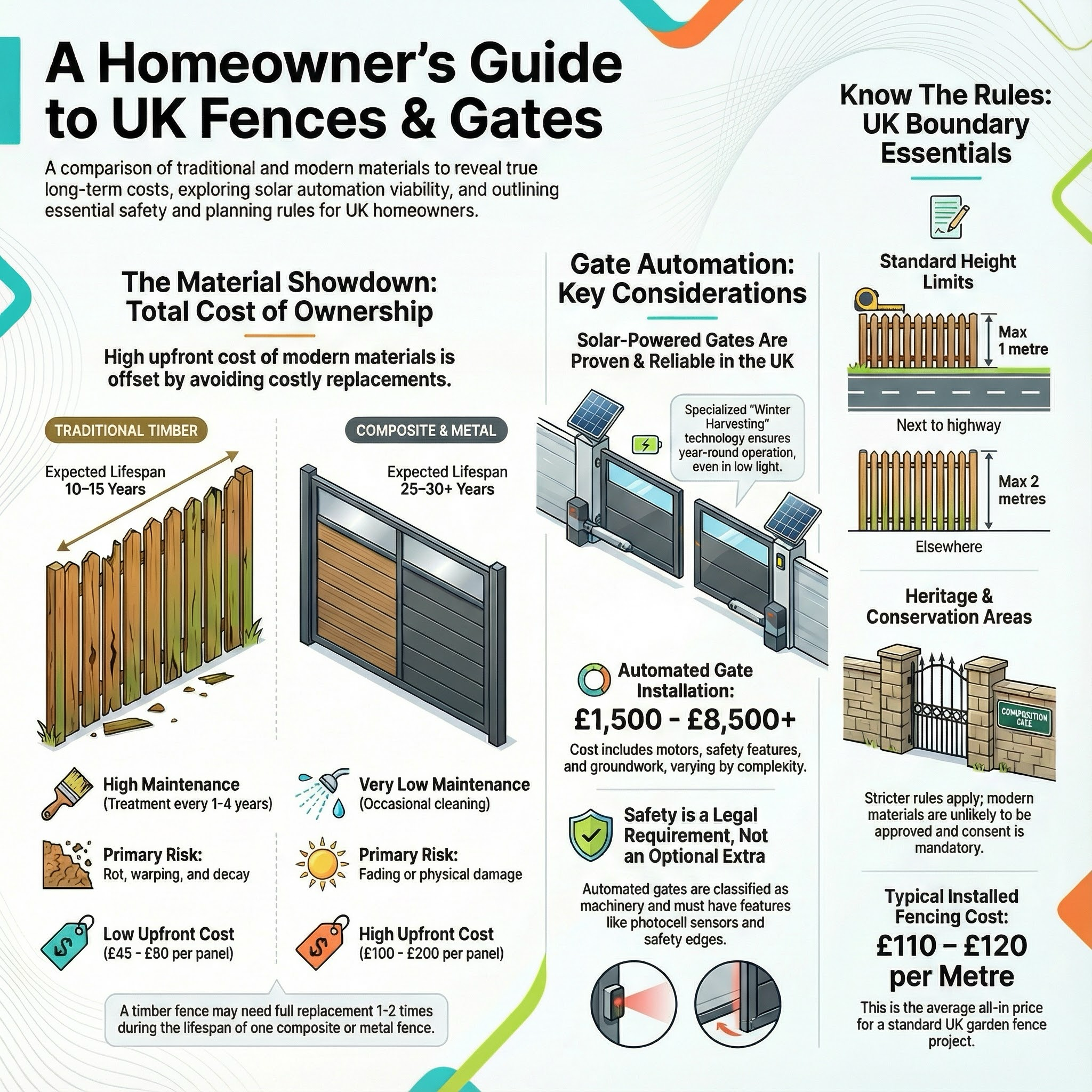
In the UK, if your fence is next to a road used by vehicles, the height limit is usually 1 metre (approx 3.2ft) without planning permission. A 4ft fence would likely require a formal application.
Pressure-treated softwood (Tanalised) is the standard choice for its balance of cost and durability. For a premium finish, Oak or Western Red Cedar offer superior natural rot resistance but at a much higher price point.
A standard gap is usually half the width of the picket itself (roughly 35mm to 50mm). This provides a balance of privacy and wind resistance while maintaining the classic look.
Yes, there are two methods: "stepping," where the fence follows the slope in level sections like stairs, or "raking," where the rails follow the angle of the ground. Stepping is more common for picket fences.
Painting (usually white) offers the classic look but requires more maintenance as it can peel. Stains soak into the wood and are easier to refresh, though they don't provide that "solid" colour finish.
This guide was written with AI assistance and is intended for general information only. Prices are estimates based on UK averages and may vary by region. Always get at least three quotes and consult a qualified professional before starting any work.
Ask follow-ups in plain English. The AI explains options, sequencing and what to ask the fencing & gates — so you walk in informed.
A high-quality garden fence is essential for UK homeowners, providing privacy, security, and a vital windbreak against the British weather. Beyond aesthetics, a...
READ GUIDE →GuideA well-installed wooden gate is more than just a boundary; it provides essential security, privacy, and kerb appeal for your property. In the UK, where wind and...
READ GUIDE →GuideA high-quality fence is more than just a boundary; it provides security, privacy, and essential shelter for your garden. In the UK, our fences must withstand ev...
READ GUIDE →GuideCrash barrier cutting, often referred to as Armco cutting, is a specialist task typically required when a barrier has been damaged by a vehicle or needs modifyi...
READ GUIDE →GuideA sturdy fence is the backbone of UK garden security, privacy, and aesthetic appeal. Whether your panels have succumbed to a winter gale or your posts have fina...
READ GUIDE →GuideA well-installed front fence does more than just mark your property boundary; it enhances kerb appeal, provides security, and keeps pets or children safe from t...
READ GUIDE →