Instant
01 · Ask
Ask the AI a follow-up
Got more questions about emergency Water Treatment? Describe the bit you're unsure about — the AI explains options, sequencing and what to ask the water treatment.

Burst-pipe contamination, brown water or Legionella concern — assessed and treated same-day.
You've read the brief on emergency Water Treatment. Now lean on us to find the right water treatment — and stay in control of the job.
Got more questions about emergency Water Treatment? Describe the bit you're unsure about — the AI explains options, sequencing and what to ask the water treatment.
Costs, timelines, pitfalls and the right questions to ask before any water treatment starts on emergency Water Treatment.
Itemised quotes from up to 3 local water treatments on emergency Water Treatment — so you can compare like-for-like, not lump sums.
Ready when you are
Enter your postcode and get free quotes from local pros.
Four moves that separate a smooth job from a nightmare.
UV lamps lose effectiveness over time even if they are still glowing; failing to replace them annually is a common cause of emergency bacterial spikes.
After a system is drained for repair, air can become trapped, leading to "spluttering" taps and potential damage to pumps.
Emergency technicians often find that bypass valves have been left open, allowing untreated water to mix with treated water.
Often caused by bacteria reacting with magnesium anodes in hot water tanks rather than the treatment system itself.
Indicative UK ranges and what affects price.
By job type
Quote spread is typically ± 18% — always get 3 quotes.
Water Treatment quick-view
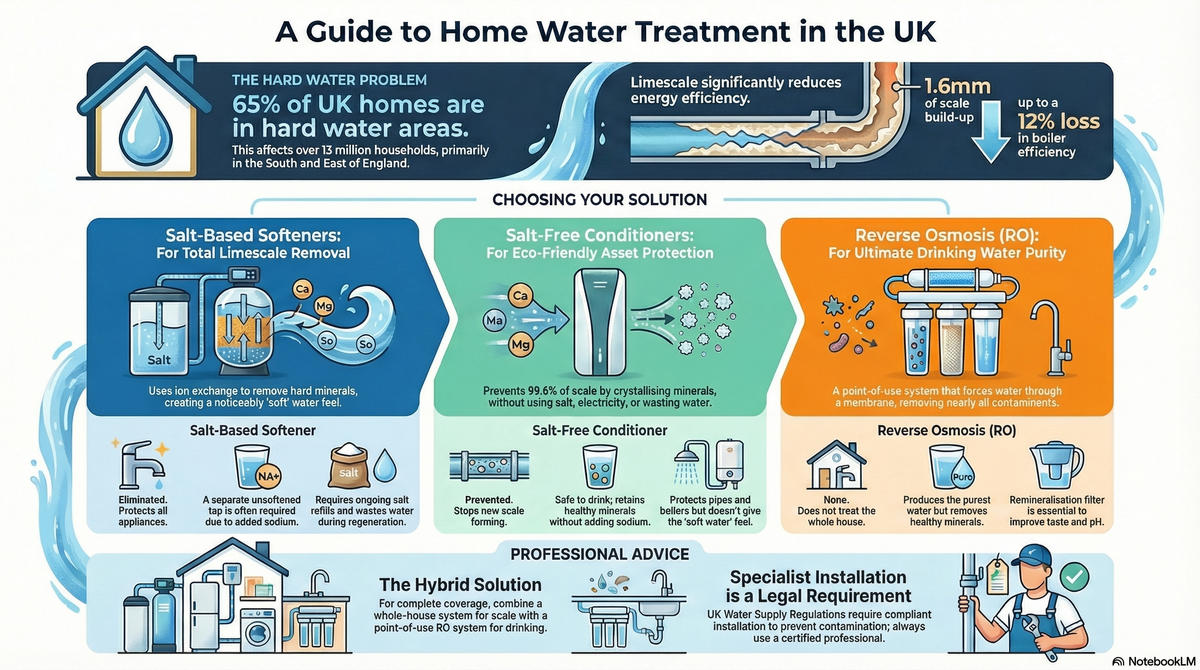
Water Treatment explained
For UK homeowners, especially those on private water supplies like boreholes or wells, a failure in UV filtration or chlorination equipment can lead to immediate biological risks. This guide outlines the costs, procedures, and regulations involved in getting your water supply back to safe standards quickly and professionally.
| Item | Low £ | High £ | Notes |
|---|---|---|---|
| Emergency Call-out (First Hour) | £120 | £220 | Higher rates for evenings, weekends, or bank holidays. |
| Labour (Hourly Rate) | £70 | £110 | Applied after the first hour of work. |
| Replacement UV Lamp/Sleeve | £60 | £180 | Varies by brand and wattage of the unit. |
| Filter Cartridges & Media | £40 | £150 | Dependent on micron rating and specialist media (e.g., iron removal). |
| RO Membrane Replacement | £100 | £250 | For Reverse Osmosis systems under high pressure. |
| Disinfection Chemicals | £30 | £70 | Professional-grade hydrogen peroxide or chlorine solutions. |
The final price is heavily influenced by your location and the specific type of system installed. Specialist parts for high-end German or American filtration brands may need to be couriered, which can add to the emergency logistics costs.
While homeowners can change a basic sediment filter, emergency water treatment—especially involving contamination—should always be handled by a professional. Incorrectly handling chemicals or failing to properly seal a UV sleeve can lead to waterborne illnesses or electrical hazards.
Note: In the UK, any work on water systems must comply with the Water Supply (Water Fittings) Regulations. If your treatment system is connected to the mains, a professional ensures you are not inadvertently contaminating the public supply.
In most cases, you should boil water for drinking and food preparation until a clean microbiological test result is returned. The technician will advise if a "Boil Water Notice" is necessary based on the nature of the failure.
This is often due to a "breakthrough" where a filter has failed or sediment in the tanks has been disturbed. It can also indicate a burst pipe nearby or a failure in your filtration media's ability to backwash correctly.
A standard plumber focuses on pipes and fixtures. A water treatment specialist understands the chemistry and microbiology of water, as well as the specific mechanics of UV, RO, and ion-exchange systems.
Standard policies often cover "trace and access" for leaks, but they rarely cover the maintenance or emergency repair of filtration equipment unless you have a specific "Home Emergency" add-on that includes plumbing systems.
The best prevention is an annual service contract. This includes changing UV bulbs, testing water quality, and checking pressure vessels, which catches 90% of issues before they become emergencies.
This guide was written with AI assistance and is intended for general information only. Prices are estimates based on UK averages and may vary by region. Always get at least three quotes and consult a qualified professional before starting any work.
Ask follow-ups in plain English. The AI explains options, sequencing and what to ask the water treatment — so you walk in informed.
Upgrading your home’s water quality is a smart investment for both your health and the longevity of your appliances. Whether you are looking to remove the taste...
READ GUIDE →GuideHard water affects over 60% of UK households, particularly in the South and East of England. High concentrations of calcium and magnesium lead to limescale buil...
READ GUIDE →GuideMaintaining your home water filtration system is essential for ensuring the continued safety, taste, and clarity of your drinking water. In many parts of the UK...
READ GUIDE →GuideLegionella bacteria can thrive in domestic hot and cold water systems, potentially causing Legionnaires' disease—a severe form of pneumonia. While most common i...
READ GUIDE →GuideMaintaining a water cooler is about more than just ensuring a cold drink; it is a critical health and safety task for UK homeowners. Over time, bacteria, biofil...
READ GUIDE →GuideLegionella is a naturally occurring bacteria that can colonise domestic water systems, potentially leading to Legionnaires' disease—a severe form of pneumonia. ...
READ GUIDE →