Instant
01 · Ask
Ask the AI a follow-up
Got more questions about legionella Testing Process? Describe the bit you're unsure about — the AI explains options, sequencing and what to ask the water treatment.

Laboratory water sampling — UKAS-accredited results in 7-10 days. Required for high-risk water systems.
You've read the brief on legionella Testing Process. Now lean on us to find the right water treatment — and stay in control of the job.
Got more questions about legionella Testing Process? Describe the bit you're unsure about — the AI explains options, sequencing and what to ask the water treatment.
Costs, timelines, pitfalls and the right questions to ask before any water treatment starts on legionella Testing Process.
Itemised quotes from up to 3 local water treatments on legionella Testing Process — so you can compare like-for-like, not lump sums.
Ready when you are
Enter your postcode and get free quotes from local pros.
Four moves that separate a smooth job from a nightmare.
Lengths of redundant pipework where water stagnates, providing a breeding ground for bacteria.
Setting a boiler too low to save energy can allow bacteria to multiply rapidly (between 20°C and 45°C).
Limescale buildup in showerheads provides nutrients and protection for Legionella.
Guest bathrooms or outdoor taps that aren't flushed regularly are high-risk areas.
Indicative UK ranges and what affects price.
By job type
Quote spread is typically ± 18% — always get 3 quotes.
Water Treatment quick-view
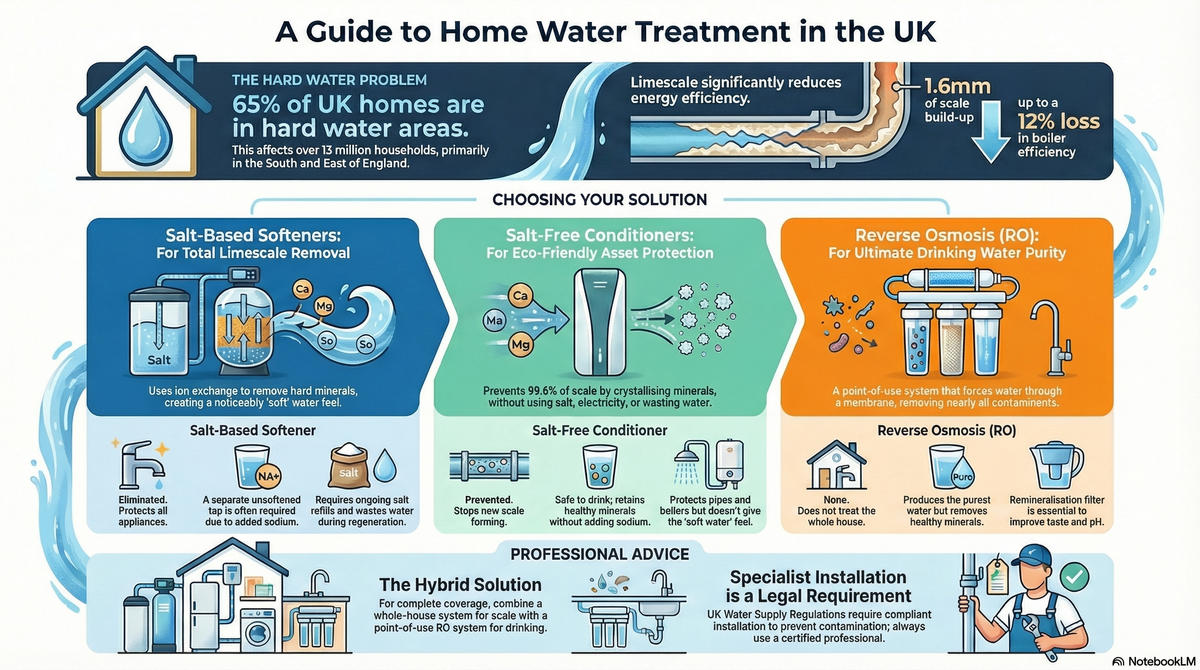
Water Treatment explained
Professional Legionella testing ensures your water system is managed safely and provides peace of mind for your family. For landlords in the UK, conducting a Legionella risk assessment is a legal requirement to ensure the safety of tenants.
| Item | Low £ | High £ | Notes |
|---|---|---|---|
| Standard Risk Assessment | £120 | £250 | Visual inspection and temperature log for a 3-bed house. |
| Water Sampling (Per Sample) | £45 | £80 | Includes sterile collection and UKAS lab analysis. |
| Landlord Compliance Pack | £150 | £300 | Assessment plus 2 samples and formal certification. |
| System Disinfection (Chlorination) | £250 | £600 | Required only if high levels of bacteria are detected. |
Prices vary based on the size of the property and the number of water outlets. Most technicians charge a fixed fee for the assessment, with additional costs for each lab sample required.
While homeowners can perform basic temperature checks, a formal Legionella risk assessment and sampling must be conducted by a competent person. Laboratory testing cannot be done via DIY methods as it requires sterile handling and UKAS-accredited facilities to be legally or insurance-compliant.
Note for Landlords: You are legally responsible for the health and safety of your tenants. A professional assessment is the only way to prove you have fulfilled your "duty of care" under UK health and safety law.
No, it is not a legal requirement for private homeowners living in their own property. However, it is highly recommended if you have complex systems, large water storage tanks, or are vulnerable to respiratory issues.
For most domestic properties, a review every two years is standard. However, you should re-test immediately if the water system is modified or if the property has been vacant for an extended period.
If bacteria are detected, the system usually requires a "shock" treatment. This involves thermal disinfection (flushing with very high-temperature water) or chemical chlorination to kill the bacteria.
No, you cannot catch it by drinking water. The risk comes from inhaling small droplets (aerosols) of contaminated water, such as those produced by showers, taps, or hot tubs.
Even "combi" boiler systems without storage tanks carry a risk, particularly in showerheads and dead legs, though the risk is generally lower than in systems with stored water.
This guide was written with AI assistance and is intended for general information only. Prices are estimates based on UK averages and may vary by region. Always get at least three quotes and consult a qualified professional before starting any work.
Ask follow-ups in plain English. The AI explains options, sequencing and what to ask the water treatment — so you walk in informed.
Upgrading your home’s water quality is a smart investment for both your health and the longevity of your appliances. Whether you are looking to remove the taste...
READ GUIDE →GuideHard water affects over 60% of UK households, particularly in the South and East of England. High concentrations of calcium and magnesium lead to limescale buil...
READ GUIDE →GuideMaintaining your home water filtration system is essential for ensuring the continued safety, taste, and clarity of your drinking water. In many parts of the UK...
READ GUIDE →GuideMaintaining a water cooler is about more than just ensuring a cold drink; it is a critical health and safety task for UK homeowners. Over time, bacteria, biofil...
READ GUIDE →GuideLegionella is a naturally occurring bacteria that can colonise domestic water systems, potentially leading to Legionnaires' disease—a severe form of pneumonia. ...
READ GUIDE →GuideWhen your home's water supply is compromised, the situation is more than just a minor inconvenience; it is a health priority. Whether you have noticed a sudden ...
READ GUIDE →