Instant
01 · Ask
Ask the AI a follow-up
Got more questions about water Purifier Installation? Describe the bit you're unsure about — the AI explains options, sequencing and what to ask the water treatment.

Reverse osmosis or UV water purifier — for high-purity drinking water and removing PFAS and bacteria.
You've read the brief on water Purifier Installation. Now lean on us to find the right water treatment — and stay in control of the job.
Got more questions about water Purifier Installation? Describe the bit you're unsure about — the AI explains options, sequencing and what to ask the water treatment.
Costs, timelines, pitfalls and the right questions to ask before any water treatment starts on water Purifier Installation.
Itemised quotes from up to 3 local water treatments on water Purifier Installation — so you can compare like-for-like, not lump sums.
Ready when you are
Enter your postcode and get free quotes from local pros.
Four moves that separate a smooth job from a nightmare.
Often caused by an undersized supply line or a clogged pre-filter; a professional will check your incoming bar pressure first.
Common in the first 48 hours; systems must be thoroughly flushed to clear the "cloudy" appearance of micro-bubbles.
Usually results from poor seals or drilling a hole that is slightly too large for the tap base.
Often occurs in RO systems if the drain line is not positioned correctly or if the auto-shutoff valve is faulty.
Indicative UK ranges and what affects price.
By job type
Quote spread is typically ± 18% — always get 3 quotes.
Water Treatment quick-view
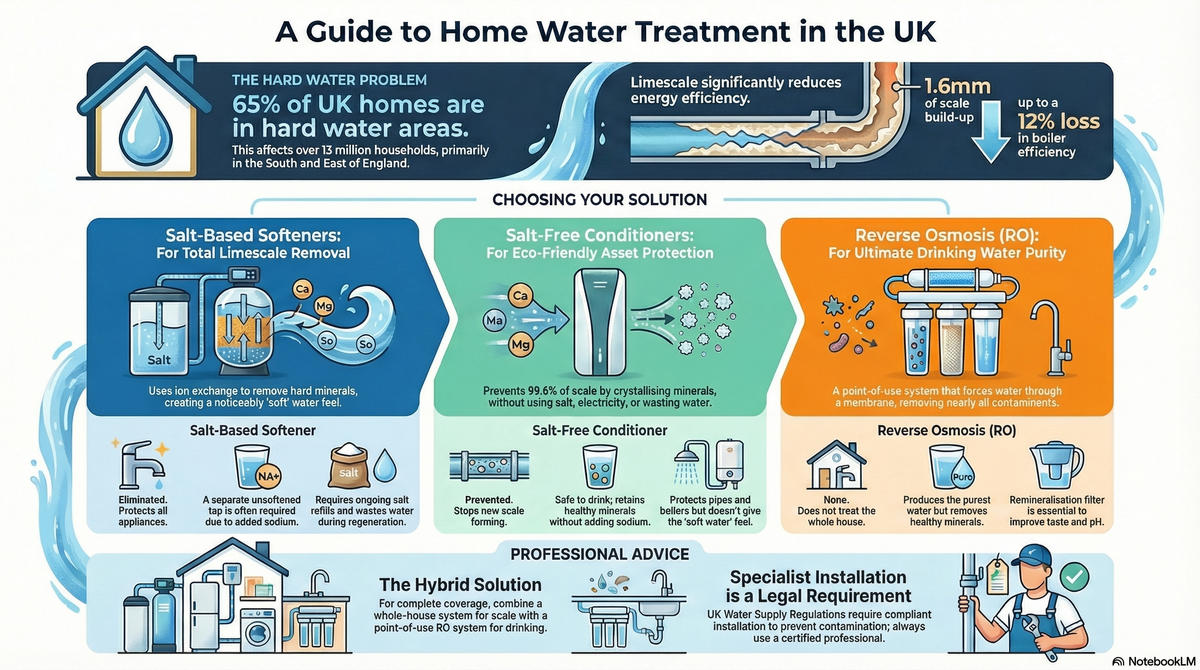
Water Treatment explained
In the UK, where water hardness and mineral content vary significantly by region, choosing the right filtration system is essential. From simple under-sink carbon filters to sophisticated Reverse Osmosis (RO) units, a proper installation ensures the system operates efficiently without risking leaks or contamination of the mains supply.
The cost of installing a water purifier in the UK depends largely on the complexity of the system and whether modifications to your cabinetry or worktops are required. Prices below include VAT and professional labour.
| System Type | Low £ | High £ | Notes |
|---|---|---|---|
| Single-Stage Under-Sink | £150 | £300 | Basic carbon filtration; quick install. |
| Reverse Osmosis (RO) | £350 | £750 | Includes storage tank and waste line. |
| Whole-House System | £800 | £2,200 | Installed at the mains point of entry. |
| Labour Only (Install) | £120 | £250 | If you provide your own unit. |
Labour rates are generally higher in London and the South East. If your installation requires drilling through granite or quartz worktops, expect to pay a premium for specialist diamond-tipped tooling and expertise.
While basic "DIY kits" are available, professional installation is highly recommended for any system that integrates with your mains plumbing. In the UK, any attachment to the water mains must comply with Water Regulations to prevent backflow and contamination. A professional installer ensures that the correct check valves are used and that the system is pressure-tested, protecting your home from the devastating cost of a slow, hidden leak under kitchen units.
Ask your tradesperson: "Will you be installing a check valve to prevent backflow, and are the fittings you use WRAS-approved?"
Most UK manufacturers recommend changing filters every 6 to 12 months. This depends on your local water quality and the volume of water used daily.
Standard filters have a negligible impact on pressure. However, Reverse Osmosis systems require a minimum of 2.8 bar to function efficiently; if your pressure is lower, a booster pump may be needed.
You can either install a small dedicated dispenser tap or replace your existing kitchen tap with a "3-way" (triflow) tap that delivers hot, cold, and filtered water from one unit.
Standard carbon filters do not remove limescale. To tackle hard water, you need a system with an ion-exchange resin or a dedicated water softener alongside your purifier.
Only Reverse Osmosis systems produce waste water (used to flush contaminants away). Modern high-efficiency RO units have a ratio of roughly 1:1, meaning for every litre of pure water, one litre goes to drain.
This guide was written with AI assistance and is intended for general information only. Prices are estimates based on UK averages and may vary by region. Always get at least three quotes and consult a qualified professional before starting any work.
Ask follow-ups in plain English. The AI explains options, sequencing and what to ask the water treatment — so you walk in informed.
Hard water affects over 60% of UK households, particularly in the South and East of England. High concentrations of calcium and magnesium lead to limescale buil...
READ GUIDE →GuideMaintaining your home water filtration system is essential for ensuring the continued safety, taste, and clarity of your drinking water. In many parts of the UK...
READ GUIDE →GuideLegionella bacteria can thrive in domestic hot and cold water systems, potentially causing Legionnaires' disease—a severe form of pneumonia. While most common i...
READ GUIDE →GuideMaintaining a water cooler is about more than just ensuring a cold drink; it is a critical health and safety task for UK homeowners. Over time, bacteria, biofil...
READ GUIDE →GuideLegionella is a naturally occurring bacteria that can colonise domestic water systems, potentially leading to Legionnaires' disease—a severe form of pneumonia. ...
READ GUIDE →GuideWhen your home's water supply is compromised, the situation is more than just a minor inconvenience; it is a health priority. Whether you have noticed a sudden ...
READ GUIDE →