Instant
01 · Ask
Ask the AI a follow-up
Got more questions about water Cooler Maintenance? Describe the bit you're unsure about — the AI explains options, sequencing and what to ask the water treatment.

Annual water cooler service — filter swap, sanitise and pressure check for office or domestic units.
You've read the brief on water Cooler Maintenance. Now lean on us to find the right water treatment — and stay in control of the job.
Got more questions about water Cooler Maintenance? Describe the bit you're unsure about — the AI explains options, sequencing and what to ask the water treatment.
Costs, timelines, pitfalls and the right questions to ask before any water treatment starts on water Cooler Maintenance.
Itemised quotes from up to 3 local water treatments on water Cooler Maintenance — so you can compare like-for-like, not lump sums.
Ready when you are
Enter your postcode and get free quotes from local pros.
Four moves that separate a smooth job from a nightmare.
Usually caused by bottled coolers being placed in direct sunlight. A professional can deep-clean the tank, but the unit should be moved.
This is often a sign of a clogged filter or a build-up of limescale in the internal pipes.
Often caused by "biofilm" (a thin layer of bacteria) inside the reservoir. This requires a professional-grade sanitising flush.
Usually a worn tap seal or a faulty internal valve. Replacing these early prevents water damage to your floor.
Indicative UK ranges and what affects price.
By job type
Quote spread is typically ± 18% — always get 3 quotes.
Water Treatment quick-view
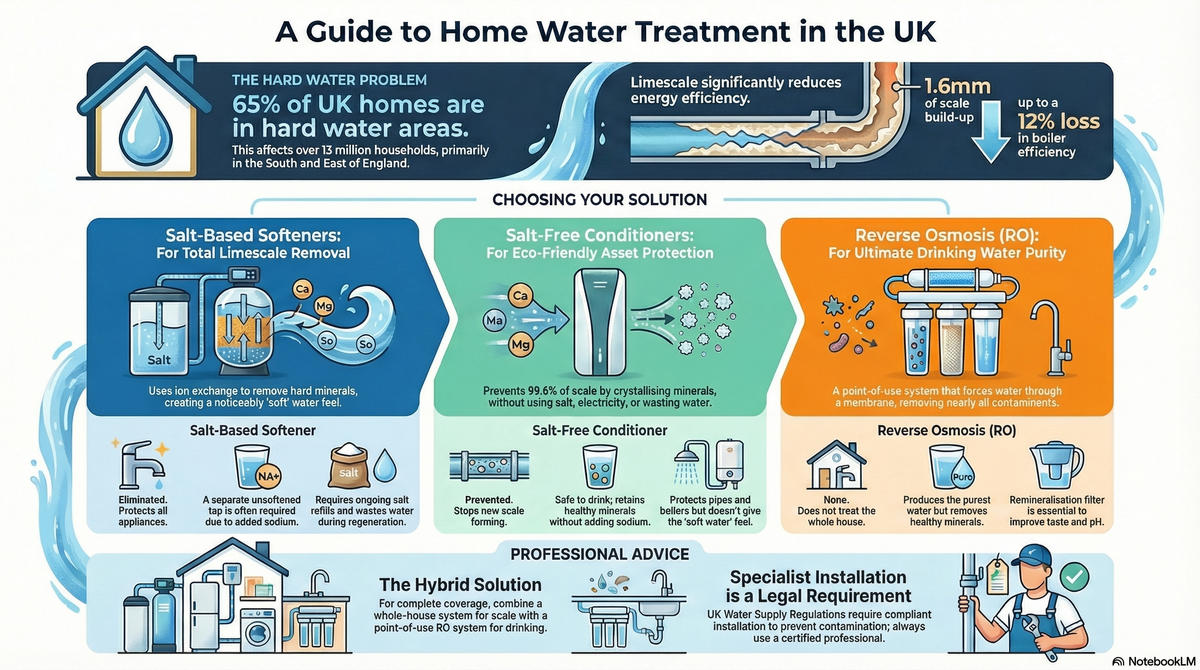
Water Treatment explained
Whether you have a bottled unit or a mains-fed (POU) system, regular professional servicing ensures the water remains pure and the machine operates efficiently. In the UK, where hard water is prevalent in many regions, descaling is particularly vital to prevent heating and cooling elements from failing prematurely.
The cost of water cooler maintenance depends largely on whether the unit is a simple bottled version or a complex plumbed-in system. Prices usually include the cost of sanitising chemicals and standard filters.
| Item | Low £ | High £ | Notes |
|---|---|---|---|
| One-off Service Visit | £70 | £120 | Includes sanitisation and basic inspection. |
| Replacement Filter Set | £25 | £60 | Higher cost for high-micron or UV filters. |
| Annual Maintenance Contract | £150 | £250 | Typically covers 2-4 visits per year. |
| Emergency Leak Repair | £90 | £160 | Includes call-out fee and first hour of labour. |
| Total Average Project | £130 | £220 | Standard service plus filter replacement. |
Factors affecting the price include your location (London and the SE typically command higher labour rates) and the specific brand of the cooler, as some proprietary filters are more expensive than universal alternatives.
While homeowners can easily wipe down the exterior and empty the drip tray, internal maintenance should generally be handled by a professional. Handling food-grade chemicals requires care, and incorrect reassembly can lead to catastrophic leaks that damage flooring.
Note: If you have a mains-fed cooler, any work involving the water supply should ideally be carried out by someone familiar with UK Water Regulations to prevent backflow contamination.
For bottled coolers, a professional sanitisation is recommended every 3 months. For mains-fed (POU) coolers, a service and filter change every 6 months is the standard UK recommendation.
If the unit is new, it may just need a thorough flush. If it is older, the internal tubing may be degrading or a biofilm has formed, requiring a professional chemical clean.
No, you should use the manufacturer-recommended filter or a high-quality WRAS-approved alternative. Lower-quality filters may not remove lead, chlorine, or cysts effectively.
While it saves a small amount of electricity, it is generally better to leave it on. Constant temperature fluctuations can actually encourage bacterial growth in the reservoir.
A 'Point-of-Use' (POU) cooler is plumbed directly into your mains water supply, whereas a bottled cooler uses 19-litre plastic jugs. POU units are generally cheaper to run but require more complex initial installation.
This guide was written with AI assistance and is intended for general information only. Prices are estimates based on UK averages and may vary by region. Always get at least three quotes and consult a qualified professional before starting any work.
Ask follow-ups in plain English. The AI explains options, sequencing and what to ask the water treatment — so you walk in informed.
Upgrading your home’s water quality is a smart investment for both your health and the longevity of your appliances. Whether you are looking to remove the taste...
READ GUIDE →GuideHard water affects over 60% of UK households, particularly in the South and East of England. High concentrations of calcium and magnesium lead to limescale buil...
READ GUIDE →GuideMaintaining your home water filtration system is essential for ensuring the continued safety, taste, and clarity of your drinking water. In many parts of the UK...
READ GUIDE →GuideLegionella bacteria can thrive in domestic hot and cold water systems, potentially causing Legionnaires' disease—a severe form of pneumonia. While most common i...
READ GUIDE →GuideLegionella is a naturally occurring bacteria that can colonise domestic water systems, potentially leading to Legionnaires' disease—a severe form of pneumonia. ...
READ GUIDE →GuideWhen your home's water supply is compromised, the situation is more than just a minor inconvenience; it is a health priority. Whether you have noticed a sudden ...
READ GUIDE →