Instant
01 · Ask
Ask the AI a follow-up
Got more questions about water Softener Installation? Describe the bit you're unsure about — the AI explains options, sequencing and what to ask the water treatment.

Salt-based water softener — eliminates limescale, extends boiler life and saves on heating costs.
You've read the brief on water Softener Installation. Now lean on us to find the right water treatment — and stay in control of the job.
Got more questions about water Softener Installation? Describe the bit you're unsure about — the AI explains options, sequencing and what to ask the water treatment.
Costs, timelines, pitfalls and the right questions to ask before any water treatment starts on water Softener Installation.
Itemised quotes from up to 3 local water treatments on water Softener Installation — so you can compare like-for-like, not lump sums.
Ready when you are
Enter your postcode and get free quotes from local pros.
Four moves that separate a smooth job from a nightmare.
A hard crust forms in the salt tank, preventing the brine from saturating. Avoid this by using high-quality tablet or block salt and not overfilling.
Some older softeners can restrict flow. Ensure your tradesperson installs a "high-flow" model if you have a Megaflo or unvented system.
If the drain hose is kinked or positioned too high, the unit won't regenerate properly, leading to hard water "leakage" into your taps.
If the unit is set to regenerate at 2 AM but is located near a bedroom, the noise can be disruptive. This can be adjusted on electric models.
Indicative UK ranges and what affects price.
By job type
Quote spread is typically ± 18% — always get 3 quotes.
Water Treatment quick-view
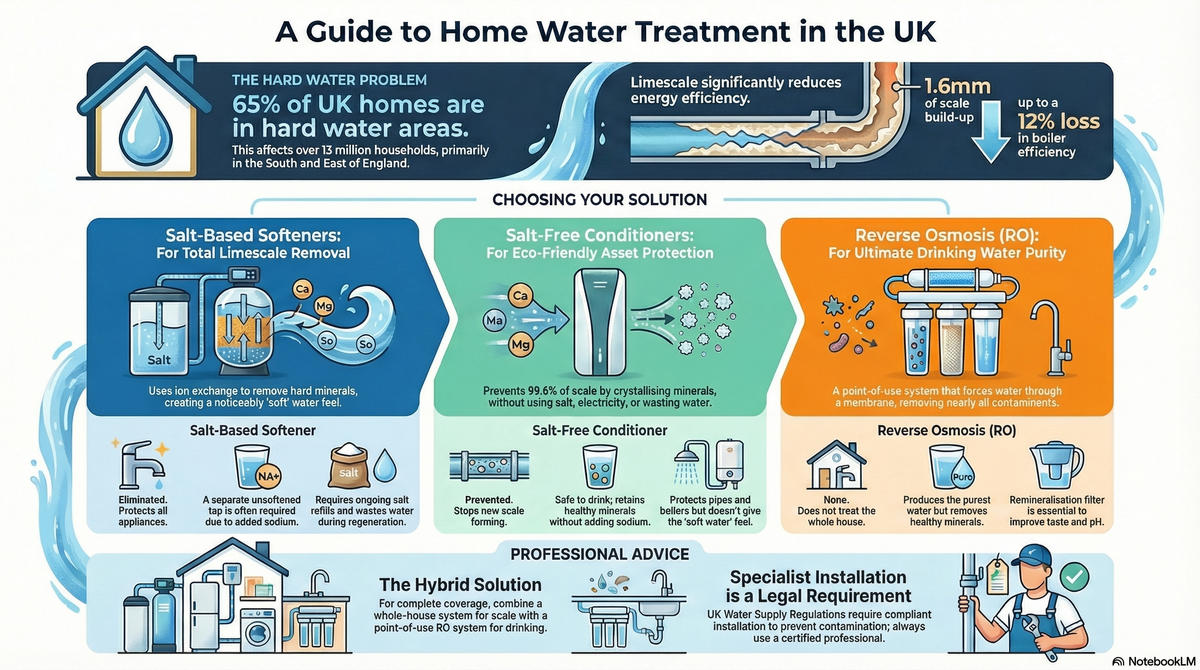
Water Treatment explained
Installing a water softener is a long-term investment that protects your plumbing, reduces soap consumption, and extends the lifespan of your white goods. This guide covers everything from installation steps and realistic 2025 pricing to the essential UK regulations you must follow.
The total cost depends heavily on whether you choose a budget electric model or a premium twin-tank non-electric system. Prices below include VAT and professional installation by a qualified plumber.
| Item | Low £ | High £ | Notes |
|---|---|---|---|
| Electric Single-Tank Unit | £450 | £850 | Requires a 13A power socket nearby. |
| Non-Electric Twin-Tank Unit | £900 | £1,600 | Continuous soft water; no power needed. |
| Installation Labour | £200 | £450 | Includes pipework and bypass valves. |
| Drinking Water Filter Kit | £80 | £150 | Optional add-on for the drinking tap. |
| Total Project Cost | £730 | £2,200 | Varies by brand and pipework complexity. |
Factors affecting the price include the distance to the nearest drain, the need for a power socket installation, and the size of your home. Premium brands often offer longer warranties (up to 10 years), which justifies the higher initial outlay.
While some "DIY-ready" kits exist, professional installation is highly recommended. You are dealing with your primary drinking water supply; a mistake can lead to cross-contamination or significant flood damage. UK Water Regulations also mandate specific check valves to prevent softened water from backflowing into the mains, which a professional will ensure are correctly fitted.
Pro Tip: Most manufacturers will only honour their 5 or 10-year warranties if the unit is installed by a qualified tradesperson or a WRAS-approved installer.
Softened water contains a small amount of added sodium. While safe for most, it is not recommended for preparing baby formula or for individuals on a medically supervised low-sodium diet. This is why UK regs usually require one hard water tap.
An average family of four typically uses one 25kg bag of tablet salt or two blocks of salt per month. This costs roughly £10–£15 per month depending on your water hardness levels.
Electric units are cheaper upfront but require a power socket and manual programming. Non-electric twin-tank units are more expensive but offer 24/7 soft water and adjust automatically to your usage without needing a plug.
Yes. Over 6–12 months, softened water will gradually dissolve existing scale buildup in your pipes, showerheads, and boiler heat exchanger, improving system efficiency.
Ideally, as close to the rising main as possible. This is usually under the kitchen sink, but utility rooms, garages, or even external insulated cabinets are common alternatives.
This guide was written with AI assistance and is intended for general information only. Prices are estimates based on UK averages and may vary by region. Always get at least three quotes and consult a qualified professional before starting any work.
Ask follow-ups in plain English. The AI explains options, sequencing and what to ask the water treatment — so you walk in informed.
Upgrading your home’s water quality is a smart investment for both your health and the longevity of your appliances. Whether you are looking to remove the taste...
READ GUIDE →GuideMaintaining your home water filtration system is essential for ensuring the continued safety, taste, and clarity of your drinking water. In many parts of the UK...
READ GUIDE →GuideLegionella bacteria can thrive in domestic hot and cold water systems, potentially causing Legionnaires' disease—a severe form of pneumonia. While most common i...
READ GUIDE →GuideMaintaining a water cooler is about more than just ensuring a cold drink; it is a critical health and safety task for UK homeowners. Over time, bacteria, biofil...
READ GUIDE →GuideLegionella is a naturally occurring bacteria that can colonise domestic water systems, potentially leading to Legionnaires' disease—a severe form of pneumonia. ...
READ GUIDE →GuideWhen your home's water supply is compromised, the situation is more than just a minor inconvenience; it is a health priority. Whether you have noticed a sudden ...
READ GUIDE →