Instant
01 · Ask
Ask the AI a follow-up
Got more questions about legionella Risk Assessment? Describe the bit you're unsure about — the AI explains options, sequencing and what to ask the water treatment.

Written Legionella risk assessment — required by HSE for landlords and most commercial premises.
You've read the brief on legionella Risk Assessment. Now lean on us to find the right water treatment — and stay in control of the job.
Got more questions about legionella Risk Assessment? Describe the bit you're unsure about — the AI explains options, sequencing and what to ask the water treatment.
Costs, timelines, pitfalls and the right questions to ask before any water treatment starts on legionella Risk Assessment.
Itemised quotes from up to 3 local water treatments on legionella Risk Assessment — so you can compare like-for-like, not lump sums.
Ready when you are
Enter your postcode and get free quotes from local pros.
Four moves that separate a smooth job from a nightmare.
Pipes leading to removed radiators or capped-off sinks where water stagnates. These must be cut back as close to the main line as possible.
Setting your boiler too low to save energy can allow bacteria to multiply. Hot water should be stored at 60°C.
Loft tanks without lids allow dust, insects, and birds to enter, providing "food" for bacteria.
Limescale on showerheads and taps provides a protective home for Legionella; regular descaling is essential.
Indicative UK ranges and what affects price.
By job type
Quote spread is typically ± 18% — always get 3 quotes.
Water Treatment quick-view
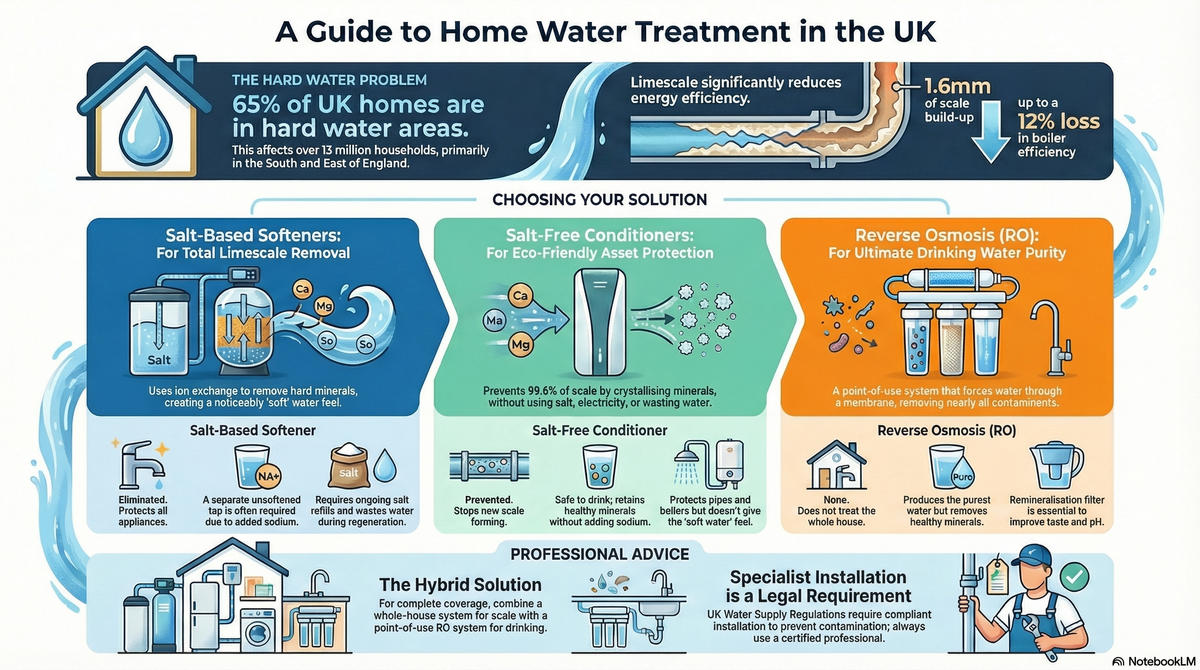
Water Treatment explained
For UK homeowners, a Legionella risk assessment ensures your water system is safe, efficient, and free from conditions that encourage bacterial growth. For landlords, this assessment is not just a safety recommendation but a legal requirement under UK health and safety legislation to ensure the protection of tenants.
The cost of a Legionella risk assessment in the UK depends primarily on the size of the property and the complexity of the plumbing system. Prices usually include the site visit, the physical testing, and the digital or physical report.
| Item | Low £ | High £ | Notes |
|---|---|---|---|
| Studio / 1-Bed Flat | £85 | £120 | Simple system, single bathroom. |
| 3-4 Bed Semi-Detached | £130 | £180 | Standard domestic setup. |
| Large Detached / HMO | £200 | £450 | Multiple tanks and complex pipework. |
| Water Sampling (Optional) | £50 | £100 | Per sample; usually only if risk is high. |
Factors affecting the price include your location (London and the South East typically command higher rates) and whether you require additional services like showerhead descaling or water tank disinfection as part of the visit.
While a DIY assessment is technically possible for a private homeowner, it is rarely recommended. Professionals use calibrated thermometers and have the expertise to spot "hidden" risks like pipework dead legs behind walls. For landlords, the law requires a "competent person" to carry out the assessment. If you lack the technical knowledge of plumbing systems, you may fail to meet your legal duty of care, leaving you liable in the event of an outbreak.
Legionella management is governed by strict UK standards. Compliance ensures both safety and legal protection for property owners.
No. A risk assessment is a physical inspection of the system's design and temperature. A "test" usually refers to water sampling (lab analysis), which is generally only required if the assessment identifies a high-risk scenario or an outbreak is suspected.
There is no fixed legal timeframe, but the industry standard is every 2 years. However, you must review the assessment if there are changes to the water system, the building's use, or if new guidance is published.
Yes, though the risk is lower. While these systems lack a large storage tank (a primary risk site), they still have showerheads and pipework where stagnation or incorrect temperatures can occur.
The law states the assessor must be "competent." If a landlord understands the water system, can measure temperatures accurately, and knows the risks, they can do it. However, most prefer a professional to ensure the report is legally robust.
If a risk is identified, the system usually requires a chemical disinfection (chlorination) or a thermal shock (flushing with very high-temperature water). Physical defects, like dead legs, should be removed by a plumber.
This guide was written with AI assistance and is intended for general information only. Prices are estimates based on UK averages and may vary by region. Always get at least three quotes and consult a qualified professional before starting any work.
Ask follow-ups in plain English. The AI explains options, sequencing and what to ask the water treatment — so you walk in informed.
Upgrading your home’s water quality is a smart investment for both your health and the longevity of your appliances. Whether you are looking to remove the taste...
READ GUIDE →GuideHard water affects over 60% of UK households, particularly in the South and East of England. High concentrations of calcium and magnesium lead to limescale buil...
READ GUIDE →GuideMaintaining your home water filtration system is essential for ensuring the continued safety, taste, and clarity of your drinking water. In many parts of the UK...
READ GUIDE →GuideLegionella bacteria can thrive in domestic hot and cold water systems, potentially causing Legionnaires' disease—a severe form of pneumonia. While most common i...
READ GUIDE →GuideMaintaining a water cooler is about more than just ensuring a cold drink; it is a critical health and safety task for UK homeowners. Over time, bacteria, biofil...
READ GUIDE →GuideWhen your home's water supply is compromised, the situation is more than just a minor inconvenience; it is a health priority. Whether you have noticed a sudden ...
READ GUIDE →