Instant
01 · Ask
Ask the AI a follow-up
Got more questions about removing Spray Foam Insulation? Describe the bit you're unsure about — the AI explains options, sequencing and what to ask the insulation.

Spray foam removed from loft — required for mortgage and sale in many cases. Proper extraction, not just scraping.
You've read the brief on removing Spray Foam Insulation. Now lean on us to find the right insulation — and stay in control of the job.
Got more questions about removing Spray Foam Insulation? Describe the bit you're unsure about — the AI explains options, sequencing and what to ask the insulation.
Costs, timelines, pitfalls and the right questions to ask before any insulation starts on removing Spray Foam Insulation.
Itemised quotes from up to 3 local insulations on removing Spray Foam Insulation — so you can compare like-for-like, not lump sums.
Ready when you are
Enter your postcode and get free quotes from local pros.
Four moves that separate a smooth job from a nightmare.
The biggest risk is discovering that the foam has already caused the rafters to rot, which may require expensive structural repairs.
If the foam is bonded to a felt or breathable membrane, the membrane is almost always destroyed during removal and must be replaced.
Even after removal, some lenders are cautious; ensure you have a "clean" survey from a RICS-qualified surveyor once the work is done.
Spray foam breaks into tiny static beads that can spread throughout the house if the loft isn't properly sealed.
Indicative UK ranges and what affects price.
By job type
Quote spread is typically ± 18% — always get 3 quotes.
Insulation quick-view
Insulation explained
Professional removal is a labour-intensive process that requires specialist tools and safety equipment. This guide explains the costs, risks, and steps involved in restoring your loft to a mortgageable condition.
The cost of spray foam removal is significantly higher than the original installation cost because it is slow, manual work. Prices vary based on the roof size, the pitch, and whether the foam was sprayed directly onto tiles or a breathable membrane.
| Item | Low £ | High £ | Notes |
|---|---|---|---|
| Pre-Removal Survey | £250 | £500 | Includes moisture readings and report. |
| Small Loft (Mid-Terrace) | £2,000 | £3,500 | Full removal including waste disposal. |
| Average 3-Bed Semi | £3,000 | £5,000 | Depends on the thickness of the foam. |
| Large Detached / Complex Roof | £5,500 | £9,000+ | Higher costs for restricted access. |
| Skip Hire & Waste Fees | £300 | £600 | Specialist waste disposal charges. |
Note: Closed-cell foam is much harder and more expensive to remove than open-cell foam. If the foam was sprayed directly onto the roof tiles (without a liner), you may also face costs for replacing damaged tiles or the entire roof covering.
Removing spray foam is not recommended as a DIY project. It is physically exhausting work in a confined, dusty space, and the risk of damaging the delicate roof membrane or gouging the structural timbers is high.
Most mortgage lenders will only accept a certificate of removal from a VAT-registered professional company with specific insurance for this type of work.
Furthermore, the dust generated during removal can be an irritant. Professionals use industrial-grade extraction and PPE (Personal Protective Equipment) that most homeowners do not have access to.
Lenders worry that spray foam, especially closed-cell, prevents air from circulating around the roof timbers. This can trap moisture against the wood, leading to "stealth rot" that isn't visible until the roof becomes structurally unsound.
While technically possible, it is not advised. You risk damaging the roof structure, and without a professional certificate of removal, you may still struggle to sell your home or get a mortgage in the future.
Not necessarily for the safety of the house, but if you are selling or remortgaging, most UK lenders currently have a "zero tolerance" policy. It is best to check with a mortgage broker before committing to removal.
Open-cell is softer and more flexible, making it easier to remove. Closed-cell is dense and sets like hard plastic; it is much harder to strip away and carries a higher risk of timber damage during removal.
If the foam was used to "glue" old, failing tiles together (a practice known as 'back-bonding'), removing it may cause the tiles to slip. A professional should assess this risk before starting work.
The most common and cost-effective solution is to install traditional mineral wool batts or rolls between and over the ceiling joists to the current Building Regulation thickness (usually 270mm).
This guide was written with AI assistance and is intended for general information only. Prices are estimates based on UK averages and may vary by region. Always get at least three quotes and consult a qualified professional before starting any work.
Ask follow-ups in plain English. The AI explains options, sequencing and what to ask the insulation — so you walk in informed.
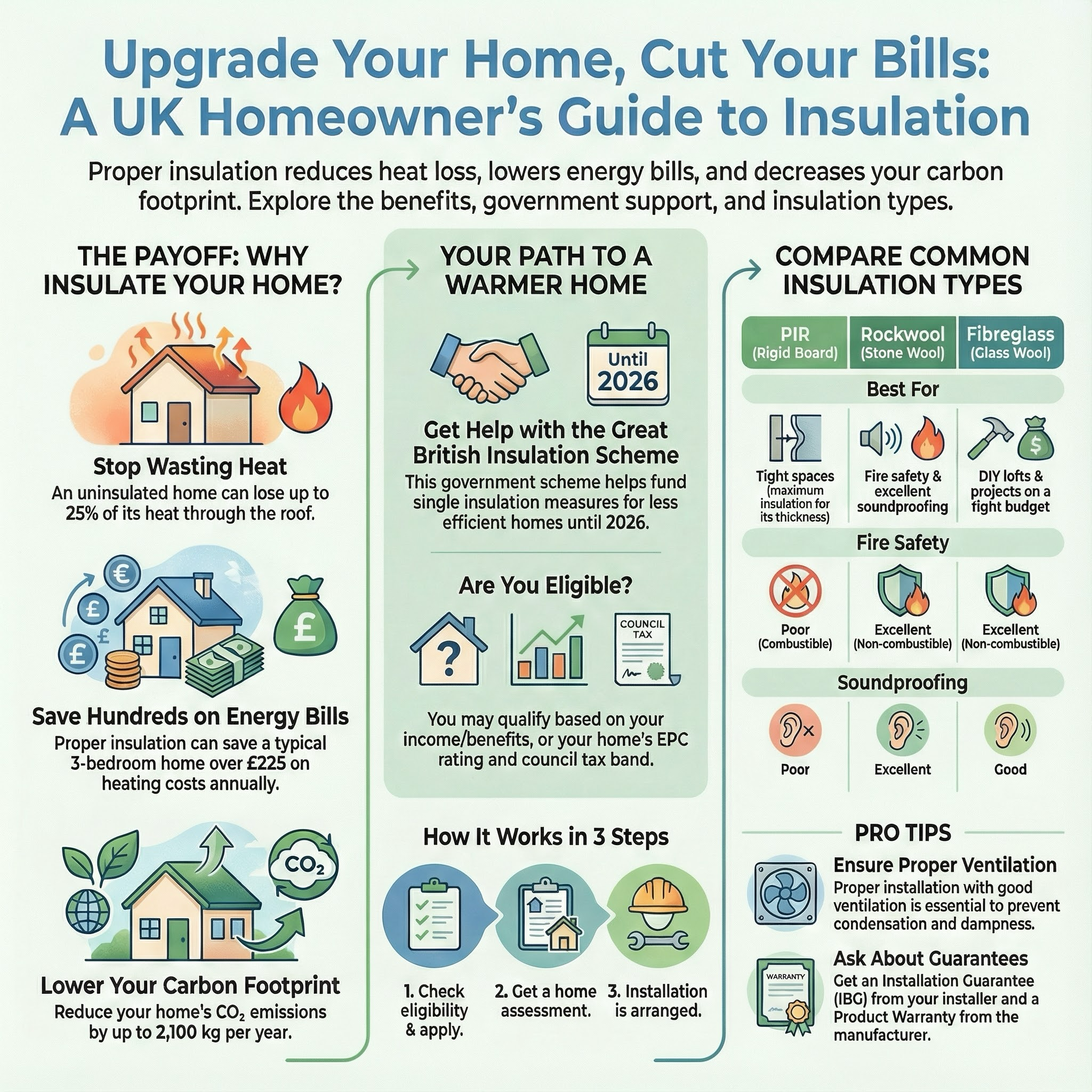
UK homes lose approximately 25% of their heat through an uninsulated roof. Installing high-quality insulation is one of the most effective ways to lower your en...
READ GUIDE →GuideWhether you are dealing with noisy neighbours in a terraced house or trying to create a quiet home office, professional soundproofing is a transformative invest...
READ GUIDE →GuideSuspended timber floors are a common feature in UK homes built before the 1950s. While they provide necessary ventilation for the building's structure, they are...
READ GUIDE →GuideCavity wall insulation is one of the most cost-effective ways to improve your home’s energy efficiency. By filling the gap between your inner and outer walls, y...
READ GUIDE →GuideAcoustic panels have transitioned from professional recording studios into the heart of modern UK homes. As open-plan living and hard flooring become more preva...
READ GUIDE →GuideInternal wall insulation (IWI) is a transformative upgrade for the millions of UK homes built with solid walls, typically those constructed before 1930. Unlike ...
READ GUIDE →