Instant
01 · Ask
Ask the AI a follow-up
Got more questions about suspended Floor Insulation? Describe the bit you're unsure about — the AI explains options, sequencing and what to ask the insulation.

Timber-floor insulation — from above or below — for Victorian and Edwardian houses with cold downstairs floors.
You've read the brief on suspended Floor Insulation. Now lean on us to find the right insulation — and stay in control of the job.
Got more questions about suspended Floor Insulation? Describe the bit you're unsure about — the AI explains options, sequencing and what to ask the insulation.
Costs, timelines, pitfalls and the right questions to ask before any insulation starts on suspended Floor Insulation.
Itemised quotes from up to 3 local insulations on suspended Floor Insulation — so you can compare like-for-like, not lump sums.
Ready when you are
Enter your postcode and get free quotes from local pros.
Four moves that separate a smooth job from a nightmare.
This stops the cross-flow of air, leading to high humidity in the void and eventual timber decay.
Leaving gaps between the insulation and the joists, which allows cold spots and potential condensation.
Covering stopcocks or electrical junction boxes without creating access hatches.
Installing insulation over wet or rotting wood, which accelerates the decay process.
Indicative UK ranges and what affects price.
By job type
Quote spread is typically ± 18% — always get 3 quotes.
Insulation quick-view
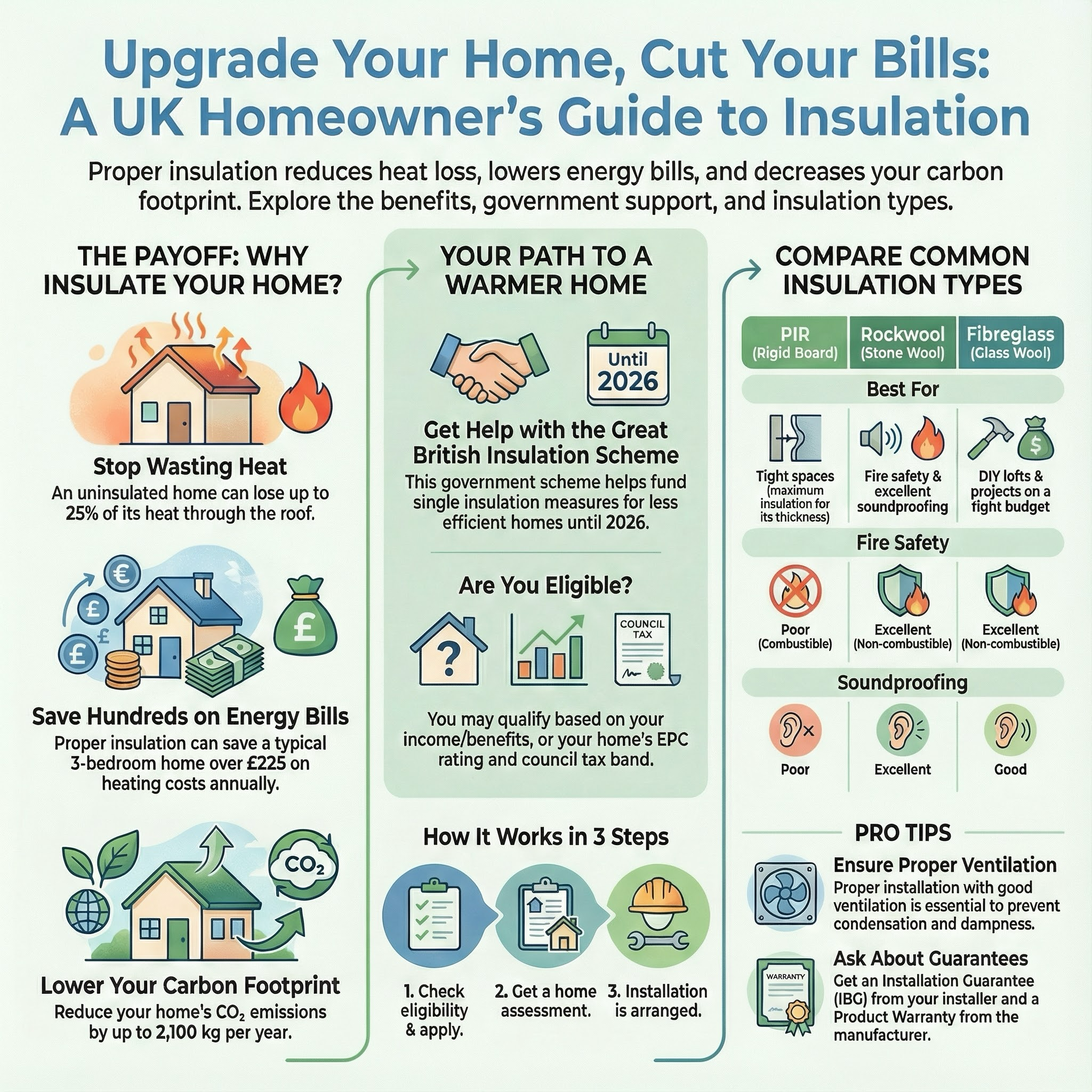
Insulation explained
Insulating the void beneath your floorboards can reduce your heating bills by up to 10% and significantly improve the "thermal comfort" of your ground floor. This guide covers everything from material choices to the vital importance of maintaining sub-floor ventilation.
Prices vary based on the size of your home, the type of insulation material chosen, and whether the installer has to lift the entire floor or can work from a crawl space below.
| Item | Low £ | High £ | Notes |
|---|---|---|---|
| Small Room (15m²) | £450 | £800 | Mineral wool with easy access. |
| Terraced House Ground Floor | £950 | £1,600 | Includes lifting and relaying boards. |
| Semi-Detached Ground Floor | £1,300 | £2,200 | Using high-performance PIR boards. |
| Materials only (per m²) | £12 | £35 | Depends on thickness and R-value. |
Labour is the primary cost driver. If your home lacks a crawl space, the tradesperson must lift every floorboard, which significantly increases the time and price of the project.
If you have a large crawl space (at least 1 metre deep) and are comfortable working in confined spaces, this can be a DIY task. However, it is physically demanding and dirty work.
Hiring a professional is highly recommended if you have narrow joist spacing or suspect any signs of rot or damp. A professional will ensure that air bricks are not blocked—a common DIY mistake that leads to catastrophic dry rot in timber floors.
Pro Tip: Never use spray foam insulation on suspended timber floors. It can trap moisture against the wood and makes future repairs or structural inspections impossible.
It will stop draughts coming through the floorboards themselves. However, you may still feel draughts from windows, doors, or the "perimeter gap" between the floor and the skirting board, which should be sealed separately.
Yes, this is often the easiest type of floor to insulate. You can simply fix the insulation to the ceiling of the cellar between the joists, provided the cellar itself is well-ventilated.
Mineral wool or sheep’s wool are excellent because they are breathable and flexible. Rigid PIR boards (like Celotex) offer better thermal performance for the thickness but are harder to fit perfectly between uneven old joists.
According to the Energy Saving Trust, the average UK detached home can save around £110 per year, while a terrace might save £60-£75. The main benefit is the increased comfort and warmth underfoot.
If there is no crawl space access from below, yes. The carpets and underlay will need to be rolled back, and the floorboards lifted to install the insulation from above.
This guide was written with AI assistance and is intended for general information only. Prices are estimates based on UK averages and may vary by region. Always get at least three quotes and consult a qualified professional before starting any work.
Ask follow-ups in plain English. The AI explains options, sequencing and what to ask the insulation — so you walk in informed.
UK homes lose approximately 25% of their heat through an uninsulated roof. Installing high-quality insulation is one of the most effective ways to lower your en...
READ GUIDE →GuideWhether you are dealing with noisy neighbours in a terraced house or trying to create a quiet home office, professional soundproofing is a transformative invest...
READ GUIDE →GuideCavity wall insulation is one of the most cost-effective ways to improve your home’s energy efficiency. By filling the gap between your inner and outer walls, y...
READ GUIDE →GuideAcoustic panels have transitioned from professional recording studios into the heart of modern UK homes. As open-plan living and hard flooring become more preva...
READ GUIDE →GuideInternal wall insulation (IWI) is a transformative upgrade for the millions of UK homes built with solid walls, typically those constructed before 1930. Unlike ...
READ GUIDE →GuideInsulating a solid concrete floor is one of the most effective ways to stop heat escaping through the ground in UK properties, particularly those built before t...
READ GUIDE →