Instant
01 · Ask
Ask the AI a follow-up
Got more questions about internal Wall Insulation? Describe the bit you're unsure about — the AI explains options, sequencing and what to ask the insulation.

IWI — insulated plasterboard or studwork system on the inside of solid walls. Cuts heat loss without changing facade.
You've read the brief on internal Wall Insulation. Now lean on us to find the right insulation — and stay in control of the job.
Got more questions about internal Wall Insulation? Describe the bit you're unsure about — the AI explains options, sequencing and what to ask the insulation.
Costs, timelines, pitfalls and the right questions to ask before any insulation starts on internal Wall Insulation.
Itemised quotes from up to 3 local insulations on internal Wall Insulation — so you can compare like-for-like, not lump sums.
Ready when you are
Enter your postcode and get free quotes from local pros.
Four moves that separate a smooth job from a nightmare.
Moisture getting trapped behind the insulation. Avoid this by using a high-quality vapour barrier.
Forgetting to insulate "returns" (the small sections of internal wall where they meet the external wall), which leads to cold spots and mould.
High-performance PIR boards are usually 60mm–100mm thick. Ensure you are happy with the reduced floor area before starting.
Standard wall plugs won't work on insulated walls; you will need special "heavy-duty" fixings to hang TVs or heavy mirrors in the future.
Indicative UK ranges and what affects price.
By job type
Quote spread is typically ± 18% — always get 3 quotes.
Insulation quick-view
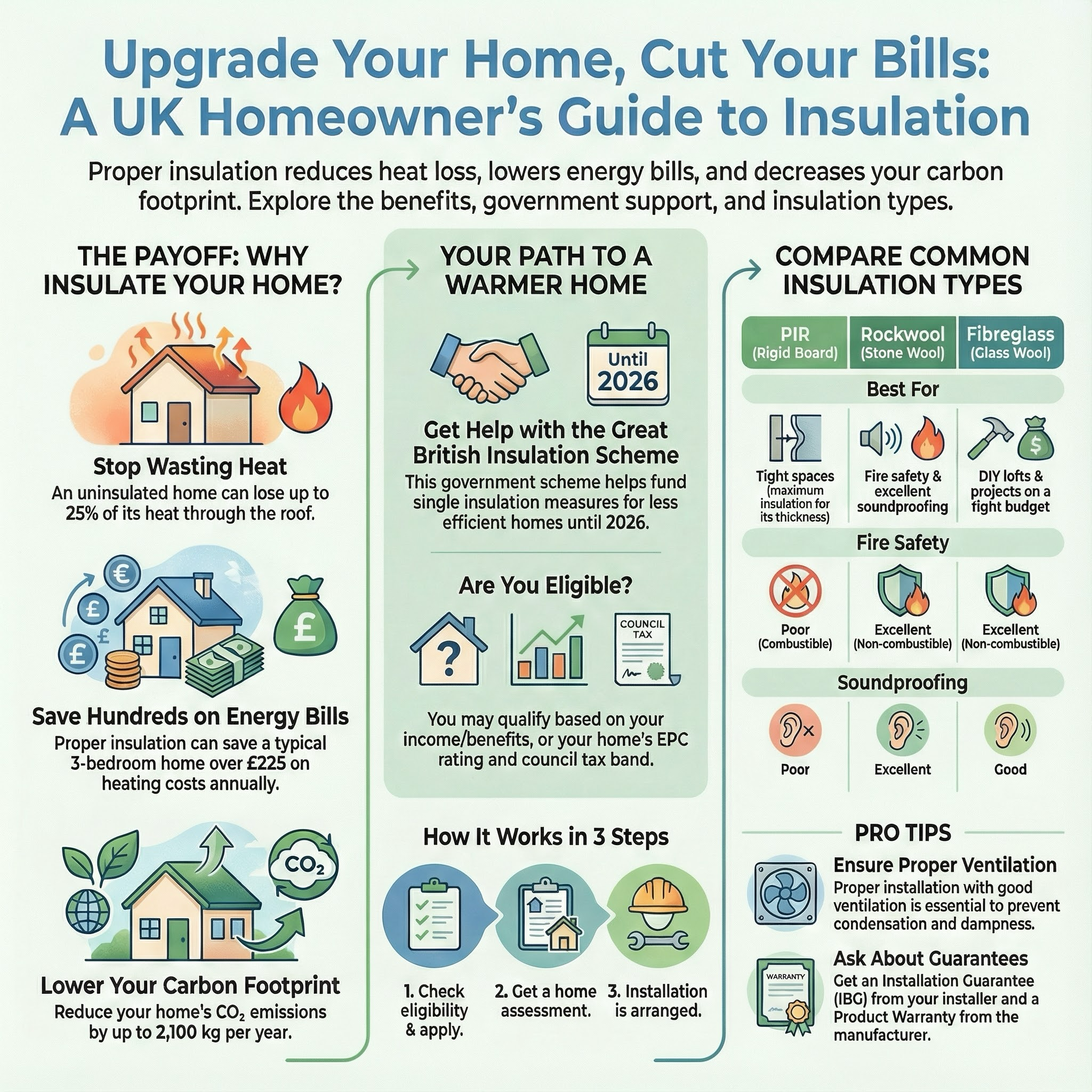
Insulation explained
By applying a layer of high-performance insulation to the inside of your external walls, you can significantly reduce heat loss and improve your Energy Performance Certificate (EPC) rating. While it involves some disruption and a slight reduction in room size, the increase in thermal comfort and reduction in energy bills is often substantial.
The cost of internal wall insulation varies based on the materials used and the complexity of the room. Moving radiators and electrical points often accounts for a significant portion of the labour cost.
| Item | Low £ | High £ | Notes |
|---|---|---|---|
| Small Room (Materials & Labour) | £1,500 | £2,500 | Standard PIR boards and skimming. |
| Average Semi-Detached (Whole House) | £6,500 | £10,000 | Complete internal wrap of external walls. |
| Breathable Wood Fibre (per m²) | £120 | £180 | Premium eco-friendly material. |
| Radiator/Electrical Re-siting | £300 | £600 | Per room, depending on complexity. |
Pricing is largely driven by the finish required. If you choose breathable lime plaster or natural insulation like wood fibre to protect a period property, expect costs to sit at the higher end of the scale.
While a confident DIYer can fix insulation boards, IWI is a high-risk project that is usually best left to professionals. Incorrect installation can trap moisture between the insulation and the wall, leading to structural rot or hidden mould growth.
Note: Professional installers will ensure the vapour barrier is continuous, which is the most critical step in preventing long-term damage to your home.
Furthermore, any electrical or gas work (like moving radiators or sockets) must be carried out by qualified Gas Safe engineers or Part P certified electricians to comply with UK law.
Look for installers with specific experience in "Solid Wall Insulation" rather than general builders. Ensure they understand the difference between breathable and non-breathable systems.
If installed correctly with a vapour barrier, it prevents damp. However, if the wall was already damp or the barrier is breached, it can trap moisture. Always fix external leaks or rising damp before insulating.
Expect to lose between 65mm and 120mm per external wall. While this sounds small, it can impact the placement of furniture and the swing of doors near corners.
EWI is generally more effective and doesn't reduce internal space, but it is significantly more expensive and changes the look of your home. IWI is better for conservation areas or where external access is restricted.
Yes, in almost all cases. The insulation sits behind the radiator, so the pipework must be extended to bring the radiator forward onto the new wall surface.
Yes, but you cannot use standard nails or screws. You must use specialist deep-reach fixings that anchor into the original masonry behind the insulation.
This guide was written with AI assistance and is intended for general information only. Prices are estimates based on UK averages and may vary by region. Always get at least three quotes and consult a qualified professional before starting any work.
Ask follow-ups in plain English. The AI explains options, sequencing and what to ask the insulation — so you walk in informed.
UK homes lose approximately 25% of their heat through an uninsulated roof. Installing high-quality insulation is one of the most effective ways to lower your en...
READ GUIDE →GuideWhether you are dealing with noisy neighbours in a terraced house or trying to create a quiet home office, professional soundproofing is a transformative invest...
READ GUIDE →GuideSuspended timber floors are a common feature in UK homes built before the 1950s. While they provide necessary ventilation for the building's structure, they are...
READ GUIDE →GuideCavity wall insulation is one of the most cost-effective ways to improve your home’s energy efficiency. By filling the gap between your inner and outer walls, y...
READ GUIDE →GuideAcoustic panels have transitioned from professional recording studios into the heart of modern UK homes. As open-plan living and hard flooring become more preva...
READ GUIDE →GuideInsulating a solid concrete floor is one of the most effective ways to stop heat escaping through the ground in UK properties, particularly those built before t...
READ GUIDE →