Instant
01 · Ask
Ask the AI a follow-up
Got more questions about acoustic panel installation? Describe the bit you're unsure about — the AI explains options, sequencing and what to ask the insulation.

Wall- or ceiling-mounted acoustic panels — for home offices, studios or media rooms with echo problems.
You've read the brief on acoustic panel installation. Now lean on us to find the right insulation — and stay in control of the job.
Got more questions about acoustic panel installation? Describe the bit you're unsure about — the AI explains options, sequencing and what to ask the insulation.
Costs, timelines, pitfalls and the right questions to ask before any insulation starts on acoustic panel installation.
Itemised quotes from up to 3 local insulations on acoustic panel installation — so you can compare like-for-like, not lump sums.
Ready when you are
Enter your postcode and get free quotes from local pros.
Four moves that separate a smooth job from a nightmare.
If the first panel is even 1mm out of plumb, the error will be glaringly obvious by the end of the wall.
Using cheap "no-nails" style glue on heavy panels can lead to them peeling away or sagging over time.
Gaps around electrical outlets look unprofessional and can be a fire hazard if the panels are combustible.
Placing panels purely for aesthetics often fails to solve the actual noise problem; they must be placed where sound "bounces."
Indicative UK ranges and what affects price.
By job type
Quote spread is typically ± 18% — always get 3 quotes.
Insulation quick-view
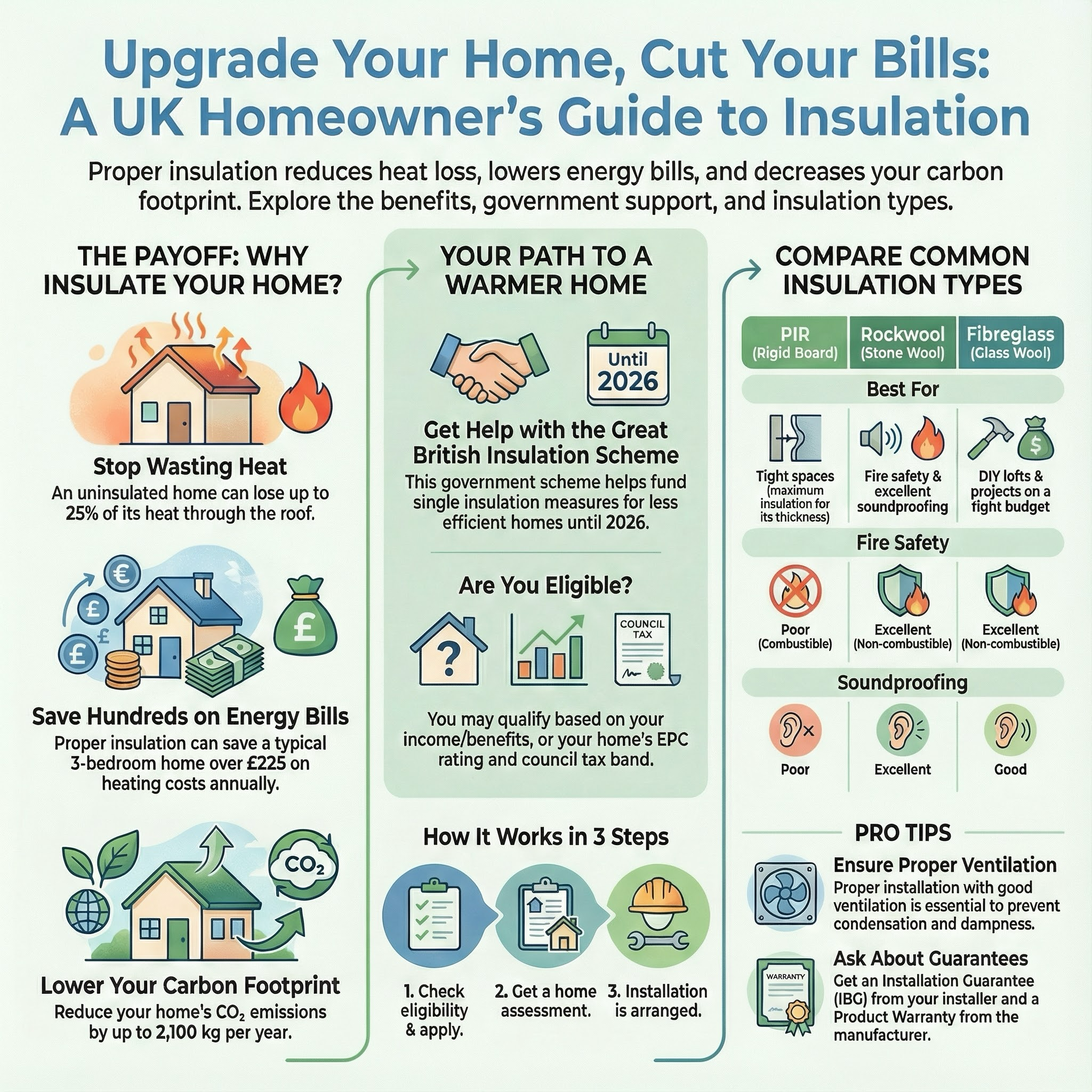
Insulation explained
Installing high-quality acoustic treatment improves sound clarity and privacy while adding a contemporary aesthetic. Whether you are opting for trendy timber slat panels or discreet fabric-wrapped absorbers, professional installation ensures the panels are securely fixed, perfectly aligned, and compliant with UK fire safety standards.
The cost of acoustic panel installation is largely driven by the material choice—ranging from basic foam to premium oak slats—and the complexity of the room's layout.
| Item | Low £ | High £ | Notes |
|---|---|---|---|
| Labour (per day) | £250 | £450 | Higher rates in London and SE England. |
| Timber Slat Panels (per m²) | £60 | £140 | Includes felt backing and real wood veneer. |
| Fabric/Foam Panels (per m²) | £30 | £90 | Varies by thickness and NRC rating. |
| Adhesives & Fixings | £20 | £60 | High-grab grab adhesive or specialist clips. |
| Waste Disposal | £0 | £80 | Many installers include this in the day rate. |
| Total Small Project (Feature Wall) | £450 | £950 | Typical 2.4m x 2.4m area including labour. |
Pro Tip: Always order 10% more material than your measurements suggest to account for cutting waste and "scribing" to uneven walls.
While basic foam tiles can be a DIY weekend task, high-end timber slat panels or fabric systems are difficult to get right. Achieving perfectly vertical lines on wonky UK masonry walls requires professional experience and specialist cutting tools to prevent wood splintering.
Furthermore, if you are installing panels in a kitchen or near a fireplace, a professional will ensure the materials meet Class 0 or Class 1 fire ratings. For any work involving moving sockets or switches to sit flush with the new panels, you must use a Part P registered electrician.
3 Questions to Ask:
Generally, no. Most decorative acoustic panels are designed for absorption (reducing echo inside your room), not insulation (stopping sound entering from outside). To block neighbour noise, you need high-mass soundproofing systems installed behind the panels.
It is not recommended. The weight of the panels can cause the wallpaper to peel away from the wall. For a secure fit, it is best to remove the wallpaper or use mechanical fixings (screws) through the paper into the masonry.
Most popular UK brands use a real wood veneer (like Oak or Walnut) bonded to an MDF core, which is then fixed to a recycled felt backing. This provides the look of solid wood with better acoustic performance and less warping.
For slat panels, a vacuum with a brush attachment is best for removing dust from the felt gaps. Fabric panels can be lightly dabbed with a damp cloth, but avoid harsh chemicals which can damage the fibres or fire-retardant coating.
Only if they are specifically rated for high-humidity environments. Standard MDF-core slat panels will swell and delaminate in a damp bathroom. Look for "moisture-resistant" or PET-only options.
This guide was written with AI assistance and is intended for general information only. Prices are estimates based on UK averages and may vary by region. Always get at least three quotes and consult a qualified professional before starting any work.
Ask follow-ups in plain English. The AI explains options, sequencing and what to ask the insulation — so you walk in informed.
UK homes lose approximately 25% of their heat through an uninsulated roof. Installing high-quality insulation is one of the most effective ways to lower your en...
READ GUIDE →GuideWhether you are dealing with noisy neighbours in a terraced house or trying to create a quiet home office, professional soundproofing is a transformative invest...
READ GUIDE →GuideSuspended timber floors are a common feature in UK homes built before the 1950s. While they provide necessary ventilation for the building's structure, they are...
READ GUIDE →GuideCavity wall insulation is one of the most cost-effective ways to improve your home’s energy efficiency. By filling the gap between your inner and outer walls, y...
READ GUIDE →GuideInternal wall insulation (IWI) is a transformative upgrade for the millions of UK homes built with solid walls, typically those constructed before 1930. Unlike ...
READ GUIDE →GuideInsulating a solid concrete floor is one of the most effective ways to stop heat escaping through the ground in UK properties, particularly those built before t...
READ GUIDE →