Instant
01 · Ask
Ask the AI a follow-up
Got more questions about roof Insulation Installation? Describe the bit you're unsure about — the AI explains options, sequencing and what to ask the insulation.

Pitched or flat roof insulation — by an accredited insulation installer with full Part L compliance.
You've read the brief on roof Insulation Installation. Now lean on us to find the right insulation — and stay in control of the job.
Got more questions about roof Insulation Installation? Describe the bit you're unsure about — the AI explains options, sequencing and what to ask the insulation.
Costs, timelines, pitfalls and the right questions to ask before any insulation starts on roof Insulation Installation.
Itemised quotes from up to 3 local insulations on roof Insulation Installation — so you can compare like-for-like, not lump sums.
Ready when you are
Enter your postcode and get free quotes from local pros.
Four moves that separate a smooth job from a nightmare.
Pushing insulation right into the corners stops airflow, leading to condensation, mould, and eventually timber rot.
Placing heavy boxes or boarding directly onto the wool compresses the air pockets, reducing its effectiveness by up to 50%.
Traditional halogen or even some LED downlights can catch fire if covered by flammable insulation without a protective "loft cap."
An uninsulated, non-draught-proofed hatch acts like an open chimney, sucking heat out of your home.
Indicative UK ranges and what affects price.
By job type
Quote spread is typically ± 18% — always get 3 quotes.
Insulation quick-view
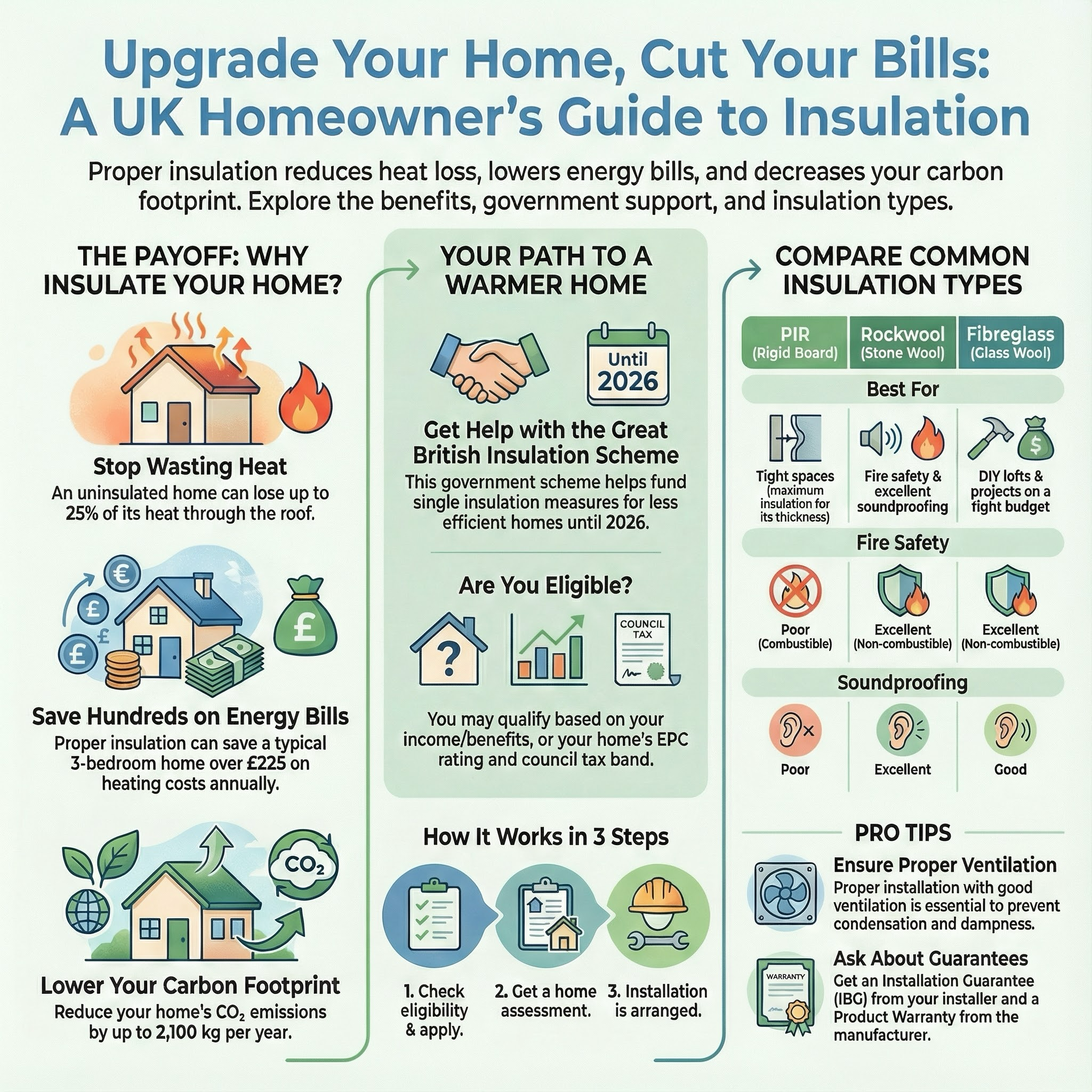
Insulation explained
Modern standards recommend a depth of 270mm for mineral wool insulation, yet many older British homes still have only 100mm or less. Upgrading this "thermal envelope" ensures your home stays warmer in winter and significantly cooler during the summer months.
The total cost depends heavily on the size of your property and whether you are "topping up" existing insulation or starting from scratch. Prices below include professional labour and VAT at the standard rate.
| Item | Low £ | High £ | Notes |
|---|---|---|---|
| Mineral Wool (Full Install) | £450 | £1,100 | Based on a standard 3-bed semi-detached. |
| PIR Rigid Foam Boards | £1,200 | £2,500 | More expensive material; used for "warm roofs." |
| Old Insulation Removal | £300 | £600 | Includes disposal fees for contaminated material. |
| Loft Boarding (Raised) | £45 | £75 | Per m² including "Loft Legs" to avoid compression. |
| Labour (Day Rate) | £200 | £350 | Per person; usually a two-person job for safety. |
Pro Tip: Check if you are eligible for the Great British Insulation Scheme. Many UK homeowners can get roof insulation installed for free or at a significantly subsidised rate if they meet certain criteria.
Laying glass wool or rock wool rolls is a common DIY task, but it is physically demanding, itchy, and carries risks. If you step off the joists, you will fall through the ceiling; if you cover your eaves, you may cause structural dampness within months.
Professionals ensure compliance with Building Regulations (Part L) and handle the dangerous aspects, such as working around electrical circuits. If your project involves spray foam or rigid PIR boards, a professional is essential to ensure the roof can still "breathe" and to satisfy future mortgage lenders.
3 Questions to Ask:
Usually, no. If the old insulation is dry and not infested with pests, it is better to leave it and "top up" with new rolls to reach the 270mm mark. You should only remove it if it is damp, mouldy, or contains hazardous materials like asbestos.
Yes, but you cannot lay boards directly onto 270mm of wool. You must use "Loft Legs" or a similar raised flooring system to create a platform above the insulation. This prevents compression and maintains the thermal performance.
Mineral wool (glass or rock wool) is the most common and cost-effective. Sheep’s wool is a great eco-friendly, breathable alternative. Rigid PIR boards are best if you have limited space or want to insulate the rafters (a "warm roof").
Insulation itself doesn't cause damp, but poor installation does. By making the house warmer, the loft space becomes much colder. If ventilation isn't maintained at the eaves, moisture from the house will condense on the cold roof timbers.
Be cautious. While it has high thermal properties, many UK mortgage lenders refuse to lend on properties with spray foam insulation because it can hide roof defects and restrict timber breathability. Always consult a surveyor first.
According to the Energy Saving Trust, insulating a previously uninsulated loft in a typical detached house can save up to £445 per year at current energy prices. Even a "top-up" can save around £25–£50 annually.
This guide was written with AI assistance and is intended for general information only. Prices are estimates based on UK averages and may vary by region. Always get at least three quotes and consult a qualified professional before starting any work.
Ask follow-ups in plain English. The AI explains options, sequencing and what to ask the insulation — so you walk in informed.
UK homes lose approximately 25% of their heat through an uninsulated roof. Installing high-quality insulation is one of the most effective ways to lower your en...
READ GUIDE →GuideWhether you are dealing with noisy neighbours in a terraced house or trying to create a quiet home office, professional soundproofing is a transformative invest...
READ GUIDE →GuideSuspended timber floors are a common feature in UK homes built before the 1950s. While they provide necessary ventilation for the building's structure, they are...
READ GUIDE →GuideCavity wall insulation is one of the most cost-effective ways to improve your home’s energy efficiency. By filling the gap between your inner and outer walls, y...
READ GUIDE →GuideAcoustic panels have transitioned from professional recording studios into the heart of modern UK homes. As open-plan living and hard flooring become more preva...
READ GUIDE →GuideInternal wall insulation (IWI) is a transformative upgrade for the millions of UK homes built with solid walls, typically those constructed before 1930. Unlike ...
READ GUIDE →