Instant
01 · Ask
Ask the AI a follow-up
Got more questions about ant Nest Removal? Describe the bit you're unsure about — the AI explains options, sequencing and what to ask the pest control.

Inside or outside ant nest — located, treated and the colony killed. Follow-up visit included.
You've read the brief on ant Nest Removal. Now lean on us to find the right pest control — and stay in control of the job.
Got more questions about ant Nest Removal? Describe the bit you're unsure about — the AI explains options, sequencing and what to ask the pest control.
Costs, timelines, pitfalls and the right questions to ask before any pest control starts on ant Nest Removal.
Itemised quotes from up to 3 local pest controls on ant Nest Removal — so you can compare like-for-like, not lump sums.
Ready when you are
Enter your postcode and get free quotes from local pros.
Four moves that separate a smooth job from a nightmare.
If you have recently used DIY sprays, the ants may avoid the professional bait. Always tell your technician if you have already tried to treat the area.
Treating only the kitchen when the primary nest is in the cavity wall or under the garden patio will lead to a rapid re-infestation.
Even the best treatment can fail if competing food sources (like crumbs or unsealed sugar) are left out, as ants will ignore the bait in favour of the "real" food.
Ants can fit through gaps as small as 1mm; failing to seal entry points after treatment often results in new colonies moving in the following season.
Indicative UK ranges and what affects price.
By job type
Quote spread is typically ± 18% — always get 3 quotes.
Pest Control quick-view
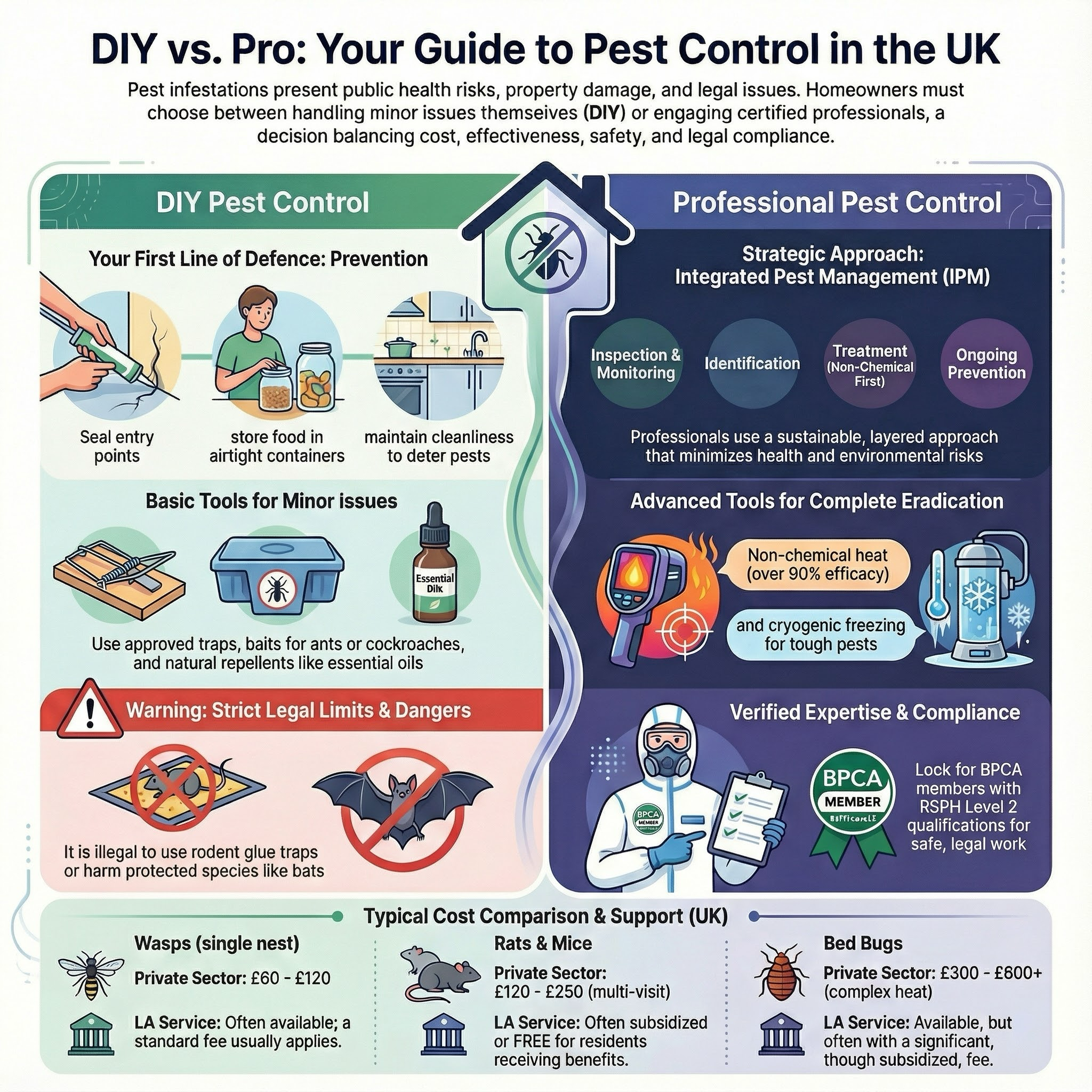
Pest Control explained
Professional ant nest removal focuses on total colony elimination rather than just killing the foragers you see on your kitchen counter. By using professional-grade baits and residual treatments, a qualified pest controller can reach the queen and stop the reproductive cycle entirely.
The cost of ant removal in the UK depends largely on the species involved and the extent of the infestation. Pharaoh ants, for example, usually require a multi-visit programme which increases the overall price compared to a standard garden ant nest.
| Item | Low £ | High £ | Notes |
|---|---|---|---|
| Initial Inspection & Call-out | £60 | £110 | Often deducted from the final bill if work proceeds. |
| Standard Garden Ant Treatment | £120 | £180 | Typical price for a single nest or indoor kitchen treatment. |
| Pharaoh/Ghost Ant Programme | £250 | £450 | Requires multiple visits and specialist hormone baits. |
| External Nest Drenching | £80 | £130 | Treating large nests in patios or garden borders. |
| Professional Proofing (per hour) | £45 | £70 | Labour for sealing entry points with specialist fillers. |
Prices generally include VAT and professional-grade materials. Factors that can increase the cost include the need for specialist access equipment (for nests in roof voids) or properties with extensive outbuildings that also require treatment.
Many homeowners start with supermarket sprays, but these often make the problem worse. Standard sprays are "repellents" that kill ants on contact but cause the rest of the colony to scatter—a process known as "budding"—leading to multiple new nests forming within your walls.
Professional pest controllers use "non-repellents" and professional-grade baits that the ants cannot detect. This allows the poison to be spread throughout the entire colony, including the queen, before the ants realise they are being targeted. For Pharaoh ants, professional help is essential, as DIY attempts almost always fail to reach the complex network of nests.
Note: Professional pest control products are regulated under UK law and are significantly more potent than those available to the general public.
Questions to ask:
Yes, when applied by a professional. Most modern treatments use gel baits placed in areas pets cannot reach, or residual sprays that are safe once completely dry. Your technician will advise you on how long to keep pets out of the treated room (usually 2-4 hours).
Flying ants are the reproductive stage of the colony. They usually emerge on "Flying Ant Day" in July or August to mate. If they are inside your home, it often means there is a nest established within the building's structure or immediately beneath the foundations.
You should see a significant reduction in activity within 48 hours, but total colony elimination usually takes between 7 and 14 days. This delay is necessary to allow the ants to carry the bait back to the queen.
For standard baiting treatments, you can usually stay in the property. If a broad-spectrum residual spray is used, you may be asked to leave the specific room being treated until the product has dried, which typically takes a few hours.
Garden ants are larger, black, and usually live outdoors. Pharaoh ants are very small (2mm), yellow/brown, and exclusively live indoors in the UK. Pharaoh ants are much harder to treat because they have multiple queens and will split their colony if they feel threatened by DIY sprays.
While the specific colony treated will be destroyed, your home may still be attractive to new colonies. Professional proofing (sealing gaps) and maintaining high hygiene standards are the best ways to prevent a new infestation the following spring.
This guide was written with AI assistance and is intended for general information only. Prices are estimates based on UK averages and may vary by region. Always get at least three quotes and consult a qualified professional before starting any work.
Ask follow-ups in plain English. The AI explains options, sequencing and what to ask the pest control — so you walk in informed.
Discovering a rat problem in your UK home is more than just an unpleasant surprise; it is a genuine risk to your property’s integrity and your family’s health. ...
READ GUIDE →GuideA fly infestation in a UK home is more than just a seasonal nuisance; it is a significant hygiene risk. Flies are known carriers of bacteria such as Salmonella ...
READ GUIDE →GuideDiscovering signs of rats in your home is more than just a nuisance; it is a significant health and safety risk. Rats can gnaw through electrical cables, damage...
READ GUIDE →GuideGrey squirrels are more than just a garden nuisance; they are a significant threat to the structural integrity and safety of UK homes. Once they gain access to ...
READ GUIDE →GuideDomestic Pest and Vermin Control Guide Scope of Works Inspect lofts, sub‑floors, kitchens and exterior for signs, entry points and species identification . Prod...
READ GUIDE →GuideFinding maggots in your home is a distressing experience for any UK homeowner. These larvae, typically from houseflies or blowflies, are not just unsightly; the...
READ GUIDE →