Instant
01 · Ask
Ask the AI a follow-up
Got more questions about rat inspection? Describe the bit you're unsure about — the AI explains options, sequencing and what to ask the pest control.

Pre-purchase or active-infestation rat inspection — written report, activity check and treatment plan.
You've read the brief on rat inspection. Now lean on us to find the right pest control — and stay in control of the job.
Got more questions about rat inspection? Describe the bit you're unsure about — the AI explains options, sequencing and what to ask the pest control.
Costs, timelines, pitfalls and the right questions to ask before any pest control starts on rat inspection.
Itemised quotes from up to 3 local pest controls on rat inspection — so you can compare like-for-like, not lump sums.
Ready when you are
Enter your postcode and get free quotes from local pros.
Four moves that separate a smooth job from a nightmare.
Killing the rats currently in the house without sealing the entry points ensures a new colony will move in within weeks.
Roughly 90% of internal rat problems in the UK are linked to damaged sewer pipes or redundant junctions.
Leaving bird feed out or failing to secure compost bins provides a "high-protein" food source that makes traps and baits less attractive to rats.
Homeowners often stop the process once the scratching noises cease, but failing to complete the baiting cycle allows the remaining rats to breed rapidly.
Indicative UK ranges and what affects price.
By job type
Quote spread is typically ± 18% — always get 3 quotes.
Pest Control quick-view
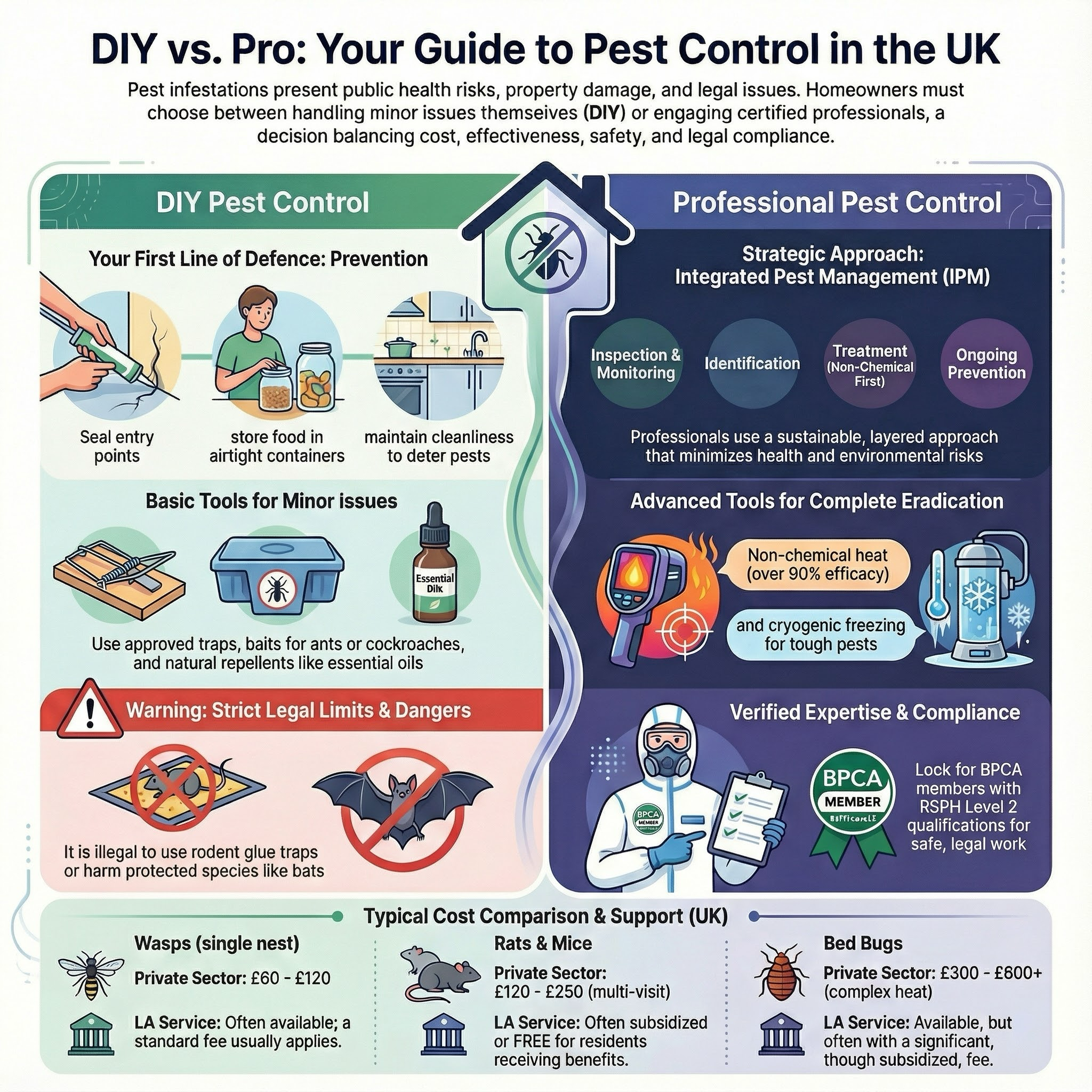
Pest Control explained
A professional rat inspection is the first step in reclaiming your home. Unlike basic DIY checks, a specialist survey identifies not just where the rats are, but how they are getting in and what is sustaining them, ensuring a long-term solution rather than a temporary fix.
| Item | Low £ | High £ | Notes |
|---|---|---|---|
| Standard Inspection Only | £80 | £150 | Flat fee for survey and report. |
| CCTV Drain Survey | £150 | £300 | Required if rats are entering via sewers. |
| Basic Treatment (3 Visits) | £180 | £350 | Includes professional-grade rodenticide/traps. |
| Proofing & Sealing | £100 | £600+ | Depends on the number of entry points. |
| Loft Clearance/Sanitisation | £400 | £1,500 | Removal of contaminated insulation and waste. |
Prices vary based on property size and location, with London and the South East typically seeing higher rates. The severity of the infestation also dictates the amount of bait or traps required and the complexity of the cleanup operation.
While you can buy traps and bait at hardware stores, DIY rat control often fails because rats are "neophobic"—highly suspicious of new objects. Amateur-grade poisons are also significantly weaker than those available to professionals, often leading to bait resistance.
Hiring a professional is strongly recommended due to the health risks of handling rat waste and the strict UK regulations regarding rodenticide use. A professional will ensure that poisons are placed in "tamper-resistant" stations, protecting your pets and local wildlife from accidental secondary poisoning.
Rat droppings are the size of an olive stone (10-15mm) and spindle-shaped, while mouse droppings are the size of a grain of rice. Rats also leave larger gnaw marks and often produce a distinct, ammonia-like smell.
Professionals use lockable, tamper-proof bait stations that prevent pets from reaching the rodenticide. They will also place bait in areas pets cannot access, such as lofts or behind kitchen units.
Rats are nocturnal and excellent climbers. They often live in the wall cavities or loft space, using the "superhighway" of pipes and cables to move around the house unseen.
If you have recurring rat issues despite baiting, a drain survey is essential. It identifies cracks or collapsed pipes that allow rats to exit the sewer system and enter your wall cavities.
Yes. Modern rat treatments do not require you to vacate your home. The only exception is if a specialist "gas" treatment or heavy-duty fogging for sanitisation is being carried out, which is rare in residential settings.
Most UK councils now charge for pest control services, and their rates are often similar to private contractors. Private firms usually offer faster response times and more thorough proofing services.
This guide was written with AI assistance and is intended for general information only. Prices are estimates based on UK averages and may vary by region. Always get at least three quotes and consult a qualified professional before starting any work.
Ask follow-ups in plain English. The AI explains options, sequencing and what to ask the pest control — so you walk in informed.
Discovering a rat problem in your UK home is more than just an unpleasant surprise; it is a genuine risk to your property’s integrity and your family’s health. ...
READ GUIDE →GuideA fly infestation in a UK home is more than just a seasonal nuisance; it is a significant hygiene risk. Flies are known carriers of bacteria such as Salmonella ...
READ GUIDE →GuideGrey squirrels are more than just a garden nuisance; they are a significant threat to the structural integrity and safety of UK homes. Once they gain access to ...
READ GUIDE →GuideDomestic Pest and Vermin Control Guide Scope of Works Inspect lofts, sub‑floors, kitchens and exterior for signs, entry points and species identification . Prod...
READ GUIDE →GuideFinding maggots in your home is a distressing experience for any UK homeowner. These larvae, typically from houseflies or blowflies, are not just unsightly; the...
READ GUIDE →GuideMoth Infestation Treatment Guide Scope of Works Confirm species & extent – inspect wardrobes, carpets and loft insulation; place pheromone traps for activit...
READ GUIDE →