Instant
01 · Ask
Ask the AI a follow-up
Got more questions about squirrel removal? Describe the bit you're unsure about — the AI explains options, sequencing and what to ask the pest control.

Grey squirrel in loft or roof void — trapped, removed and entry points sealed against re-entry.
You've read the brief on squirrel removal. Now lean on us to find the right pest control — and stay in control of the job.
Got more questions about squirrel removal? Describe the bit you're unsure about — the AI explains options, sequencing and what to ask the pest control.
Costs, timelines, pitfalls and the right questions to ask before any pest control starts on squirrel removal.
Itemised quotes from up to 3 local pest controls on squirrel removal — so you can compare like-for-like, not lump sums.
Ready when you are
Enter your postcode and get free quotes from local pros.
Four moves that separate a smooth job from a nightmare.
Squirrels often strip the plastic coating from cables, leading to short circuits or fires. Always check your electrics after an infestation.
If a nest is missed during the cleanup, it can attract secondary pests like carpet beetles, moths, or flies.
Sealing one hole often leads a determined squirrel to chew a new one nearby; comprehensive proofing of the entire roofline is essential.
The scratching and "scurrying" sounds in the ceiling are often loudest at dawn, causing significant sleep disruption for residents.
Indicative UK ranges and what affects price.
By job type
Quote spread is typically ± 18% — always get 3 quotes.
Pest Control quick-view
Pest Control explained
Professional squirrel removal is essential not only for effectively clearing the infestation but also for ensuring the property is legally and physically secured against future invasions. In the UK, strict laws govern how these invasive species must be handled, making professional intervention the safest and most compliant route for homeowners.
The cost of squirrel removal in the UK depends heavily on the severity of the infestation and the amount of "proofing" required to stop them coming back. Prices generally include VAT and a set number of visits.
| Item | Low £ | High £ | Notes |
|---|---|---|---|
| Initial Survey & Setup | £80 | £160 | Includes site assessment and trap placement. |
| Standard Removal Package | £250 | £450 | Typically includes 3 visits and basic trapping. |
| Contaminated Waste Removal | £150 | £400 | Removal and disposal of fouled insulation. |
| Structural Proofing | £100 | £500+ | Varies by the number of entry points and height. |
| Access Equipment (Scaffolding) | £250 | £800 | Only required for difficult-to-reach rooflines. |
Factors that will increase your quote include the size of the loft space, the height of the roofline (requiring ladders or scaffolding), and whether the squirrels have caused damage to electrical wiring that requires a separate electrician's sign-off.
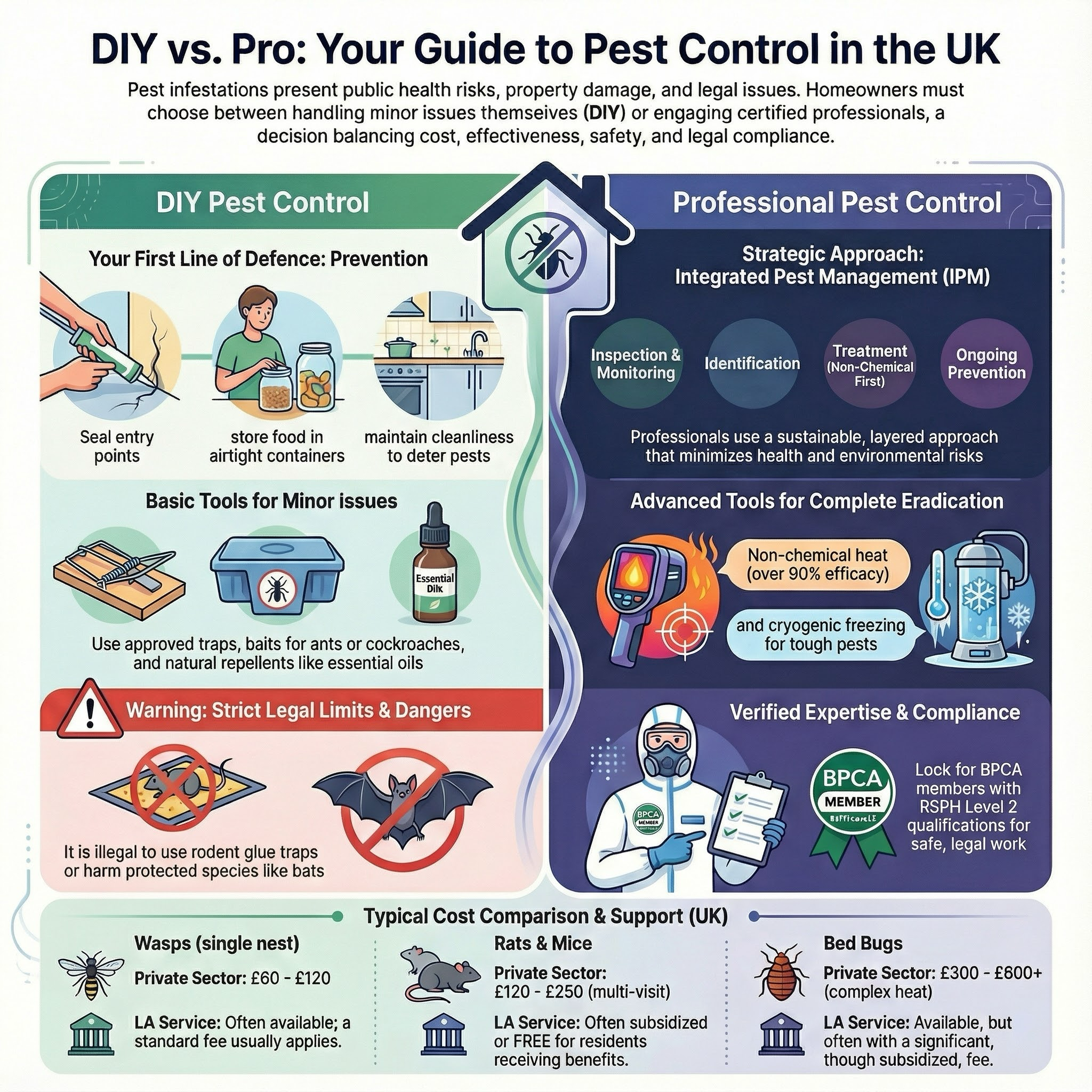
While DIY traps are available, squirrel removal is best left to professionals due to the Wildlife and Countryside Act 1981. It is a criminal offence in the UK to release a grey squirrel back into the wild once it has been caught; they must be humanely dispatched. Most homeowners find this process distressing and difficult to manage legally.
Professional pest controllers have the specific equipment and training to handle the disposal humanely and the heavy-duty materials required to proof a roof effectively against a squirrel's powerful jaws.
Don't just hire the first person with a van; pest control requires specific certifications to ensure safety and legality.
This is highly discouraged. If you block the hole while the squirrel is inside, it will chew through your ceiling or woodwork in a panic to escape. If you block it while they are out but leave young kits inside, the mother will cause massive structural damage trying to get back to them.
In the UK, it is illegal to relocate and release grey squirrels. A professional pest controller is legally required to humanely dispatch any grey squirrel caught in a trap. Live-capture traps must be checked at least once every 24 hours by law.
Most standard UK home insurance policies exclude damage caused by "vermin," which usually includes squirrels. However, some "Platinum" or "Home Emergency" add-ons may cover the cost of the removal itself or damage to electrical wiring. Check your policy wording carefully.
Squirrels are diurnal, meaning you will hear them most in the early morning and late afternoon. Rats are nocturnal, so you'll hear them at night. Squirrel droppings are larger and more rounded (like a raisin), whereas rat droppings are thinner and tapered at the ends.
Yes. Squirrels carry fleas, ticks, and mites. Even after the squirrels are gone, these parasites can migrate down into your living spaces. A professional biocide or insecticide spray ensures the loft is medically safe to enter for future maintenance.
This guide was written with AI assistance and is intended for general information only. Prices are estimates based on UK averages and may vary by region. Always get at least three quotes and consult a qualified professional before starting any work.
Ask follow-ups in plain English. The AI explains options, sequencing and what to ask the pest control — so you walk in informed.
Discovering a rat problem in your UK home is more than just an unpleasant surprise; it is a genuine risk to your property’s integrity and your family’s health. ...
READ GUIDE →GuideA fly infestation in a UK home is more than just a seasonal nuisance; it is a significant hygiene risk. Flies are known carriers of bacteria such as Salmonella ...
READ GUIDE →GuideDiscovering signs of rats in your home is more than just a nuisance; it is a significant health and safety risk. Rats can gnaw through electrical cables, damage...
READ GUIDE →GuideDomestic Pest and Vermin Control Guide Scope of Works Inspect lofts, sub‑floors, kitchens and exterior for signs, entry points and species identification . Prod...
READ GUIDE →GuideFinding maggots in your home is a distressing experience for any UK homeowner. These larvae, typically from houseflies or blowflies, are not just unsightly; the...
READ GUIDE →GuideMoth Infestation Treatment Guide Scope of Works Confirm species & extent – inspect wardrobes, carpets and loft insulation; place pheromone traps for activit...
READ GUIDE →